
Personalised course content
The aim of the programme is to systematically impart theoretical, methodological and practical knowledge and skills in biosphere reserve management.
You will learn to develop sustainability strategies using participatory and cooperative approaches and acquire knowledge of ecosystems and various land-use concepts. Cultural and socio-economic challenges, as well as opportunities, will be identified and reflected upon.
Graduates will be able to implement the UNESCO ‘Man and the Biosphere’ (MAB) programme and make sustainable improvements to the World Network of Biosphere Reserves (WNBR).
Modules per term
The first semester focuses on the biosphere reserve concept and the fundamentals of management.
Communication theories, communication techniques and styles, conflict resolution strategies, role-playing, intercultural communication, developing learning and communication skills, environmental communication, teamwork techniques, practical exercises, basic rules of conduct in research communication.
International organisations, UNESCO, history of UNESCO, international environmental agreements and conventions, Sustainable Development Goals (SDGs), MAB Programme, institutional frameworks and coordination mechanisms of the programme, nature conservation law in different countries, BRs as model areas, establishment and maintenance of biosphere reserves and their distinction from other categories of protected areas, organisations associated with biosphere reserves, transboundary parks.
You will be able to understand the natural functional structures and organisations relevant to biosphere reserves as complex systems. This involves understanding the emergent properties and inherently indeterminate dynamics of ecological and social systems, as well as the key attributes required for sustainable functioning. You will discuss analogies and homologies between social and ecological systems, as well as the strengths and weaknesses of the socio-ecological systems approach. You will be able to identify the requirements and limitations of managing complex systems.
Innovation & Innovation Promotion, Fundamentals & Definitions of Project Management, Problem Analysis, Problem Tree / Solution Tree, Planning Methods, Objective Planning, Financial Planning, Time Planning, DIN Process Descriptions, Project Phases, Project Team & Roles, Controlling, Monitoring, Adaptive Management, Agile Planning, Open Standards for the Practice of Conservation, Organisational Development Projects & Change Management, PM software, evaluation, donor landscape, application formats of various donors.
Approaches and Tools for Research and Monitoring: Compulsory Elective Module
In this compulsory elective module, you will choose between two specialisations.
Both specialisations begin with a joint introduction to the fundamentals of monitoring and research.
Presentation of the theoretical foundations of quantitative and spatial research and monitoring methods, with practical examples from research, monitoring and evaluation in the context of international protected areas. Inter- and transdisciplinary approaches to knowledge management will be presented, as well as innovative, digital methods of citizen science and communication via social media. You will learn the methods of empirical social research as well as scaled spatial analysis from the perspective of different stakeholders against the backdrop of protected areas.
Option 1: Empirical Social Research
Research design (cross-sectional, longitudinal, experimental designs), qualitative data collection, qualitative sampling, quantitative data collection, quantitative sampling, qualitative data analysis, Maxqda software, optional additional focus on evaluation
Option 2: Geodata and remote sensing as tools for spatial monitoring
You will understand the practical application and methodological significance of subject-specific geodata at various spatial scales and will produce subject-specific outputs for monitoring habitat types and communicating nature conservation findings using analytical geostatistics and web-based cartography. This practice-oriented specialist seminar teaches innovative working methods for working with geodata in protected areas using practical examples and discusses the use of current remote sensing sensors, spatial monitoring methods and the use of professional services and products for continuous landscape-ecological spatial observation.
In the second semester, you will build on the foundations you have already established. You will also choose two further compulsory-elective modules to specialise your studies.
Teaching the fundamentals of social ecology and ethics, cultural diversity, and the interconnection between socio-ecological aspects and economic conditions; forms of land use (agriculture, forestry, fisheries, horticulture, tourism, energy management, etc.); ecosystem services, biodiversity and nature conservation; insights into economic and political theories; historical and current forms of land use in the context of natural resource utilisation; effects of globalisation on land use systems; social movements, gender justice. Analysis of case studies selected from around the world on value chains from natural resources to the consumer.
Presentation of innovative solutions and participatory decision-making processes.
Group work, joint discussion and presentation of results.
Management tools, area management, adaptive management, participatory management, dealing with uncertainties and risks, the impact of property rights and obligations, stakeholder analysis, participation and participatory formats, the use of rangers, volunteer management, conflict management, partnerships, corporate partnerships, promoting sustainable development, ecosystem services, administrative structures and processes.
Transformation
Transformation processes, institutional change and governance processes, reflection on the constellations of actors in civil society, the political sphere and the public sphere. Learning systematic, anticipatory and critical thinking.
Education for Sustainable Development
Education for Sustainable Development, stakeholder analysis, methods, skills, problem-solving and strategic skills, indigenous knowledge.
In the second semester, you will choose two of the following three compulsory-elective modules.
Option 1: Ecological effectiveness of biosphere reserves
Various concepts for determining ecological effectiveness, approaches to quantifying and evaluating ecological effectiveness, practical exercises, critical reflection on measurability, and the development of innovative proposals for assessing effectiveness in relation to key attributes of biosphere reserves as socio-ecological systems (e.g. innovation, adaptability and resilience).
Option 2: Nature tourism and cultural identity
Cultural identity (e.g. regional cuisine, regional products, regional architectural heritage, regional history/storytelling, traditions, dialects, etc.), tourism development, tourism as an economic factor and for regional development, strategies and methods of visitor management, segments of the nature tourism offering and product development, conflict resolution strategies between nature conservation, cultural identity, and leisure and tourism.
Option 3: Stakeholder communication in biosphere reserves
Problem analysis of land-use conflicts using real-life case studies, familiarisation with and application of various problem-solving tools and techniques, development and application of planning and role-playing exercises, group facilitation.
In the third semester, you will carry out an independent research project in a biosphere reserve.
You will be able to plan, coordinate and carry out a small-scale research project relating to biosphere reserves.
They focus both on the techniques involved in the research process and on ‘transfer research’, exploring, amongst other things, ways of applying findings from research projects to other regions, as well as methods of marketing and self-promotion.
In the final semester, you will write and defend your Master’s thesis.
They will produce their own research findings whilst solving and discussing a scientific problem. They will present the findings of their Master’s thesis and be able to defend the underlying assumptions, methods and robustness of the key findings.
You will engage in critical reflection on your own research approach, present your topic to your fellow students and benefit from the exchange of knowledge and experience. You will develop your research proposal, including the formulation of research questions and hypotheses and the research design. Progress reports will be presented and discussed.
The BIOM students are a diverse group of individuals. During my time on this programme, I have realised that the better the group we form together, the further I get. I am grateful to have had the opportunity to learn from and alongside my fellow students.
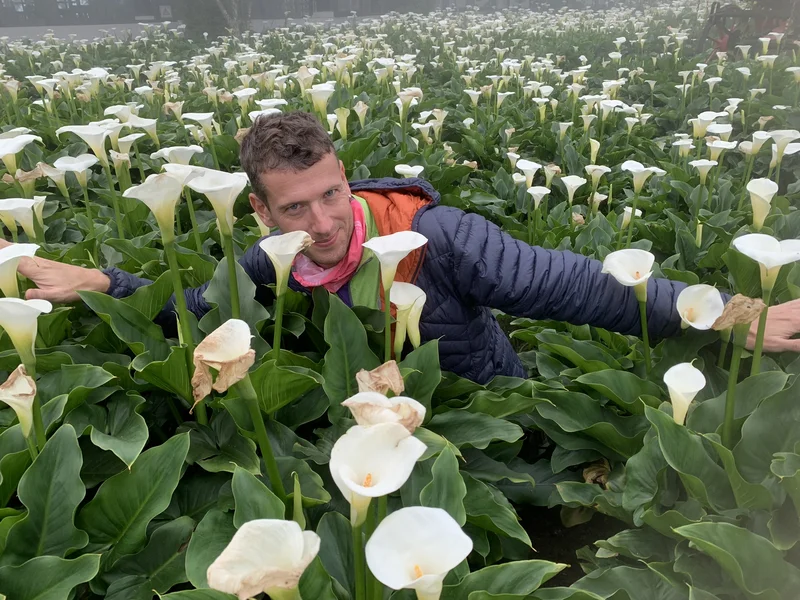
Daniel Ojeda de Vicente
Student, Biosphere Reserve Management 2021