Research Centre [Sustainability – Transformation – Transfer]
As the [Sustainability – Transformation – Transfer] Research Centre, we focus on applied sustainability research. Our vision is to provide scientifically and practically applicable impetus for sustainable development in business, politics and civil society. To this end, we support transfer and transformation projects towards sustainability through theoretical-conceptual and empirical-analytical approaches. We organise transfer spaces for dialogue between practice and academia on substantive, strategic and normative issues of sustainable development.
Through our activities, we help to highlight and harness the potential of sustainability transfer in teaching, research and the third mission at the Eberswalde University for Sustainable Development. In doing so, the Research Centre supports the HNEE’s transfer strategy and research strategy, with its key research priorities.
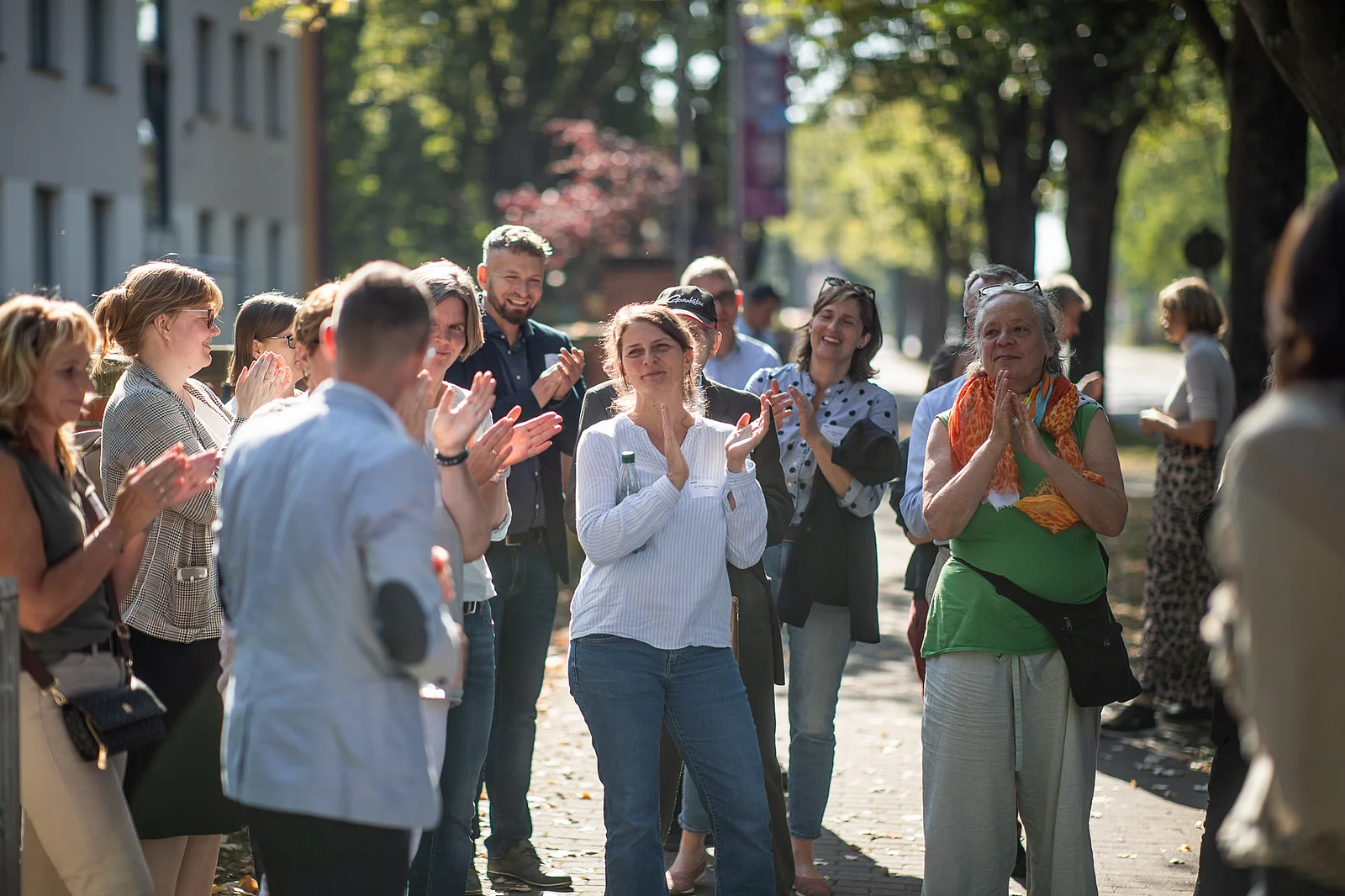
Sustainable development does not happen in a test tube; it needs to be lived and tested. How do science and practice cooperate in this regard? How do they learn from and with each other, and how can this exchange be meaningfully promoted? The NTT Research Centre is investigating these topics using the concept of sustainability transfer.
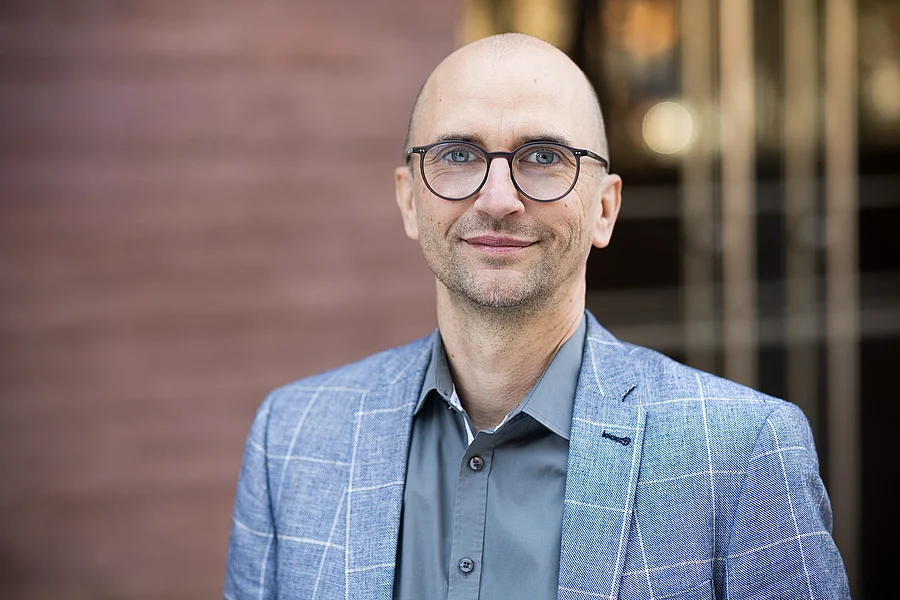
Professor Matthias Barth
President
Sustainability transfer as a key focus of the research centre
By ‘sustainability transfer’, we mean all transfer activities between the university and non-university partners whose aim is to contribute to sustainable development in society. Such sustainability transfer activities are characterised by sustainability objectives and a description of the intended sustainability impact in each case.
The outcomes of sustainability transfer are a) contributions to sustainable development, such as models, projects, technologies, concepts, solutions, tests or discussions on sustainability, and b) the strengthening of core competencies for sustainable development through shared learning processes involving all participants.
Further reading:
Sustainability transfer at universities
Sustainability transfer – a concept for science-practice cooperation
Mapping the transfer of sustainability
The practice–university collaborations in sustainability transfer cover a broad spectrum of topics, stakeholder constellations and disciplines. To make this diversity visible, a method for mapping sustainability transfer was developed at the research centre.
Building on this mapping approach, a method was developed to represent sustainability transfer spatially and visualise collaborations geographically using GIS. The sustainability transfer collaborations of the then Department of Landscape Management and Nature Conservation at HNEE between 2021 and 2023 are shown on the following interactive map:
Sustainability transfer at HNEE
Sustainability transfer is both the vision and mission of HNEE, as outlined in its transfer strategy with a focus on sustainability. Transfer activities take place across all areas (teaching, research and the third mission) of HNEE.
For example, in our joint research projects InNoWest, which brings together sustainable development and digitalisation, and Region 4.0, an alliance of a wide range of stakeholders in the Uecker-Randow, Uckermark and Barnim regions.
Further reading:
How practitioners negotiate and balance their goals for regional sustainability transformation…
Sustainability Transfer as a Concept for Universities in Regional Transformation – A Case Study
Projects at the Research Centre

Discussion Paper Series: "Sustainability Transformation & Sustainability Transfer"
In close cooperation with the HNEE University Library, the [NTT] Research Center launched its discussion paper series "Sustainability Transformation & Sustainability Transfer" in March 2022. The discussion paper series is a medium for the timely publication of current research results, practical reports, or theoretical and conceptual considerations relating to sustainability transformation and sustainability transfer. The series is aimed not only at established scientists, but also explicitly at young scientists and students. To ensure wide distribution and good visibility, the series is published under an open access license and each volume is assigned its own DOI. A peer review process ensures professional quality assurance.
Göttert T, König B, Nölting B, Roose I, unter Mitarbeit von Crewett W, Demele U, Fritz H (2022). https://doi.org/10.57741/opus4-224
Roose I, Nölting B, König B, Demele U, Crewett W, Georgiev G, Göttert T, unter Mitarbeit von Hobelsberger C (2022). https://doi.org/10.57741/opus4-272
No. 03: Methodology and metadata for the citizen science study "Logbook of Change"
König B, Nölting B, Crewett W, Demele U (2022). https://doi.org/10.57741/opus4-277
No. 04: Solidarity and solidarity-based behaviour during the coronavirus pandemic: findings from the ‘logbook of change’
Gutsohn A, Selleneit T, König B, Nölting B (2022). https://doi.org/10.57741/opus4-360
No. 05: Information, communication and the development of digital skills during the coronavirus pandemic: findings from the "logbook of change"
Gutsohn A, Wiemers H, König B, Nölting B (2022). http://doi.org/10.57741/opus4-368
No. 06: Agricultural films: Socio-economic and ecological assessment of the use of plastic films in asparagus cultivation in Germany and resulting recommendations for action
Selleneit T, Verdugo-Raab D, Kipp S, Sprenger D, König B (2022). https://doi.org/10.57741/opus4-376
Stahl JK, König B, Gutsohn A (2023). https://doi.org/10.57741/opus4-406
No. 08: The value of photography in science and education: Photography through the lens of two scholars
Currie B, Göttert T (2023). https://doi.org/10.57741/opus4-636
No. 09: Mapping sustainability transfer? - Developing a method for visualising sustainability transfer activities
Göttert T, Hobelsberger C, König B, Nölting N, Roose I (2023). https://doi.org/10.57741/opus4-666
No. 10: Changed working practices and conditions during the coronavirus pandemic: findings from the "logbook of change"
Gutsohn A, Hahnle M, König B, Nölting B (2023). https://doi.org/10.57741/opus4-788
No. 11: Framing growth: Exploring the transformative power of photography for students
Göttert T, Currie B, Backa V, Feldenz L, Klaver M, Markides Y, Munting E, Rolfes O (2023). https://doi.org/10.57741/opus4-792
No. 12: Changes in consumer behaviour during the coronavirus pandemic: findings from the "logbook of changes"
Weinberger R, König B, Nölting B, Gutsohn A (2024). https://doi.org/10.57741/opus4-830
No. 13: How the platform economy is taking over markets. The significance of the platform economy for integrated rural development
Luley H, in collaboration with Göttert T (2024). https://doi.org/10.57741/opus4-833
No. 14: Local authorities as partners for system innovations for sustainability transformation. Using the example of a recycling plant for the utilisation of human waste in Brandenburg.
Searles K, Di Terlizzi H, Ulrich M, Knopf J, unter Mitarbeit von Markow J (2024). https://doi.org/10.57741/opus4-834
No. 15: Biodiversity and ecosystems in digital teaching – case studies from the University of Applied Sciences for Sustainable Development
Schulz U, Zeidler M, Feldenz L, Göttert T, in collaboration with Guth M, Meister A, Mersmann-Münster R (2024). https://doi.org/10.57741/opus4-835
No. 16: Methodology and metadata for the citizen science study "Logbook of Changes".
König B, Nölting B, Gutsohn A (2024) https://doi.org/10.57741/opus4-1060
No. 17: coming soon
No. 18: Sustainable development on the Berlin-Szczecin axis. Conference proceedings for the German-Polish conference | Zrównoważony rozwój na osi Berlin-Szczecin. Publikacja konferencyjna do polsko-niemieckiej konferencji.
Nölting B, Korpysa J, Cheba K, Dawidowicz D, Göttert T, Obrycki N, Schiller D, Zbaraszewski W (2025)https://doi.org/10.57741/opus4-1062