

The Eberswalde Study Model
With the Eberswalde Study Model (EStM), we at HNEE are developing a forward-looking teaching and learning framework. The focus is on the integrated development of key competences for sustainable development, encompassing subject-specific and methodological competences as well as social and personal competences.
These key competences form part of the ‘Future Skills’ that will be needed in the future to shape the transition to sustainability. And that is precisely what we are training our students to do.
Practical and interdisciplinary
Solution- and skills-based
Innovative and digital
Personalised and flexible
International and meaningful
News
- Green light: On 25 March 2026, the Senate approved the implementation of the ‘Eberswalde Study Model’ project and the associated further development of the ‘Study and Teaching’ division, with one abstention.
- Financial support: The Foundation for Innovation in Higher Education (StIL) is funding the Eberswalde Study Model with €6.1 million over a period of six years. Provided we pass the first evaluation after four years. What began as an idea in 2023 and was given a regulatory framework in 2024 can now be structurally embedded with increased resources.
- Almost complete: With ten new colleagues now on board, the EStM team is almost at full strength. We expect further additions to our team in July.
What makes the Eberswalde study model special
With the Eberswalde study model, we are not only building on our teaching philosophy, but also further enhancing our sustainability profile.
Drawing on our DNA (The Sustainable Approach), we have developed four pedagogical principles that apply to all degree programmes:
- Reflecting on sustainability together
- as the foundation of every degree programme
- Shaping transdisciplinarity
- through dialogue with practitioners from civil society and the business sector
- Working in an interdisciplinary manner
- across disciplines and on a project-based basis, addressing real-world transformation issues and challenges
- Developing individual competence profiles
- through a range of options and specialisations
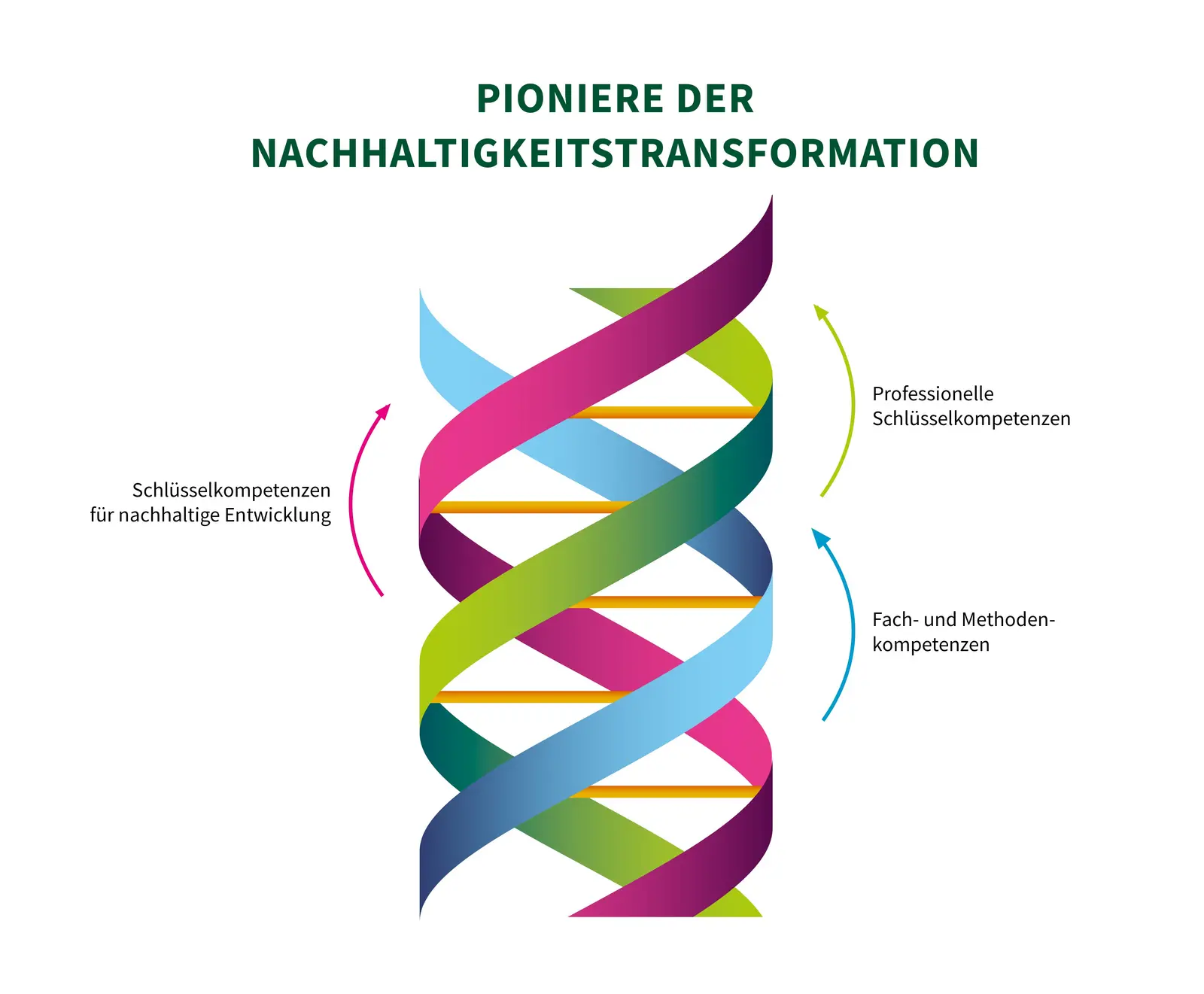
Our new teaching and learning framework
To bring this model to life, we will interweave three strands of development across the relevant areas of work.
This involves a cultural shift: we will empower teaching staff to further develop their teaching on the basis of experience and reflection. At the same time, we will support all staff groups at the university in developing the necessary openness to change.
This will be achieved by:
- Embedding competence-based higher education for sustainable development within the curricula of all degree programmes.
- Implementing the necessary design of adaptive physical, digital and hybrid learning environments.
- Developing and testing new reflective processes for learning support.
Area 1: Integrating skills into the curriculum
- Concept development and implementation of the EStM
- Establishment of a legal and administrative framework
- Programme-specific testing and implementation
- Development of a culture receptive to change
Workstream 2: Designing adaptive learning spaces
- Participatory development of a learning space development strategy and a spatial structure concept
- Implementation of pilot projects for the design and testing of learning and meeting spaces
- Establishment of digital learning environments
Workstream 3: Rethinking learning support
- “Want”: Strengthening a feedforward culture in learning support
- “Can”: Enabling learning support
- “Do”: Developing competence-based assessment formats
The team
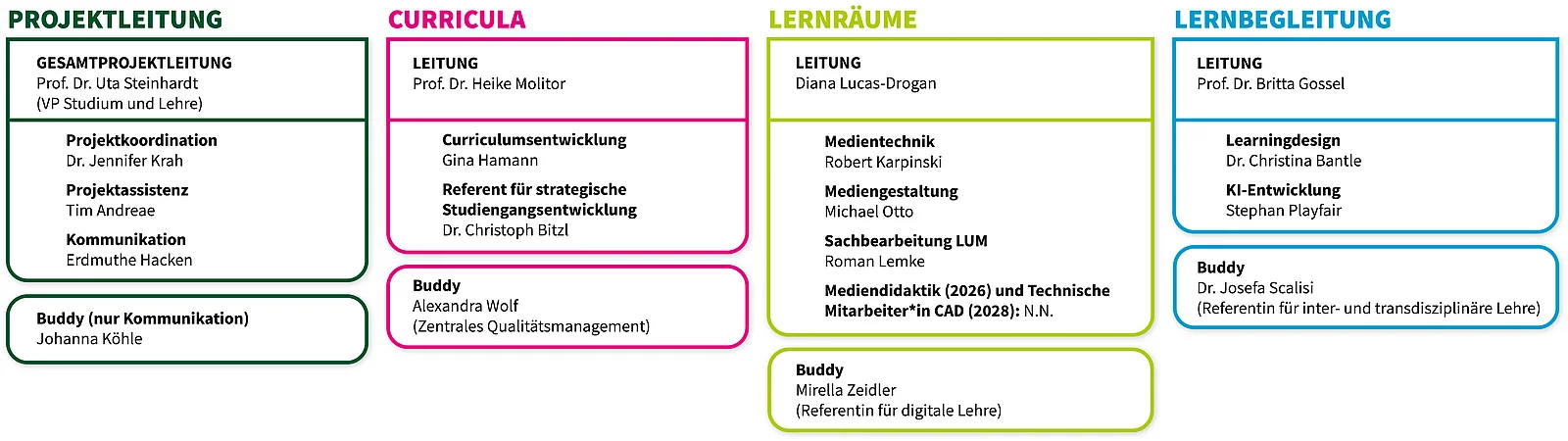
With our Eberswalde study model, we offer you comprehensive opportunities for your personal and professional development so that you can realise your potential and grow your skills.
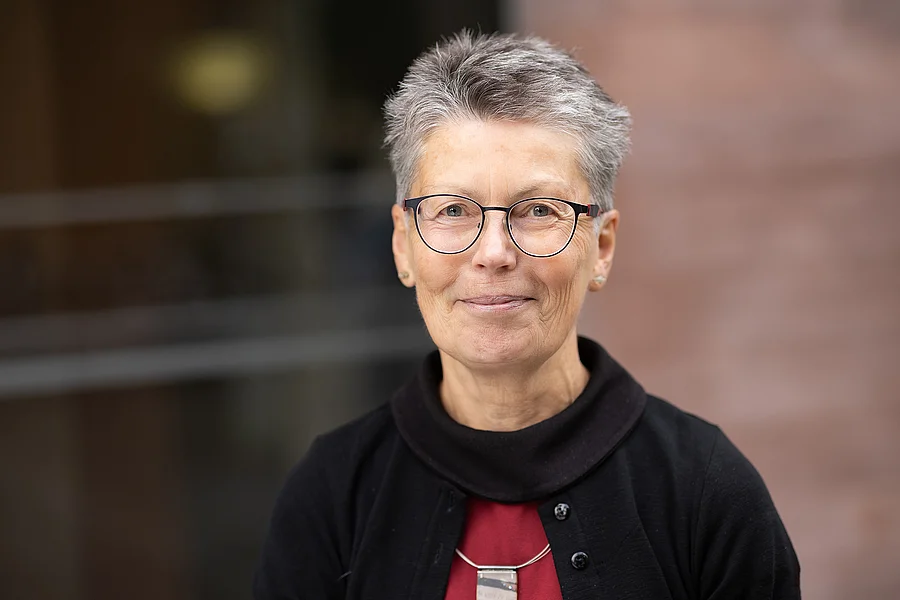
Prof Dr Uta Steinhardt
Vice President for Studies and Teaching at HNEE
Outlook
Now that funding has been approved and the Senate has passed its resolution, what exactly are the next steps? Alongside the (further) development of the curriculum, we intend to adapt administrative processes and foster a culture of change. We are also designing spaces that are learner-centred and therefore characterised by maximum flexibility of use.
Piloted
Together with students, teaching staff and a development team comprising members of Central Quality Management, the Schools and staff responsible for programme organisation, we are developing the curricula of the future step by step and through pilot schemes in curriculum workshops.
Refurbished
Together with the library, we are converting the ground floor up to the first floor into a learning centre.
We are supporting the Property Department with the refurbishment of lecture theatres on the Waldcampus.
We are developing informal learning hubs in corridors and communal areas and expanding the Didactics Navigator.
We are introducing a media literacy certificate in cooperation with universities in Brandenburg.
Interactive
We are developing new formats for socialising and exchange, such as ‘Eat & Great’, for all members of the university community in the canteens on the City and Forest Campuses.
In cooperation with the Healthy University Working Group, we organise the ‘3,000 Steps’ walks on the City and Forest Campuses.
Funding bodies
Contact details for the Eberswalde study model
Please feel free to contact us at eberswalder-studienmodell(at)hnee.de
Professor of Landscape Ecology and Landscape Planning, Vice-President for Studies and Teaching
Eberswalder Studienmodell | Kommunikation