

Three state teaching awards, one profile: HNEE’s teaching impresses
The Eberswalde University for Sustainable Development (HNEE) has received no fewer than three awards this year: as part of the Brandenburg Science Awards, Prof. Dr Tobias Cremer, Prof. Dr Ralf Bloch, Prof. Dr Heike Walk, Dr Josefa Scalisi and Towadei Conrad, as well as Prof. Dr Heike Molitor and Dr Jennifer Krah, have been recognised for their outstanding teaching approaches.
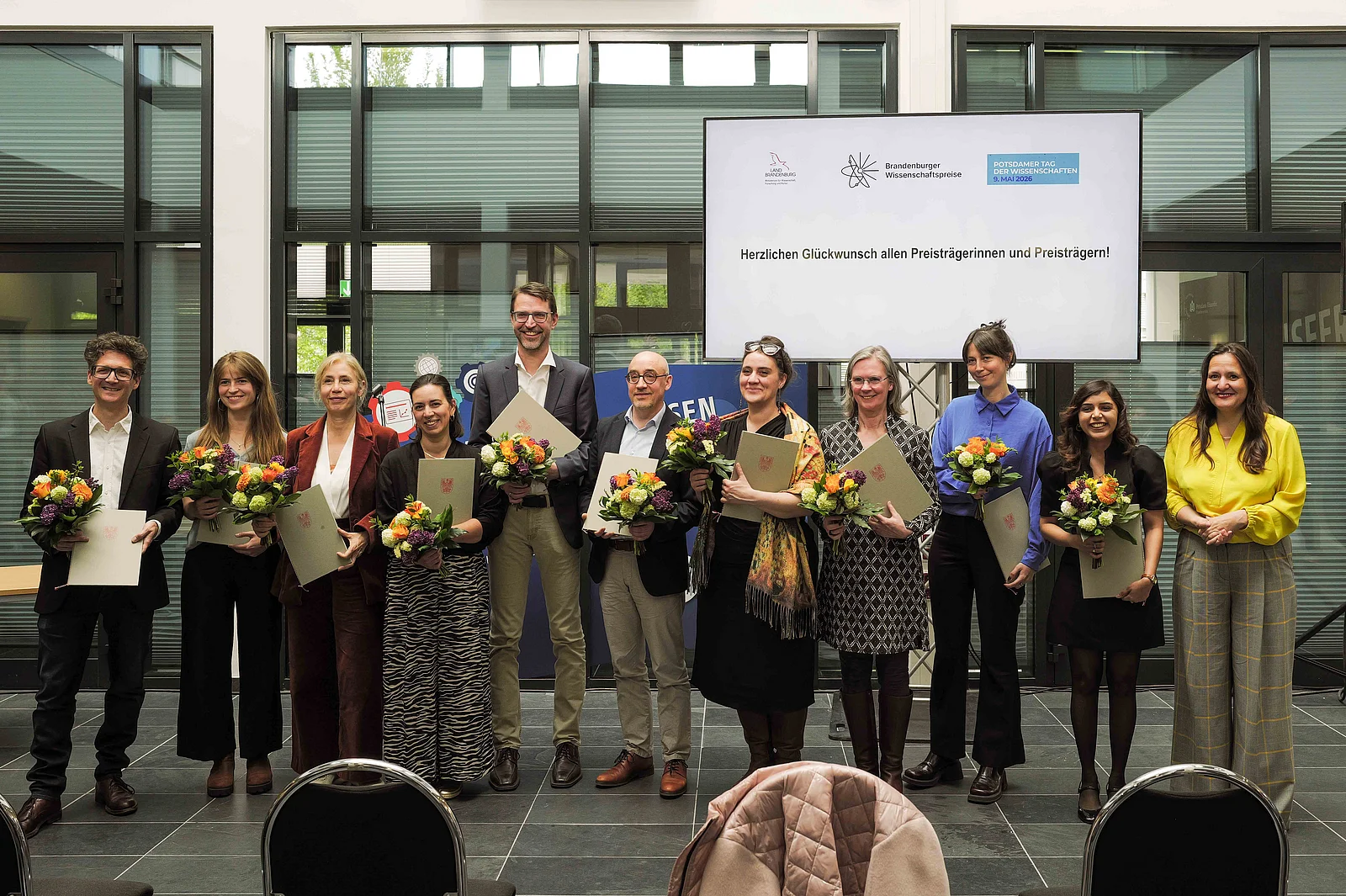
The 13th Brandenburg State Teaching Award in 2026 will be held under the theme “Interdisciplinarity and Cooperation in Higher Education Teaching”. A total of four university lecturers or teaching teams will each be awarded 10,000 euros. Two of these prizes will go to the HNEE. In addition, an HNEE team will receive the special prize on the topic of “Future Skills in Higher Education”. The winners will be selected by independent juries.
Prof. Dr Tobias Cremer and Prof. Dr Ralf Bloch are being honoured for their teaching concept “Teaching Module: Agroforestry Systems – Real-World Laboratory for Arable Farming”. Prof. Dr Heike Walk, Dr Josefa Scalisi and Towadei Conrad are also receiving a State Teaching Award for the course “Introduction to Sustainable Development”. The special prize “Future Skills in Higher Education” goes to Prof. Dr Heike Molitor and Dr Jennifer Krah for the module “Methods and Concepts of Education for Sustainable Development”.
The teaching module “Agroforestry Systems – Real-world Laboratory for Arable Farming” combines scientific principles with practical research on a real-world experimental plot. Since the establishment of the agroforestry system in the winter semester of 2017/18, Prof. Dr Tobias Cremer and Prof. Dr Ralf Bloch have been teaching students about agroforestry systems as a particularly sustainable form of land use. Agroforestry systems combine arable crops and woody plants on the same plot of land and are regarded as an important approach to making agriculture more climate-resilient and conducive to biodiversity.
The module is based on elements of inquiry-based learning: students formulate research questions, collect data, evaluate results and examine the ecological, economic and practical dimensions of agroforestry systems. Since 2016, there has been close collaboration with the owner of a plot of land in the Löwenberger Land region. Since 2019, the module has been established as an elective module in various Bachelor’s and Master's study programmes at HNEE. Each semester, between 15 and 35 students from up to seven degree programmes conduct research and learn within the module. In total, more than 400 students have now taken part. Over the years, the course has been supported by 15 tutors. Many of them are still active in the field of agroforestry systems today.
The development of the course ‘Introduction to Sustainable Development’ as a joint compulsory module for first-year students of all Bachelor’s programmes builds on a long-standing HNEE tradition: as early as 2009, Prof. Dr Heike Molitor had designed the ‘Introduction to Sustainable Development’ in collaboration with representatives from all the faculties at the time. With the reorientation of the introductory module from the 2020/21 winter semester onwards, the integration of transdisciplinary projects and the introduction of a mentoring system, a new interface in teaching between Bachelor’s and Master's study programmes has emerged.
The current form of the “Introduction to Sustainable Development” module has been further developed since 2019 by Prof. Dr Heike Walk and Dr Josefa Scalisi. Towadei Conrad is responsible for coordination, which also brings a student perspective into the design of the module. From the 2020/21 winter semester, the module was fundamentally redesigned: as a series of lectures with transdisciplinary micro-projects, supervised by mentors and carried out in cooperation with industry partners. In each intake, around 350 students from all degree programmes work together on approximately 35 micro-projects. This ensures that sustainable development is not merely addressed theoretically, but is brought to life as a collaborative learning process.
The integration with the Master’s module “Methods and Concepts of Education for Sustainable Development” led by Prof. Dr Heike Molitor plays a special role. Master’s students act as student mentors, supporting first-year students in their projects within the “Introduction to Sustainable Development” course. A complementary accompanying module, “Methodological Group Support”, strengthens and consolidates this mentoring structure.
The special award “Future Skills in Higher Education Teaching” recognises this module, which equips Master’s students with the expertise to provide professionally sound support for learning and educational processes in the context of education for sustainable development.
Prof. Heike Molitor and Dr Jennifer Krah have further developed the module “Methods and Concepts of Education for Sustainable Development” and will integrate the theory of higher education for sustainable development in the winter semester 2023/24. The module focuses on sustainability skills as a central element of future skills: in the role of mentors, Master’s students develop methods to promote sustainability skills among Bachelor’s students. In the future, it is planned that students or graduates, following their participation in the module, will be able to take on teaching responsibilities themselves on a trial basis and further develop their skills at a higher level.
The three awards demonstrate the extent to which HNEE aligns its teaching with future societal challenges: interdisciplinary, practice-oriented, research-driven and with a particular focus on sustainability, cooperation and creative competence.