

HNEE sets an example for protection against discrimination
The Eberswalde University for Sustainable Development (HNEE) has taken an important step towards strengthening a respectful, equal opportunity and discrimination-sensitive university culture: on 26 November 2025, the HNEE Senate adopted the new statutes on protection against and dealing with discrimination (anti-discrimination statutes). The aim of the statutes is to create a binding framework that effectively prevents discrimination, protects those affected and establishes transparent channels for advice and complaints.
The HNEE sees itself as a democratic and cosmopolitan institution that anchors solidarity, appreciation and diversity as fundamental values in its actions. Respect, equal opportunities and responsible interaction with one another are central prerequisites for successful learning, teaching, research and work at the university. The new anti-discrimination statute institutionally strengthens and bindingly secures this claim.
The statute defines discrimination comprehensively – including in relation to gender and gender identity, ethnic origin, sexual identity, disability, religion, age, social background or appearance – and takes into account not only individual but also structural and multidimensional forms (intersectionality). It establishes clear principles and a binding prohibition of discrimination, regulates transparent and reliable counselling and complaint procedures, protects those affected from discrimination and anchors preventive measures, training opportunities and the systematic documentation and evaluation of incidents.
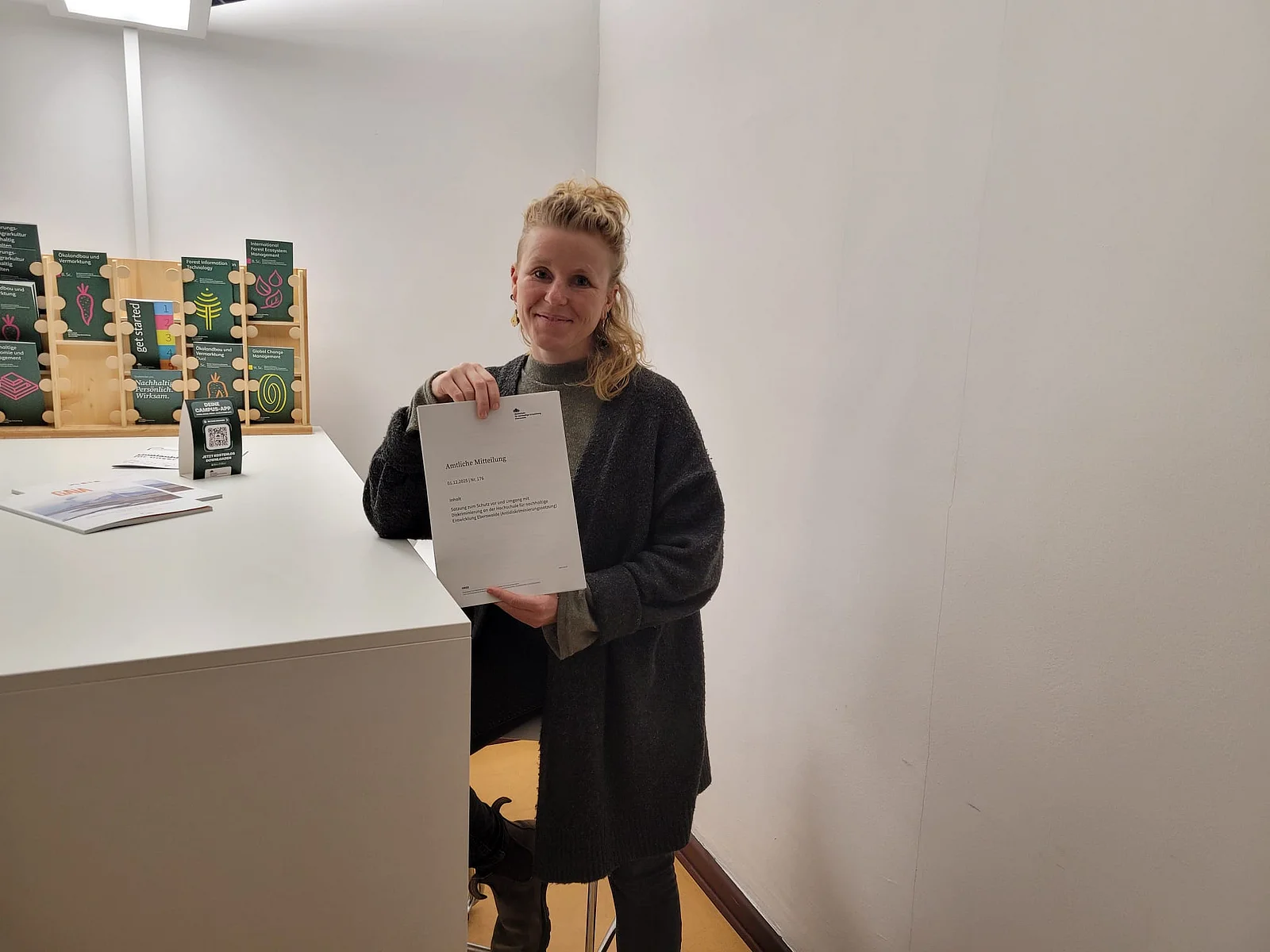
The anti-discrimination charter was developed primarily by Maria Seidel, who, as anti-discrimination officer, will continue to shape and promote the strategic development of anti-discrimination work at HNEE in the future. The aim is to permanently embed protection against discrimination in the university culture and to expand preventive structures in a sustainable manner. In close cooperation with existing decentralised contact points and officers – for example in student counselling, equality work, representation of disabled students and in student structures – a reliable, low-threshold support network is being continuously strengthened and further developed.
"With the new statutes, we are making it unmistakably clear that disrespectful, discriminatory or abusive behaviour has no place at our university. At the same time, we are creating transparent structures that offer guidance, protection and reliable support to those affected. It is crucial that all members and affiliates of HNEE know who they can turn to and that their concerns will be treated confidentially, professionally and with the necessary sensitivity," says Maria Seidel.
In future, cases of discrimination can be recorded and documented anonymously. This will create a reliable data basis for the first time, making developments visible and enabling the targeted development of preventive measures.
Those affected have the right to confidential counselling and can file a formal complaint independently of this. Responsibilities, procedures and possible measures in the event of violations are regulated in a transparent manner and in compliance with data protection regulations. The aim is to permanently anchor anti-discrimination as a lived attitude in everyday university life and to actively promote an open, safe and respectful university community.
Members and affiliates of HNEE can find further information in the internal area under CampusWorks and access the reporting form directly.