

Research at the BRI - biosphere reserves as real-world laboratories: crucial for research and transformation
From the perspective of sustainability research, biosphere reserves are particularly relevant research areas because they bring together two goals that are often in conflict: the protection of biodiversity and the strengthening of regional value creation. According to Prof. Dr. Carsten Mann, it is precisely this conflict of objectives between protection and use that makes them ideal locations for application-oriented sustainability and transformation research, which also fulfils a third objective: research and education for sustainable development.
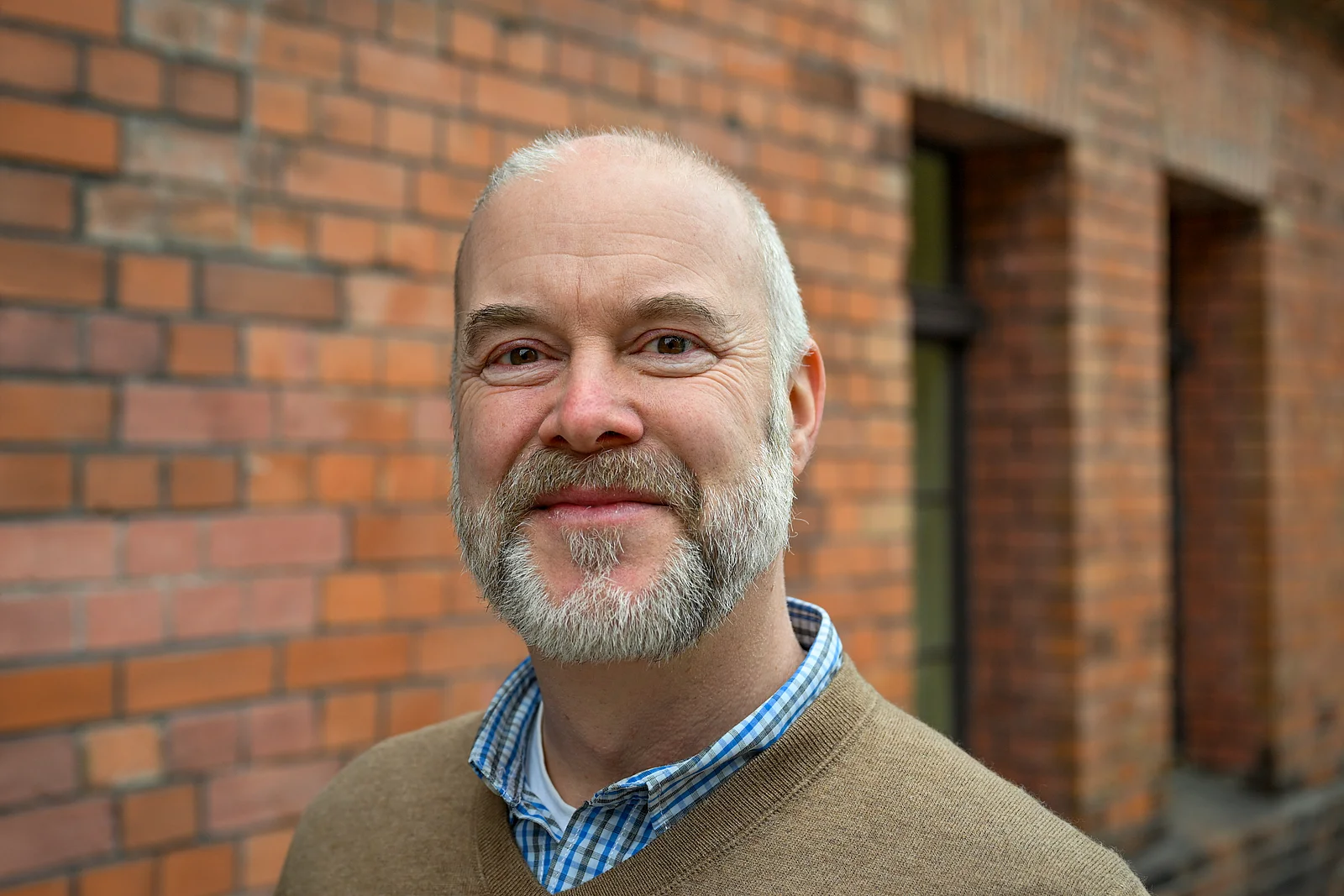
"Biosphere reserves can be understood as real-world laboratories," says Prof. Dr. Carsten Mann, Professor of Sustainable Forest Resource Economics at HNEE and Director General of the Biosphere Reserve Institute (BRI). These "protected areas" provide a space for testing new approaches, from governance models and cooperation to incentive and reward systems that more effectively support biodiversity conservation. At the same time, the question arises as to whether biosphere reserves can have an impact beyond their boundaries and serve as drivers of transformation.
A doctoral thesis on sustainability innovations in biosphere reserves – with case studies from the Schorfheide-Chorin region (near Berlin) and France (Fontainebleau-Gatinais, near Paris) – shows how the transfer between rural and urban areas can be successful. Initial potential lies in value chains that connect urban and rural areas. In addition to sustainable tourism, Carsten Mann sees further potential for agriculture and the marketing of regional products in the biosphere environment.
What role does the Biosphere Reserves Institute play in this? Mann describes the BRI as a platform and point of contact at the interface between science and practice – with expertise in interdisciplinary and transdisciplinary research, co-design and process support. Its UNESCO Category 2 status as the world's first institute focusing on biosphere reserves also significantly increases its international visibility: enquiries from project consortia, reserves worldwide and for publications are on the rise – at the same time, there is a growing need to strategically prioritise activities.
The BRI also pools expertise in teaching: the English-language Master's programme "BIOM – Biosphere Reserve Management International" qualifies future change agents for a field that requires systemic thinking, transdisciplinary methodological competence and international contextual sensitivity.
The full interview with Prof. Dr. Carsten Mann shows why biosphere reserves are considered research areas of the future – and how the BRI brings together research, practice and education in the UNESCO context.
Research at the BRI
Interview: "Biosphere reserves are real-world laboratories for sustainable development"
Why biosphere reserves are becoming key research areas – and what role the Biosphere Reserves Institute (BRI) plays in this. Prof. Dr Carsten Mann is Director General of the BRI and Professor of Sustainable Forest Resource Economics.
Question: Why are biosphere reserves particularly relevant research areas from a scientific perspective today?
Prof. Dr Carsten Mann:
Biosphere reserves are ideal for research – especially sustainability research – because they combine different tasks. On the one hand, they are about protecting biodiversity, and on the other, they are about strengthening local and regional value creation. In doing so, they highlight a classic conflict of objectives in natural resource management: the conflict between protection and use.
This is precisely where their scientific value lies. Biosphere reserves offer the opportunity to test new approaches to biodiversity conservation, value chains and governance models that productively address this tension and create added value for the region. This requires protected areas where new ideas can be tried out. Biosphere reserves can therefore be understood as real-world laboratories in which new processes and models are developed and tested in collaboration with local stakeholders.
Question: What developments are currently giving rise to new research questions?
Prof. Dr. Carsten Mann:
A key issue is biodiversity conservation. We can see that existing policies and strategies are not sufficient to halt biodiversity loss. That is why it is increasingly important to develop new approaches – for example, market models or reward systems that take greater account of biodiversity conservation.
Another focus is on governance issues: how can different stakeholders and policy sectors be coordinated in a biosphere reserve to promote sustainable development and initiate transformation processes? And beyond that, the question arises as to whether biosphere reserves can also have an impact beyond their boundaries – as starting points for social transformation.
Question: Does this contribute to insights that are relevant beyond biosphere reserves?
Prof. Dr Carsten Mann:
Yes. A doctoral thesis by Dr Caroline Dabard, for example, examined which sustainability innovations arise in biosphere reserves and how these impact urban areas. Among others, the Schorfheide-Chorin reserve near Berlin and Fontainebleau-Gatinais in France near Paris were considered.
The study shows that value chains in particular can create a link between rural and urban areas – for example, through regional products. At the same time, there is still great potential here. Apart from tourism, exchange has been limited so far. There is still room for improvement, especially in areas where sustainable value creation could provide impetus for development.
Question: Which transformation processes can be observed particularly well in biosphere reserves?
Prof. Dr Carsten Mann:
It is clear to see how different areas of land use and policy fields can be brought together – such as agriculture and forestry, rural development, transport and energy supply. The first crucial step is to get stakeholders talking to each other.
Formats such as biosphere reserve forums make it possible to develop shared visions for a region and agree on a target vision. This often works better in biosphere reserves than in other contexts because the area is manageable and stakeholders come together under one roof.
In addition, there are areas such as tourism or regional value creation labels, such as Spreewaldgurken (Spreewald gherkins) as an umbrella brand. Such models can preserve traditional forms of cultivation and strengthen the regional economy. Many stakeholders have now recognised the added value that regional value creation can have in times of increasing intensification.
Question: What role does the Biosphere Reserves Institute (BRI) play in this?
Prof. Dr. Carsten Mann:
The BRI sees itself as a platform and interface between science and practice. We receive enquiries from biosphere reserves about specific challenges and can translate these into research processes. In this way, we strengthen the link between scientific expertise and practical issues.
At the same time, we are internationally networked through the UNESCO network and are the point of contact for research and practical questions relating to biosphere reserves. In the past, such activities were often tied to individual persons. Today, they are institutionally bundled and the BRI serves as a point of contact, which significantly improves visibility and cooperation.
Another focus is our expertise in sustainability and transformation research. We work in an interdisciplinary and transdisciplinary manner, accompany transformation processes and develop solutions together with partners in the field. In this sense, the BRI is a mouthpiece, platform and centre of excellence all at once.
Question: What role do teaching and training play?
Prof. Dr. Carsten Mann:
With the English-language master's programme "BIOM – Biosphere Reserve Management International", we qualify students for precisely these interfaces. There, future change agents are trained who have interface skills, can manage biosphere reserves and accompany transformation processes.
Research, practice and teaching are closely intertwined. Research provides the basis for the content, while networks with practice partners enable very application-oriented studies and theses. Research also plays an important evaluation role: to examine what works and what does not.
Question: What significance does UNESCO Category 2 status have for the BRI?
Prof. Dr Carsten Mann:
The significance is only just becoming apparent. Until now, there has been no UNESCO Category 2 institute focusing on biosphere reserves. The status significantly increases international visibility. We are receiving significantly more enquiries from international project consortia, from biosphere reserves worldwide and for scientific contributions.
This is a great opportunity, but it also brings challenges. As a relatively small institution, we have to decide carefully which collaborations and activities we can pursue. This process is part of an ongoing development.
Question: What is the advantage of the BRI being based at a university?
Prof. Dr Carsten Mann:
HNEE has many years of experience in sustainability and transformation research, in working with different stakeholders and in transdisciplinary approaches. These skills are not new and extend beyond biosphere reserves. That is why the BRI is a very good fit for a university with this profile.
A clear profile is crucial here. Sustainable development is not a closed topic – in many areas, practical implementation is only just beginning. This is also reflected in the people who study and work here: many are highly motivated to help shape social change.
Question: What skills do students need if they want to work internationally later on?
Prof. Dr. Carsten Mann:
Biosphere reserves are socio-ecological systems with complex interactions between society and nature. Systemic thinking is therefore crucial. Students must learn to combine different disciplines, work in an interdisciplinary and transdisciplinary manner, and engage in practical processes.
Equally important is an international perspective – that is, a willingness to understand different cultural and institutional contexts.
In short: systemic thinking, methodological competence, openness and curiosity about other contexts.
Question: What prospects does academic qualification in this field open up?
Prof. Dr. Carsten Mann:
After completing a master's degree, the next step could be a doctorate, for example as part of the Brandenburg Doctoral College. Current research focuses, for example, on society's relationship with nature and the question of how a stronger connection to nature can support biodiversity conservation.
The profile is less tailored to a single professional field, but opens up many opportunities – for example, in protected area management, administration or ministries. There is a demand for people who understand complex interrelationships and can mediate between science, practice and politics.
Question: Which research questions will become more important in the future?
Prof. Dr Carsten Mann:
Above all, governance issues: how can stakeholders be involved, how can cooperation be structured and how can joint solutions be developed? Biosphere reserves offer the opportunity to test such processes as real-world laboratories and to learn from both successes and failures.
Question: What do you personally enjoy most about your work?
Prof. Dr Carsten Mann:
The international dimension. I find it personally very enriching to see HNEE in an international context and to strengthen its role there.
The interview was conducted by Ulrich Wessollek.