

HolzForschung Deutschland established: HNEE contributes its expertise to the forest-timber and timber products value chain
The newly established “HolzForschung Deutschland” network gives the diverse research landscape centred on wood as a resource a unified voice. The Eberswalde University for Sustainable Development (HNEE) is contributing to this with its expertise across the entire forest-to-wood value chain – from sustainable forest management to the development and manufacture of innovative wood-based products.
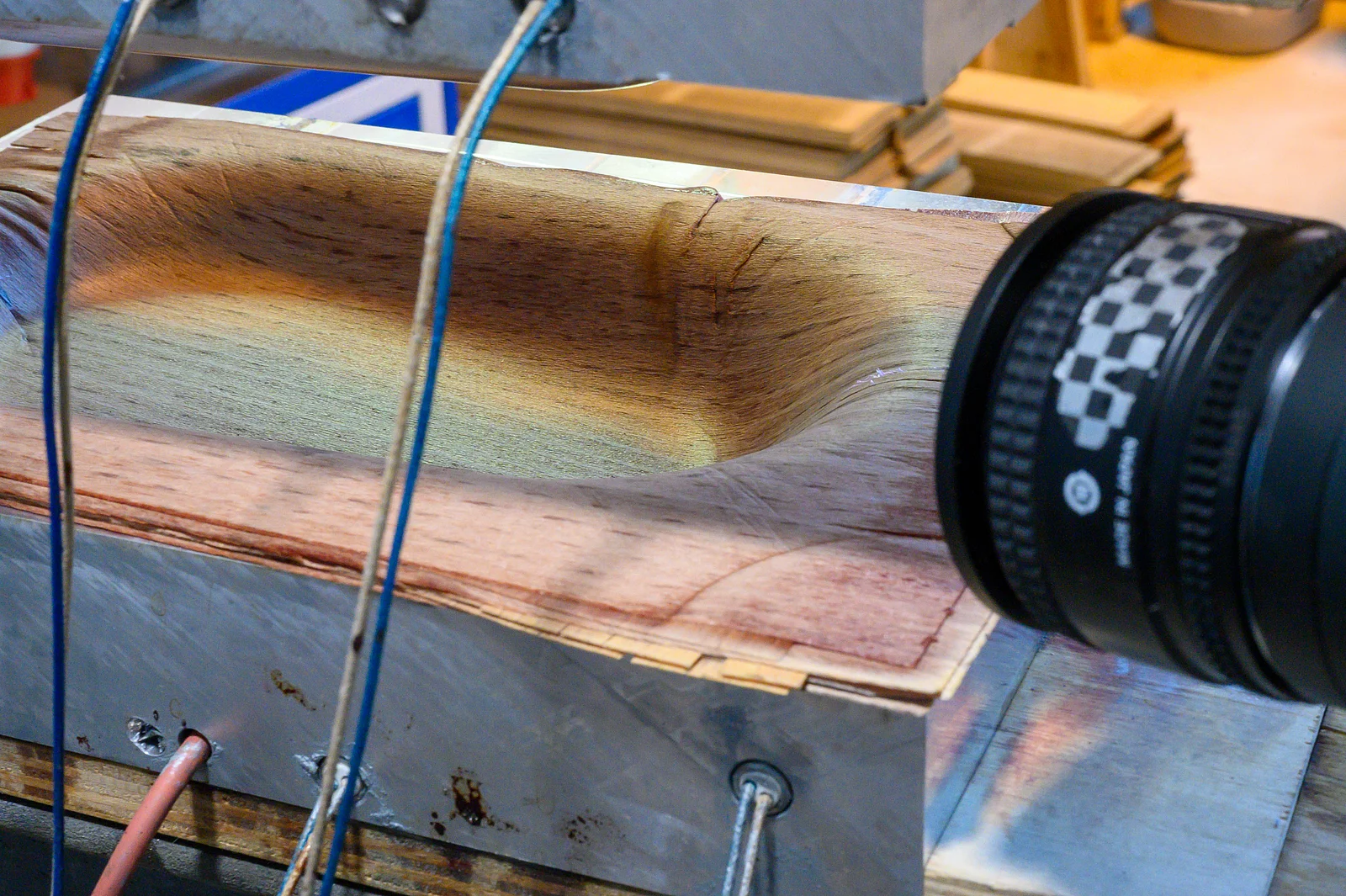
On 16 June 2026, the new research network “HolzForschung Deutschland” was founded in Braunschweig. Scientists from across Germany aim to use this network to strengthen collaboration in timber research, pool expertise and promote the transfer of knowledge to society, industry and politics. The impetus for this is the growing importance of timber as a resource: for climate protection, sustainable construction, the substitution of fossil raw materials and a circular bioeconomy.
For the Eberswalde University for Sustainable Development (HNEE), the establishment of the network sends an important signal. At the HNEE’s Forest Campus, issues relating to sustainable forest and timber use, regional timber resources, and processing and product development have been addressed in research and teaching for many years. In this way, the university brings together ecological, economic and technical perspectives on a raw material that plays a central role in the transition to a sustainable economy.
“Wood lies at the interface of many issues shaping the future: it is about stable forests to ensure regional raw material availability, new utilisation concepts and functioning markets. A network such as HolzForschung Deutschland can help to bring these perspectives closer together and raise the profile of timber research by speaking with a single voice,” says Prof. Dr Tobias Cremer, Professor of Forest Utilisation and the Timber Market at the HNEE.
At HNEE, Prof. Dr Tobias Cremer’s work focuses, amongst other things, on timber grading, timber logistics, the timber market and regional forest-timber value chains. His perspective focuses on the interface between timber supply and timber processing, i.e. where timber, as a renewable raw material, is produced, made available and transferred into utilisation systems. These issues are becoming increasingly important, particularly in light of climate change, changing forest structures and growing demands for sustainable resource use.
This perspective at the HNEE is supported by the work of Prof. Dr.-Ing. Ulrich Schwarz. His professorship in the design, construction and manufacture of timber products focuses on processing, product development and technical applications. His areas of research include, amongst others, quality assurance, adhesive technology, sawn timber production and processing, solid timber processing, product management and building physics measurement technology.
“Wood is far more than just a traditional material. Its versatility opens up huge potential – from resource-efficient construction through to new products and circular economy applications. This requires research that integrates an understanding of the material, technical feasibility and sustainable use,” says Prof. Dr.-Ing. Ulrich Schwarz.
The establishment of ‘HolzForschung Deutschland’ creates a platform that brings together different disciplines – from materials research, civil engineering and architecture to process engineering, chemical technologies and the arts. The HNEE sees this as an important opportunity to strengthen interdisciplinary exchange and to further develop the role of wood in a sustainable bioeconomy.
This is in line with the HNEE’s self-image as a university that not only researches sustainable development but also puts it into practice through teaching, knowledge transfer and real-world application. The interconnection of forests, timber, technology and societal transformation is a key component of this – regionally rooted, scientifically sound and with an eye to the challenges of the coming years.