

Prof. Dr. Heike Molitor
Professorship of Environmental Education and Education for Sustainable Development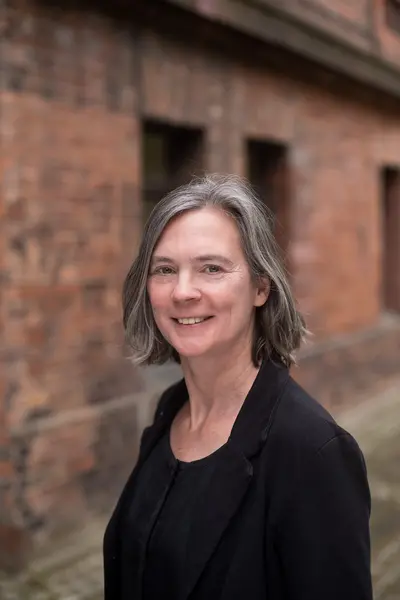
| Heike.Molitor(at)hnee.de | |
| Phone | +49 3334 657-336 |
| Location | City Campus | Schicklerstrasse 5 | 16225 Eberswalde |
| Room | 01.302.1 |
| Office Hours | by appointment |
| Website | Head of Degree Programme 'Education - Sustainability - Transformation' |
Responsibilities
- Programme Director for the part-time Master's programme in Education – Sustainability – Transformation (M.A.)
- Subject Advisor for the Master's programme in Regional Development and Nature Conservation (M.Sc.)
Teaching
- Introduction to Education for Sustainable Development (M.A. Education – Sustainability – Transformation)
- Introduction to Sustainable Development (M.A. Education – Sustainability – Transformation)
- Sustainability Communication (M.Sc. Sustainable Regional Development)
- Project work (M.Sc. Sustainable Regional Development)
- With nature for people – Introduction to sustainable development (B.Sc.)
- Learning to teach sustainability (M.Sc. Sustainable Regional Development)
- Non-formal environmental education/interpretation (M.Sc. Sustainable Regional Development)
- Methods and Concepts of Education for Sustainable Development (M.Sc. Sustainable Regional Development)
- Adult Education in the Context of Sustainable Development (M.Sc. Sustainable Regional Development)
- Education for Sustainable Development in the Context of Protected Area Management (B.Sc. Landscape Use and Nature Conservation)
- Education for sustainable development
- Environmental education
- Global learning
- Nature experience areas
- Sustainable development
- Health promotion
Supporting young African scientists in planning and implementing research projects on sustainable development using the example of UNESCO biosphere reserves
As part of a project funded by the Federal Agency for Nature Conservation (BfN) and in close cooperation with Rhodes University in South Africa, a transnational research and support network is being established in the context of UNESCO biosphere reserves (BRs) in sub-Saharan Africa.
The aim is to integrate science more closely into the practice of biosphere reserves and to promote transdisciplinary exchange through capacity building, networking and joint learning.
Building on existing partnerships between HNEE and the Biosphere Reserves Institute (BRI), young scientists are being supported, together with practitioners from biosphere reserves, in developing transdisciplinary research skills and further advancing the UNESCO concept of biosphere reserves in practice. Key findings on the need for action and challenges in UNESCO biosphere reserves in sub-Saharan Africa will be published in a discussion paper.
Brandenburg-wide ESD service centre – supported by the Brandenburg ESD Quality Development Working Group
Whether in the new framework curriculum with the interdisciplinary competence development ‘Sustainable Development / Learning in Global Contexts’, in educational projects and at public events, in companies, science, administration, politics and civil society - education for sustainable development is becoming increasingly important in the state of Brandenburg. In order to better support this commitment in the future, a state-wide service centre for education for sustainable development (ESD) was established in Brandenburg on 1 April 2019. It is intended to serve as a central point of contact in this field and to help network stakeholders, train and advise education providers, and promote awareness of the topic among the general public.
Sustainability at Brandenburg universities
A coordination office for higher education in sustainable development has been established at HNEE. This highlights the commitment to sustainability of Brandenburg's universities. The coordination office supports Brandenburg's state universities in their university-specific development of sustainability in teaching, research, transfer and governance.
Model project: Intercultural communication in higher education for sustainable development
Intercultural communication skills in the context of higher education for sustainable development are of fundamental importance in enabling inclusive and equitable teaching that reaches all people, as envisaged in SDG 4.7. Raising awareness and recognising cultural differences enables students to improve understanding and make sustainability communication more effective.
InNoWest – Just do it! Working together for sustainability and digitalisation in north-west Brandenburg
The joint project aims to promote innovation in north-west Brandenburg and brings together two major transformation challenges: sustainable development and digitalisation. The consortium supports the sustainable development of the region with transfer projects focusing on the topics of ‘user-centred digitalisation’, ‘sustainable restructuring’ and ‘shaping society’.
1Future - Joined For Sustainability
The 1Future project: jOiNEd For sUsTainability - bUilding climate REsilient communities in Western Balkan and EU aims to raise awareness of climate and sustainability issues among higher education institutions (HEIs) in the Western Balkans, support them in their climate protection measures, and integrate (higher education for) sustainable development and resilience into teaching and research.
Formative evaluation of communication and public relations work in the WIPs-DE II project
The nationwide wild plant conservation project ‘WIPs-De II’ combines various botanical species conservation measures in a network of five botanical gardens in Berlin, Mainz, Osnabrück, Potsdam and Regensburg.
The HNEE's task is to evaluate activities in the field of education (e.g. guided tours of botanical gardens, further training for species conservation ambassadors) and in the field of public relations (e.g. surveys at public displays of wild plants).
Formative evaluation of communication and public relations work in the ‘Urbanity and Diversity’ project
‘Urbanity & Diversity’ (UundV) is an innovative, wide-ranging environmental education and nature conservation project. Citizens from as many different social strata as possible from three urban regions in four federal states are actively involved in nature conservation measures. Through this action-oriented approach, participants gain a deeper understanding of the topics of ‘biological diversity’ and ‘species and biotope protection’. The target group is primarily families with children, allotment gardeners, and garden and balcony owners.
In this joint project, 10 to 30 regionally endangered wild plant species are grown from regional wild seeds, mostly in large quantities, at three different locations throughout Germany, such as the IGA grounds in Berlin. Broad-based and target group-specific communication strategies and a comprehensive media campaign will be used to recruit private individuals who will professionally propagate the young plants in their gardens. The University of Applied Sciences for Sustainable Development is responsible for evaluating the communication and public relations measures and thus accompanying and evaluating the process.
Evaluation of Saxony's State Strategy on Education for Sustainable Development
With the LS BNE, the state government provided guidance and impetus to place education even more strongly in the context of sustainable development. The LS BNE contains goals for
six areas of education (early childhood education, general education schools, vocational education, higher education, non-formal and informal learning, local authorities). The implementation of the
strategy and the measures it contains is monitored by the overall coordinator for the implementation of the LS BNE. He reports to the State Working Group on ESD
on the status of implementation. Measures and new ideas are discussed as part of the participatory implementation process (e.g. advisory groups).
The aim of the evaluation is to find out whether and to what extent the goals of the LS BNE have been achieved. The implementation process to date will be examined and will form the basis for the continuation of the Saxony State Strategy for ESD for the years 2024 to 2030.
Evaluation Course Development
The United Nations Sustainable Development Goal (SDG) 4 calls on UN member states to ‘ensure inclusive and equitable quality education and promote lifelong learning opportunities for all’. The role of learning is being redefined. Learners are developing critical reflective skills. The Working Group on Evaluation and Education for Sustainable Development was launched by the ESD Expert Net in 2019 and aims to foster meaningful discourse on the role of evaluation in the context of collaborative learning to achieve SDG 4.7 through research, collaboration and a capacity-building programme for evaluation and ESD. The overall goal of this working group is to contribute to a ‘change in worldview’ in the field of evaluation and education – from a culture of accountability to a culture of collaborative learning.
Researchers from various universities collaborated on the project (Rhodes University, South Africa; University of Veracruz, Mexico; Leuphana University, Germany; University of Potsdam, Germany; Eberswalde University for Sustainable Development, Germany).
As part of the project, an English-language course format for a summer school on ESD & evaluation was developed. This took place under the title ‘Re-generative ESD and Evaluation for the Future We Want’ from 21 July to 20 August 2021. The German-language teaching materials available here were developed from the English-language materials.
Development and implementation of the continuing education programme ‘Education – Sustainability – Transformation’
Education for sustainable development (ESD) is on the education policy agenda. The National Action Plan for ESD, which implements the Global Action Programme on ESD, assigns a special role to continuing education. The Eberswalde University for Sustainable Development has a high profile thanks to its specific profile and its status as a flagship university.
Future Camp – Subproject 3 ‘Sustainable Studying’
The aim of the sub-project ‘Sustainable Studying’ is to give prospective students an insight into the content and career opportunities of various sustainable degree programmes within the framework of 4-day, free work camps held at HNEE.
Various departments at HNEE are cooperating on this project in order to offer modules covering a wide range of topics: nature conservation, municipal management, sustainable construction
The project is being implemented in collaboration with project partners Angermünder Bildungswerk e.V. and the Frankfurt (Oder) Chamber of Crafts.
Third-party funding: The Future Camp project is funded by the Federal Ministry for the Environment, Nature Conservation and Nuclear Safety and the European Social Fund as part of the ESF federal programme ‘Promoting vocational training for sustainable development. Green key competences for climate- and resource-friendly action (BBNE)’.
Managing climate adaptation! Continuing education for educators, nature conservation experts, environmental, sustainability, and climate protection officers in local governments, and multipliers to become regional climate adaptation managers.
Building on experience gained from KLIMZUG-NORD and based on the cooperative relationships and expertise developed in the field of climate research and (further) education sector, a modular continuing education program for regional climate adaptation managers and providers of ESD (education for sustainable development) concepts in the context of climate change adaptation is to be designed and implemented. The model course is being developed in cooperation with a qualification circle of practitioners and experts and will be tested and evaluated in the pilot regions of Berlin-Brandenburg and Hamburg-Lüneburg. The course aims to promote
factual knowledge: current findings on the connection between climate impacts and the need for regulation in various fields of action in the pilot regions,
Methodological and communication skills: knowledge of “adaptation skills” and the appropriate preparation of suitable content and topics; target group-appropriate communication and teaching, learning/teaching settings, and didactic formats and building blocks for promoting “adaptation skills”
Action and design competence: knowledge of options for action and political contexts, political and planning co-design requirements, and opportunities for participation.
Third-party funding: Federal Ministry for the Environment, Nature Conservation, and Nuclear Safety (BMUB)
Further training for providers of education for sustainable development (three out of seven)
Anyone who wants to work successfully in education for sustainable development needs to have a large toolbox at their disposal. And they must be able to prove that they know their stuff!
Specialised knowledge of sustainability, sound application of methodology and didactics, and confident presentation skills in front of different target groups are essential tools. Before an idea can become a booked ESD programme, you also have to prove yourself in advertising. And this is where it is becoming increasingly important to be able to present the quality of your own programmes transparently!
Module 1 — Pedagogical foundations of ESD
Module 2 — Developing an educational concept according to ESD criteria
Module 3 — Presentation of educational concepts
Further training for providers of education for sustainable development (three out of seven) for the State of Berlin (Senate Department for Urban Development and the Environment)
Environmental education institutions in Berlin make a major contribution to raising public awareness of nature conservation and species protection issues. The aim is to improve effectiveness through a participatory framework for the qualitative development of environmental education towards education for sustainable urban development. The aim is to enable the development of ESD programmes for institutions in the state of Berlin in the context of the World Action Programme ESD through further training modules.
Commissioned by: State of Berlin, represented by the Senate Department for Urban Development and the Environment
Scientific support for the E+E project ‘Nature experience areas in large cities using Berlin as an example’
The aim of the accompanying scientific study is to systematically consolidate existing approaches to green spaces within the framework of target group-specific guidelines and, based on the project experience gained through participation in the main project, to provide a procedure for the planning, implementation, use and maintenance of green spaces that can be transferred to other large cities. This will facilitate the future establishment and dissemination of the concept throughout Germany.
Urban nature has an impact on human health. Nature experience spaces play an important role here.
Third-party funding: Federal Agency for Nature Conservation (BfN) through the Ministry of the Environment (BMUB)
Research professorship with a focus on transfer
Research Professorship
Professorship of Environmental Education and Education for Sustainable Development
Representative of the Chair of Environmental Education/Education for Sustainable Development at the Department of Landscape Use and Nature Conservation at HNE Eberswalde
Independent research associate at the Centre for Applied Health Sciences at Leuphana University Lüneburg; establishment of the “Environment-Technology-Health” section under Prof. Dr. Brigitte Urban
Lecturer at the University of Lüneburg and the University of the Federal Armed Forces in Hamburg
Education and quality management at the Adult Education Centre (VHS) in the Lüneburg region (including two periods of parental leave totalling 13 months), programme area manager for 'Health, Environment, Communication'
Freelance work as an environmental consultant, Berlin
Practical, interdisciplinary additional training as a mediator (ZWW at the University of Lüneburg and Brückenschlag e.V.)
Research assistant at the Institute for Environmental Communication (InfU) at the University of Lüneburg under Prof. Dr. Gerd Michelsen; PhD (01.02) in the research project "The significance of different contexts of environmental education for
Sustainability awareness with the theme: Sustainable development from a global perspective – local initiatives as opportunities for lifelong learning
Lecturer at the Academy for Economics and Social Sciences in Bremen and at the Adult Education Centre in Lüneburg
Studied applied cultural studies, fields of study: ecology and environmental education, economic and social geography; master's thesis (07.97) on the topic of "Environmental education in India. Part of the university project Environmental education in other countries and
Continents (funded by the Federal Ministry of Education and Research)
Worked as a medical-technical assistant at the University Medical Centre Hamburg-Eppendorf (Hamburg) in the field of basic leukaemia research
Training as an agricultural technical assistant at the Institute for Applied Botany at the University of Hamburg
Member of the Executive Board of the Brandenburg Adult Education Association as representative of academia
Member of the steering group of the Brandenburg Sustainability Platform
Member of the Expert Advisory Council for Nature Conservation and Landscape Management, Berlin, for the 18th legislative period
Member of the expert group (AG) for the ‘Haus der kleinen Forscher’ (Little Scientists' House) foundation for the development of ‘Target dimensions for education for sustainable development in elementary and primary education’
Member of the Higher Education Forum of the National Platform for Education for Sustainable Development, chaired by State Secretary Christian Luft (Federal Ministry of Education and Research)
Member of the German Society for Educational Science (DGfE)
Member of the project advisory board of the EUROPARC Germany project ANNIKA ‘Actors from national natural landscapes in international exchange of expertise’
Member of the project advisory board for the NABU and AWO project ‘ESD in voluntary services’
Member of the advisory board of I.N.A Lieberose Heide (E+E project)
Member of the advisory board for the R&D project (UBA): ‘Decision-making basis for improving soil awareness’
Member of the scientific advisory board of the DBU project ‘Natureum - Coastal Worlds’
Member of the Round Table on the National Implementation of the UN Decade of Education for Sustainable Development, Higher Education Working Group
Member of the project working group in the E+E project ‘Nature experience areas in large cities using Berlin as an example’
Member of the scientific advisory board of the DBU project ‘Global learning at local learning locations’
Member of the Sustainability Advisory Board of the State of Brandenburg
Member of the Association of University Teachers (hlb), Bonn
Member of 23grad (formerly Kunz) – Alumni initiative of the University of Lüneburg
Member of the Working Group for Nature and Environmental Education (ANU)
Member of BUND
Molitor, H., Luley, H. & Weimar, L.C. 2025. BNE im Spannungsfeld von Hochschulbildung und beruflicher Praxis – Schlüsselkompetenzen für Nachhaltigkeit und BNE als Profession. In: Costa, J., Kminek, H.; Ruckelshauß, T., Singer-Brodowski, M. & Weselek, J. (Hrsg.): Bildung für nachhaltige Entwicklung: Kontroversen und Debatten. Opladen • Berlin • Toronto, Online verfügbar unter: https://doi.org/10.2307/jj.27775877.7, S. 85-108.
Krah, J., Bruns, A. & Molitor, H. (im Erscheinen). Verankerung von Hochschulbildung für nachhaltige Entwicklung als Innovationsprozess im Bildungsprozessmanagement auf der Ebene eines Bundeslandes. In: Schmidberger, I., Stricker, T., Wippermann, S. & Müller, U.: Bildungsmanagement und Leadership für Bildung für nachhaltige Entwicklung und Klimabildung in Hochschule und Weiterbildung. Konzeptionelle Beiträge und empirische Befunde. Wiesbaden.
Molitor, H. & Friede, C. (im Erscheinen). Städtische Naturerfahrungsräume als informelle außerschulische Lernorte für Stadtkinder. In: Wenzel, A. & Schmäing, T. (Hrsg.): Außerschulisches Lernen in der naturwissenschaftlichen Bildung - Eine multiperspektive Betrachtung. Wiesbaden.
Molitor, H.; Fischer, L.; Greischel, E.; Holzgreve, M.; Krah, J. & Rottig, F. 2025. Successful Integration of Transfer-oriented Higher Education for Sustainable Development into Academic Teaching: A Case Study of a Future Festival. In: Albanian Journal of Economy and Business. Scientific Journal of the Faculty of Economy. Issue: Climate and Sustainability, 1(1), p.149-165. Published: March 2025
Nölting, B.; Kopfmüller, J.; Zimmermann, A.B.; Bernert, P.; Barth, M.; Becker, S.; Fischer, D.; Molitor, H. Pechlaner, H.; Schneider, F.; Schweizer, P.-J. E.; Stamm, C.; Wäger, P.; Wilhelm, R. (2025). Wissenschaftsorganisationen als Impulsgeber einer Nachhaltigkeitstransformation. In: GAIA 34/2(2025): 83– 87. https://doi.org/10.14512/gaia.34.2.4Gaia 2025
Bantle, C.; Twarok, J. & Molitor, H. 2024. Motivation und Erwerb von Wissen und praktischen Fertigkeiten im Citizen-Scince-Projekt "Urbanität und Vielfalt": Ergebnisse einer Teilnehmerbefragung. Natur und Landschaft.
Zeitschrift für Naturschutz und Landschaftspflege. 99 Jhg. (2), S. 59-65.
Molitor, H. 2024. Naturerfahrungsräume als Spielorte für Stadtkinder und als Lebensraum für Pflanzen und Tiere in der Stadt — Möglichkeiten für den Umgang mit Umbrüchen in der Stadtentwicklung.
In: Kminek, H.; Singer-Brodowski, M. & Holz, V. (Hrsg.): Bildung für eine nachhaltige Entwicklung im Umbruch? Beiträge zur Theorieentwicklung angesichts ökologischer, gesellschaftlicher und individueller Umbrüche. Opladen • Berlin • Toronto, Online verfügbar unter: https://doi.org/10.3224/84742736, S. 143-162.
Friede, C., Martens, D. & Molitor, H. 2024. Bedingungen für städtische Naturerfahrungsräume als Freiraum für Kinderspiel.
In: Braches-Chyrek, R., Ellis, J.M., Röhner, C. & Sünker, H. (Hrsg.): Handbuch Kindheit, Ökologie und Nachhaltigkeit. Opladen, Berlin, Toronto: Budrich.
Krah, J.; Molitor, H.; Reimann, J.; Bellina, L. 2023. Rahmenkonzept für die Weiterbildung „Zukunftsfähige Lehre für eine nachhaltige Entwicklung“.
Arbeitsgemeinschaft für Nachhaltigkeit an Brandenburger Hochschulen (Hrsg.), Eberswalde. https://doi.org/10.57741/opus4-394
Molitor, H.; Krah, J. & Bruns, A. 2023. Gelingende Verankerung von Hochschulbildung für nachhaltige Entwicklung in den Curricula.
Zeitschrift für Hochschulentwicklung. 18 (4), 21–40. https://doi.org/10.21240/zfhe/18-04/02
Molitor, H. 2023. Klimaschutz in der Stadt. Naturerfahrungsräume am Beispiel Berlin. sozialmagazin 7-8. S. 85-90.
Molitor, H. 2023. Umweltbildung. In: Arnold, R.; Nuissl; Schrader, J.: Wörterbuch Erwachsenen- und Weiterbildung. Bad Heilbronn, S. 410-411.
Molitor, H. 2023. Nachhaltigkeit und freies Spiel als informelle Bildung in Naturerfahrungsräumen.
In: Liedholz, Y. / Verch, J. (Hg.): Nachhaltigkeit und Soziale Arbeit. Grundlagen, Bildungsverständnisse, Praxisfelder. Opladen, Berlin, Toronto: Budrich. S. 135- 146.
Wehrsig, S. & Molitor, H. 2023. Klimakrise und Veranstaltungsplanung. Lessons Learned und praktische Tipps im Nachgang einer Fortbildung. In: forum erwachsenenbildung. Die evangelische Zeitschrift für Bildung im Lebenslauf. 4/2023. S. 10-11.
Molitor, H.; Krah, J.; Reimann, J.; Bellina, L.; Bruns, A. 2022. Zukunftsfähige Curricula gestalten - Eine Handreichung zur curricularen Verankerung von Hochschulbildung für nachhaltige Entwicklung.
Arbeitsgemeinschaft für Nachhaltigkeit an Brandenburger Hochschulen (Hrsg.), Eberswalde. https://doi.org/10.57741/opus4-388
Martens, D.; Öztürk, Ö.; Rindt, L.; Twarok, J.; Steinhardt, U. & Molitor, H. 2022. Supporting biodiversity: Structures of participatory actions in urban green spaces.
Frontiers In Sustainable Cities, 12 September 2022. Sec. Urban Greening. DOI: https://doi.org/10.3389/frsc.2022.952790 . Published: 12 Sep 2022
Lorenz, T.; Gerster, L.; Wodzinowski, E.; Wartenberg, A.; Martetschläger, L.; Molitor, H.; Cremer, T. & Bloch, R. 2022.
Innovative Teaching and Learning Formats for the Implementation of Agroforestry Systems — An Impact Analysis after Five Years of Experience with the Real-World Laboratory “Ackerbaum”. Forest 2022, 13(7), 1064. DOI: https://doi.org/10.3390/f13071064 . Published: 6 July 2022
Molitor, H. 2022: Wenn Stadtkinder Zeit haben: Naturerfahrungen im freien Spiel. In: Zeitpolitisches Magazin. Juli 2022, 19 (40), S. 29-31. online abrufbar unter: http://zeitpolitik.org/zeitpolitikmagazin.
Molitor, H. 2022. Naturerfahrungsräume als pädagogische Möglichkeitsräume in der Natur. deutsche jugend. Zeitschrift für die Jugendarbeit 2-2022. 70 Jg., S. 59-67.
Molitor, H., Holzgreve, M., Krah, J., Friede, C., Paulokat, K. (2022): Online-Camps zur Studienorientierung am Beispiels des FutureCamp-Projektes an der Hochschule für nachhaltige Entwicklung Eberswalde.
In: Siegemund, A. et al.: Sammelband „Bildung für nachhaltige Entwicklung und Digitalisierung als Beitrag für eine zukunftsorientierte Hochschulbildung“. Springer Verlag. Berlin, Heidelberg.
Krah, J.; Reimann, J.; Molitor, H. 2022. Curriculare Verankerung von Nachhaltigkeit in Brandenburger Studiengängen. In: Leal, W.: Nachhaltigkeit in den Sozialwissenschaften. Springer Verlag. Berlin, S. 127-152.
Molitor, H.; Martens, D. 2021. Kinderspiel und Stadtnatur – Emprisch ermittelte Naturerfahrungsdimensionen in Naturerfahrungsräumen. umweltpsychologie 25, 2, S. 38–63.
Krah, J.; Reimann, J. & Molitor, H. 2021. Sustainability in Brandenburg Study Programs. Perspectives for Anchoring Sustainability in Higher Education Curricula.
Sustainability 2021, 13, 3958. DOI: https://doi.org/10.3390/su13073958
Molitor, H.; Peters, J.; Martens, D.; Pretzsch, M.; Friede, C.; Heimann, J.; Wilitzki, A. (Hrsg.) 2020. Naturerfahrungsräume in Großstädten. Flächenentwicklung - Kinderspiel - rechtliche Rahmenbedingungen.
Bundesamt für Naturschutz (BfN) (Hg.). BfN-Skripten 560. Bonn. Online verfügbar unter: https://www.bfn.de/publikationen/bfn-schriften/bfn-schriften-560-naturerfahrungsraeume-grossstaedten
Pretzsch, M.; Heimann, J.; Martens, D.; Friede, C.; Wilitzki, A., Bloem-Trei, B.; Peters, J.; Molitor, H. 2020: Leitfaden Naturerfahrungsräume in Großstädten – Eine Arbeitshilfe für Vorbereitung, Planung, Einrichtung und Betrieb.
Bundesamtes für Naturschutz (Hrsg.). (240 S.). Online verfügbar unter: https://www.bfn.de/publikationen/broschuere/leitfaden-naturerfahrungsraeume-grossstaedten
Martens, D.; Molitor, H. 2020. Play in appropriate natural environments to support child development. (Fomento del desarrollo infantil mediante el juego en entornos naturales apropiados), PsyEcology 11:3: S. 363-396.
DOI: 10.1080/21711976.2020.1782040 . Published: 10 Sep 2020
Nölting, B.; Molitor, H.; Reimann, J.; Skroblin, J.-H. & Dembski, N. 2020: Transfer for Sustainable Development at Higher Education Institutions - Untapped Potential for Education for Sustainable Development and Societal Transformation.
April 2020, Sustainability 12(7): 2925. DOI: https://doi.org/10.3390/su12072925
Friede, C.; Martens, D.; Heimann, J.; Heimann, Pretzsch, M.; Bloem-Trei, B.; Peters, J.; Molitor, H. 2020: Naturerfahrungsräume in Großstädten – Eine Möglichkeit für Gesundheitsförderung in der Nachbarschaft.
In: Böhm, K., Bräunling, S., Geene, R.; Köckler, H. (Hrsg.) Gesundheit als gesamtgesellschaftliche Aufgabe. Das Konzept Health in All Policies und seine Umsetzung in Deutschland. Wiesbaden. S. 369-376.
Ibisch, P.L.; Molitor, H.; Conrad, A.; Walk, H., Mihotovic, V.; Geyer, J. 2019. Humans in the Global Ecosytem. An Introduction to Sustainable Development.
Oekom Verlag, München.
Forkel-Schubert, J.; Molitor, H. 2019. Es geht nicht von heute auf morgen. Bildung für nachhaltige Entwicklung. In: politische ökologie. 37. Jhg. Oktober, S. 218-223.
Kauertz, A.; Molitor, H.; Saffran, A.; Schubert, S.; Singer-Brodowski, M.; Ulber, D.; Verch, J. 2019. Zieldimensionen einer Bildung für nachhaltige Entwicklung für Kinder, pädagogische Fachkräfte und Leitungskräfte.
In: Stiftung Haus der kleinen Forscher (Hrsg.): Frühe Bildung für nachhaltige Entwicklung - Ziele und Gelingensbedingungen. Wissenschaftliche Untersuchungen zur Arbeit der Stiftung "Haus der kleinen Forscher". Band 12. Verlag Barbara Budrich, Opladen, Berlin, Toronto, S. 48-119.
Molitor, H. 2019. Bildung für nachhaltige Entwicklung als Ansatz ländlicher Jugendarbeit.
In: Faulde, J.; Grünhäuser, F.; Schulte-Döinghaus, S. (Hrsg.): Jugendarbeit in ländlichen Regionen. Regionalentwicklung als Chance für ein neues Profil. Beltz Juventa, Weinheim Basel. S. 156-163.
Molitor, H. 2019. Natur- und Umweltbildung in Freizeit und Urlaub. In: Rein, H.; Schuler, A.: Naturtourismus. UVK Verlag, München. S. 171-180.
Molitor, H.; Ibisch, P.L. 2019. Sustainability as a reaction: what has been happening until now.
In: Ibisch, P.L.; Molitor, H.; Conrad, A.; Walk, H.; Mihotovic, V.; Geyer, J. (Ed.): Humans in the Global Ecosytem. An Introduction to Sustainable Development. Oekom verlag, München. S. 35-58.
Molitor, H.; 2019. What motivates people to sustainability-oriented action?
In: Ibisch, P.L.; Molitor, H.; Conrad, A.; Walk, H.; Mihotovic, V.; Geyer, J. (Hrsg.): Humans in the Global Ecosytem. An Introduction to Sustainable Development. Oekom Verlag, München. S. 111-126.
Molitor, H.; 2019. Education for sustainable development. In: Ibisch, P.L.; Molitor, H.; Conrad, A.; Walk, H.; Mihotovic, V.; Geyer, J. (Hrsg.): Humans in the Global Ecosytem. An Introduction to Sustainable Development. Oekom Verlag, München. S. 333-350.
Molitor, H. 2019. Zieldimensionen für Multiplikatorinnen und Multiplikatoren früher MINT-Bildung aus Sicht einer Bildung für nachhaltige Entwicklung.
In: Stiftung Haus der kleinen Forscher (Hrsg.): Zieldimensionen für Multiplikatorinnen und Multiplikatoren früher MINT-Bildung. Wissenschaftliche Untersuchungen zur Arbeit der Stiftung "Haus der kleinen Forscher". Band 11. Verlag Barbara Budrich, Opladen, Berlin, Toronto, S. 86-97.
Ibisch, P.L.; Molitor, H.; Conrad, A.; Walk, H., Mihotovic, V.; Geyer, J. 2018. Der Mensch im globalen Ökosystem. Eine Einführung in die nachhaltige Entwicklung.
Oekom Verlag, München.
Molitor, H. 2018. Natur schützen und erfahren. Naturerfahrungsräume als neues Format im urbanen Raum. In: Geographische Rundschau 10-2018, S. 16-21.
Molitor, H.; Ibisch, P.L. 2018. Nachhaltigkeit als Reaktion: Was bisher geschah.
In: Ibisch, P.L.; Molitor, H.; Conrad, A.; Walk, H.; Mihotovic, V.; Geyer, J. (Hrsg.): Der Mensch im globalen Ökosystem. Eine Einführung in die nachhaltige Entwicklung. Oekom Verlag, München. S. 35-58.
Martens, D.; Friede, C.; Heimann, J.; Molitor, H. 2018. Kinderspiel in der Natur - (wie) können urbane Naturerfahrungsräume zur Bildung beitragen?.
In: Jung, N.; Molitor, H.; Schilling, A. (Hrsg.): Was Menschen bildet. Bildungskritische Orientierungen für gutes Leben. Eberswalder Beiträge zu Bildung und Nachhaltigkeit, Band 5. Budrich UniPress, Opladen, Berlin, Toronto, S. 193-209.
Molitor, H. 2018. Der Reisigbesen als Bildungsanlass für nachhaltige Entwicklung.
In: Jung, N.; Molitor, H.; Schilling, A. (Hrsg.): Was Menschen bildet. Bildungskritische Orientierungen für gutes Leben. Eberswalder Beiträge zu Bildung und Nachhaltigkeit, Band 5. Budrich UniPress, Opladen, Berlin, Toronto, S. 265-273.
Jung, N.; Molitor, H.; Schilling, A. (Hrsg.) 2018. Was Menschen bildet. Bildungskritische Orientierungen für gutes Leben.
Eberswalder Beiträge zu Bildung und Nachhaltigkeit, Band 5. Budrich UniPress, Opladen, Berlin, Farmington Hills.
Molitor, H.; 2018. Was bewegt Menschen zum nachhaltigkeitsorientierten Handeln?
In: Ibisch, P.L.; Molitor, H.; Conrad, A.; Walk, H.; Mihotovic, V.; Geyer, J. (Hrsg.): Der Mensch im globalen Ökosystem. Eine Einführung in die nachhaltige Entwicklung. Oekom Verlag, München. S. 111-126.
Martens, D.; Friede, C.;Molitor, M. 2018. Nature Experience Areas — Rediscovering the Potential of Nature for children’s Development. In: Cutter-Mackenzie, A., Malone, K., Hacking, E.B. (Eds.): Research Handbook on Childhoodnature. Cham: Springer.
DOI: https://doi.org/10.1007/978-3-319-51949-4_79-1
Molitor, H.; 2018. Bildung für nachhaltige Entwicklung.
In: Ibisch, P.L.; Molitor, H.; Conrad, A.; Walk, H.; Mihotovic, V.; Geyer, J. (Hrsg.): Der Mensch im globalen Ökosystem. Eine Einführung in die nachhaltige Entwicklung. Oekom Verlag, München. S. 333-350.
Nölting, B.; Demski, N.; Kräusche, K.; Lehmann, K.; Molitor, H.; Pape, J.; Pfriem, A.; Reimann, J.; Skroblin, J.-H. & Walk, H. 2018´. Transfer für nachhaltige Entwicklung an Hochschulen (Beta-Version).
BMBF-Projekt “Nachhaltigkeit an Hochschulen: entwickeln - vernetzen - berichten (HOCHN)”. Hochschule für nachhaltige Entwicklung Eberswalde (Hrsg.), Eberswalde.
Bloem-Trei, B.; Friede, C.; Heimann, J.; Martens, D.; Pretzsch, M.; Peters, J. & Molitor, H. 2018. Naturerfahrungsräume — Chancen für Kinder in der Stadt. In Jüttemann, A. Stadtpsychologie. Handbuch als Planungsgrundlage. Lengerich. S. 147-159.
Mahrenholz, P.; Knieling, J.; Knierim, A.; Martinez, G. C.; Molitor, H. & Schlipf, S. 2017. Optionen zur Weiterentwicklung von Anpassungsstrategien.
In: Brasseur, G.P.; Jacob, D. & Schuck-Zöller, S. (Hrsg.). Klimawandel in Deutschland. Entwicklung, Folgen, Risiken und Perspektiven. Springer Open, Berlin, Heidelberg, S. 335-344. https://link.springer.com/chapter/10.1007%2F978-3-662-50397-3_33
Molitor, H. 2017. Zum Spannungsfeld von Naturschutz und Bildung: Theorie und Praxis der Bildungsarbeit. In: DNT-Journal 2017. Naturschutz und Landnutzung. Analysen - Diskussionen - zeitgemäße Lösungen. S. 123-133.
Molitor, H. 2016. Bildung für nachhaltige Entwicklung in außerschulischen Lehr-Lern-Kontexten am Beispiel der Erwachsenenbildung.
In: Schweer, M.K.W. (Hrsg.): Bildung für nachhaltige Entwicklung in pädagogischen Handlungsfeldern. Grundlagen, Verankerung und Methodik in ausgewählten Lehr-Lern-Kontexten. Peter Lang, Frankfurt am Main u.a., S. 61-74.
Stopka, I.; Molitor, H. 2016. Natur und Kinder in der Stadt. Chancen und Herausforderungen für die Etablierung von Naturerfahrungsräumen im öffentlichen Freiraum.
In: Natur und Landschaft. Zeitschrift für Naturschutz und Landschaftspflege. 91. Jhg. Heft 7, S. 322-328.
Pretzsch, M.; Friede, C.; Heimann, J.; Martens, D.; Stopka, I.; Peters, J. & Molitor, H. 2016: Mehr Natur für Großstadtkinder. Zur Einrichtung von Naturerfahrungsräumen am Beispiel Berlin. In: Transforming Cities. Heft 3, S. 61-65.
Jung, N.; Molitor, H.; Schilling, A. (Hrsg.) 2015. Natur, Emotion, Bildung - vergessene Leidenschaft? Zum Spannungsfeld von Naturschutz und Umweltbildung.
Eberswalder Beiträge zu Bildung und Nachhaltigkeit, Band 4. Budrich UniPress, Opladen, Berlin, Farmington Hills.
Molitor, H. 2015. Mut zum Gefühl - Naturschutz und Bildung vereint?
In: Jung, N.; Molitor, H.; Schilling, A. (Hrsg.): Natur, Emotion, Bildung - vergessene Leidenschaft? Zum Spannungsfeld von Naturschutz und Umweltbildung. Eberswalder Beiträge zu Bildung und Nachhaltigkeit, Band 4. Budrich UniPress, Opladen, Berlin, Toronto, S. 23-30.
Beese, K.; Fekkak, M.; Katz, Chr.; Körner, C.; Molitor, H. (Hrsg.) 2014. Anpassung an regionale Klimafolgen kommunizieren. Konzepte, Herausforderungen und Perspektiven.
Oekom Verlag, München.
Katz, C.; Molitor, H. 2014. Klimaanpassung - (k)ein Thema in umweltrelevanten Bildungsorganisationen?
In: Beese, K.; Fekkak, M.; Katz, Chr.; Körner, C.; Molitor, H. (Hrsg.). Anpassung an regionale Klimafolgen kommunizieren. Konzepte, Herausforderungen und Perspektiven, oekom, München, S. 195-207.
Jung, N.; Molitor, H.; Schilling, A. (Hrsg.) 2014. Vom Sinn der Heimat. Bindung, Wandel, Verlust, Gestaltung. Hintergründe für die Bildungsarbeit.
Eberswalder Beiträge zu Bildung und Nachhaltigkeit, Band 3. Budrich UniPress, Opladen, Berlin, Farmington Hills.
Molitor, H.; Jahn, M. 2014. „GLOKAL Change“: Mit Satellitenbildern nicht nachhaltige Entwicklungen bewerten lernen.
In: Michel, U.; Siegmund, A.; Ehlers, M.; Jahn, M.; Bittner, A. (Hrsg.): Digitale Medien in der Bildung für nachhaltige Entwicklung. Potenziale und Grenzen, oekom, München, S. 111-115.
Molitor, H.; Nölting, B.; Rieken, H. 2014: Praxisnetzwerke für die Lehre. In: Deutsche UNESCO-Kommission e.V. (Hrsg.): Hochschulen für eine nachhaltige Entwicklung. Netzwerke Fördern, Bewusstsein verbreiten. Bonn: Deutsche UNESCO-Kommission, S. 60.
Molitor, H. 2014. Bildung durch digitale Medien? In: Michel, U.; Siegmund, A.; Ehlers, M.; Jahn, M.; Bittner, A. (Hrsg.): Digitale Medien in der Bildung für nachhaltige Entwicklung. Potenziale und Grenzen, oekom, München, S. 25-32.
Molitor, H. 2013. Implementierung von Bildung für nachhaltige Entwicklung in Fortbildungen von Rangern zur Kultur- und Landschaftsinterpretation in Schutzgebieten.
In: Overwien, B.; Rode, H.; (Hrsg.): Bildung für nachhaltige Entwicklung. Lebenslanges Lernen, Kompetenz und gesellschaftliche Teilhabe. Schriftenreihe Ökologie und Erziehungswissenschaft der Kommission Bildung für nachhaltige Entwicklung der DGfE, Verlag Barbara Budrich, Opladen, Berlin, Toronto, S. 153-165.
Jung, N.; Molitor, H.; Schilling, A. (Hrsg.) 2012. Auf dem Weg zu gutem Leben. Die Bedeutung der Natur für die seelische Gesundheit und Werteentwicklung.
Eberswalder Beiträge zu Bildung und Nachhaltigkeit, Band 2. Budrich UniPress, Opladen, Berlin, Toronto.
Molitor, H. 2012. Nachhaltige Entwicklung - ein werteorientiertes Konzept als Wettbewerbsvorteil an der Hochschule für nachhaltige Entwicklung Eberswalde. In: Ihne, H.; Krickhahn, T. (Hrsg.): Werthaltungen angehender Führungskräfte, Nomos, Baden-Baden.
Molitor, H. 2012. Verbindung der werteorientierten Konzepte Bildung für nachhaltige Entwicklung und Natur- und Kulturinterpretation.
In: Jung, N.; Molitor, H.; Schilling, A. (Hrsg.): Auf dem Weg zu gutem Leben. Die Bedeutung der Natur für die seelische Gesundheit und Werteentwicklung, Budrich UniPress, Opladen, Berlin, Toronto, S. 151-166.
Molitor, H. 2012. Der Wald als Bildungsanlass. Wald, Waldentwicklung und Waldnutzung im Kontext einer Bildung für nachhaltige Entwicklung. In: Praxis Geographie 10/2012, S. 4-9.
Jung, N.; Molitor, H.; Schilling, A. (Hrsg.) 2011. Natur im Blick der Kulturen. Naturbeziehung und Umweltbildung in fremden Kulturen als Herausforderung für unsere Bildung.
Eberswalder Beiträge zu Bildung und Nachhaltigkeit, Band 1. Budrich UniPress, Opladen, Berlin, Farmington Hills.
Molitor, H. 2011. Vielfalt der Kulturen - Fragen und Antworten.
In: Jung, N.; Molitor, H.; Schilling, A. (Hrsg.): Natur im Blick der Kulturen. Naturbeziehung und Umweltbildung in fremden Kulturen als Herausforderung für unsere Bildung, Budrich UniPress, Opladen, Berlin, Farmington Hills, S. 123-129.
Molitor, H. 2011. Nachhaltige Entwicklung - ein werteorientiertes Konzept als Wettbewerbsvorteil an der Hochschule für nachhaltige Entwicklung Eberswalde. In: Deutsche Lehrer im Ausland, 58. Jhg., Mai 2011, 142-145
Braun, M.-L., Molitor, H. 2008. Gestaltungsräume entdecken. In: infodienst - Das Magazin für kulturelle Bildung, Ausgabe 88, 3 S.
Brenner, C.; Heister, P.; Herrn, C.-P.; Knapp-Meimberg, H.; Kugele, R.; Molitor, H.; Robold, H.; Segler-Baur, G. 2004. Vom Öko-Audit zum Nachhaltigkeits-Audit an Schulen.
Werkstattmaterialien Bildung für eine Nachhaltige Entwicklung - BLK-Programm „21“, Nr. 41, Innovative Strukturen, Nachhaltigkeits-Audit an Schulen, Berlin.
Molitor, H. 2003. Zielgruppenspezifische Kommunikation. Wege für die Umweltkommunikation von Verbänden. In: impulse für umweltpolitisches Engagement. Informationsdienst des DNR - Kurs Zukunftspiloten, No. 3, Mai 2003, S. 2-3.
Molitor, H. 2003. Die Fotobefragung als empirische Forschungsmethode in den Erziehungswissenschaften - Indienbilder ehrenamtlich engagierter Menschen. In: INFU-Diskussionsbeiträge, Band 16, Lüneburg.
Molitor, H. 2003. Nachhaltige Orientierungen bei Akteuren sozialer Bewegungen. Lokale Initiativen als Möglichkeitsraum lebenslangen Lernens im Kontext einer nachhaltigen Entwicklung.
In: Harney, K.; Jütting, D. H. (Hrsg.): Studien zur Erwachsenenbildung, Band 20, Peter Lang, Frankfurt am Main.
Degenhardt, L.; Godemann, J.; Michelsen, G.; Molitor, H. 2002. Partizipationsformen von Kindern und Jugendlichen am Beispiel des außerschulischen Umweltbildungskonzepts von Greenpeace.
In: Bolscho, D.; Michelsen, G. (Hrsg.): Umweltbewusstsein unter dem Leitbild einer nachhaltigen Entwicklung. Schriftenreihe „Ökologie und Erziehungswissenschaft“ der Kommission „Umweltbildung“ der Deutschen Gesellschaft für Erziehungswissenschaft, Band 9, Leske+Budrich, Opladen, S. 169-188.
Molitor, H. 2002. Nachhaltige Orientierungen bei Akteuren sozialer Bewegungen. Lokale Initiativen als Möglichkeitsraum lebenslangen Lernens im Kontext einer nachhaltigen Entwicklung.
Studien zur Erwachsenenbildung, Band 20. Peter Lang, Frankfurt am Main.
Braun, M.-L.; Molitor, H. 2002. Umweltkommunikation - Vom Wissen zum Handeln. Studienbrief für den Kurs ZukunftsPiloten des Deutschen Naturschutzringes, Lüneburg.
Degenhardt, L.; Godemann, J.; Molitor, H. 2001. Typisierung des Umweltengagements von Kindern und Jugendlichen in Greenteams mittels der Methode der Clustersanalyse.
In: Haan, G. de; Lantermann, E.-D.; Linneweber, V.; Reusswig, F. (Hrsg.): Typenbildung in der sozialwissenschaftlichen Umweltforschung. Schriftenreihe „Ökologie und Erziehungswissenschaft“ der Arbeitsgruppe „Umweltbildung“ der Deutschen Gesellschaft für Erziehungswissenschaft, Leske+Budrich, Opladen, S. 288-304.
Molitor, H. 2001. Globales Lernen und kulturelle Vielfalt. In: Herz, O.; Seybold, H.; Strobl, G. (Hrsg.): Bildung für eine nachhaltige Entwicklung. Globale Perspektiven und neue Kommunikationsmedien. Leske+Budrich, Opladen, S. 151-158.
Michelsen, G.; Degenhardt, L.; Godemann, J.; Molitor, H. 2001. Umweltengagement von Kindern und Jugendlichen in der außerschulischen Umweltbildung: Ergebnisse - Bedingungen - Perspektiven.
Bundesweite Evaluation des Greenteamkonzepts der Umweltorganisation Greenpeace, Peter Lang, Frankfurt am Main.
Degenhardt, L.; Godemann, J.; Michelsen, G.; Molitor, H. 2001. Das Greenteamkonzept in der außerschulischen Umweltbildung - Ergebnisse einer bundesweiten Evaluation.
In: Empirische Pädagogik. Zeitschrift zu Theorie und Praxis erziehungswissenschaftlicher Forschung, 15. Jhg., Heft 3, S. 455-481.
Degenhardt, L.; Godemann, J.; Michelsen, G.; Molitor, H. 2001. Möglichkeitsräume schaffen - Gesellschaftliche Partizipation von Kindern und Jugendlichen in Greenteams.
In: Kind, Jugend und Gesellschaft, Zeitschrift für Jugendschutz, 46. Jhg., Heft 3, S. 87-90.
Degenhardt, L.; Godemann, J.; Michelsen, G.; Molitor, H. 2001. Selbständigkeit gefragt. Greenteamkonzept auf dem Prüfstand. In: Umwelt & Bildung, Heft 3/01, S. 30-31.
Degenhardt, L.; Godemann, J.; Michelsen, G.; Molitor, H. 2001. Ergebnisse einer bundesweiten Evaluation des Greenteamkonzepts. In: INFU-Diskussionsbeiträge, Heft 14, S. 1-30.
Molitor, H. 2001. Mädchen in Indien. Zwischen Selbst- und Fremdbestimmung. In: geographie heute. Themen, Modelle, Materialien für die Unterrichtspraxis aller Schulstufen, 2. Jhg., Heft 196, Dezember 2001, S. 20-23.
Michelsen, G.; Braun, M.-L.; Danner, M.; Degenhardt, L.; Lütkemöller, D.; Molitor, H.; Schwiersch, A.; Simonowsky, P.; Weiß, R.; Wohlers, L. 1999. Umweltkommunikation - theoretische und praktische Annäherung. In: INFU-Diskussionsbeiträge, Heft 1, S. 1-20.
Molitor, H. 1999. Die Diskrepanz zwischen Wissen und Handeln auf der Mikroebene - nur eine Frage des Blickwinkels? In: INFU-Diskussionsbeiträge, Heft 5, S. 1-17.
Molitor, H. 1997. Umwelt und Entwicklung in Indien. Indische NGOs im Kampf um die Erhaltung der Umwelt. In: Südasien, Zeitschrift des Südasienbüros 17 (3), S. 29-30.
23.01.2024 Podiumsdiskussion zum Dokumentarfilm "Das Kombinat" mit Moritz Springer, Simon Scholl und Kathrin Springer während der Ökofilmtour. Eberswalde.
12.01.2024 Molitor, H. & Krah, J.: Nachhaltigkeit an Brandenburger Hochschulen - Rahmenbedingungen für Weiterbildungsformate. Beitrag im Hub der Deutschen Gesellschaft für Nachhaltigkeit an Hochschulen (DGHochN): Innovative Lehrformate für BNE. Online.
29.11.2023 Molitor, H.: Konzeption und Moderation des Kick-Forward-Workshops zur Implementierung von BNE an der VHS Erfurt Für das Projekt Internationale ESD-Allianzen. Erfurt.
15.11.2023 Molitor, H.: Keynote: Bildungspolitik für die Zukunft – Welche Potenziale hat BNE für Kitas und Schulen. BNE Fachtag in Mecklenburg-Vorpommern 2023 zum Thema „Alle Zeichen auf Zukunft“ – Auftakt zur Erarbeitung eines Masterplans Bildung für
nachhaltige Entwicklung (BNE) für Kitas und Schulen MecklenburgVorpommern. Leea (Landeszentrum für erneuerbare Energien MV GmbH) in Neustrelitz.
30.09.2023 Molitor, H.: Bildung für nachhaltige Entwicklung (BNR) an Volkshochschulen realisieren. Input und Workshop mit den Leitungen der VHS in Schleswig-Holstein. Landesverband der Volkshochschlen Schleswig-Holstein. Rendburg.
26.09.2023 Molitor, H.; Weimar, L.C. & Luley, H.: BNE im Spannungsfeld von Hochschulbildung und beruflicher Praxis - Schlüsselkompetenzen für Nachhaltigkeit und BNE als Profession. Vortrag auf der DGfE-BNE-Kommissionstagung 2023 – "Kontroversen und
Debatten im Kontext von Bildung für nachhaltige Entwicklung" – Pädagogische Hochschule Heidelberg.
22.09.2023 Krah, J. & Molitor, H. (für die AG Nachhaltigkeit an Brandenburger Hochschulen): "Brandenburger Hochschulen übernehmen Verantwortung für nachhaltige Entwicklung. Vortrag auf der Jahrestagung des Hochschulnetzwerks "Bildung durch
Verantwortung" e.V. mit dem Titel: "Demokratiebildung und Zivilgesellschaft im Kontext nachhaltiger Entwicklung: Welche Wirkung erzielen Hochschulen in ihrer Region?". Eberswalde.
21.09.2023 Greischel, E.; Bruns, A.; Molitor, H. & Krah, J.: Gemeinsam mit Studierenden Transformation verantwortlich gestalten im Verbundvorhaben InNoWest. Vortrag auf der Jahrestagung des Hochschulnetzwerks "Bildung durch Verantwortung" e.V. mit dem
Titel: "Demokratiebildung und Zivilgesellschaft im Kontext nachhaltiger Entwicklung: Welche Wirkung erzielen Hochschulen in ihrer Region?". Eberswalde.
21.09.2023 Bantle, C. & Molitor, H.: Verantwortung für Biologische Vielfalt im Citizen Science-Projekt "Urbanität und Vielfalt". Vortrag auf der Jahrestagung des Hochschulnetzwerks "Bildung durch Verantwortung" e.V. mit dem Titel: Demokratiebildung und
Zivilgesellschaft im Kontext nachhaltiger Entwicklung: Welche Wirkung erzielen Hochschulen in ihrer Region?". Eberswalde.
21.09.2023 Molitor, H.: Moderation der Diskurswerkstatt BNE/ Service Learning im ländlichen Raum kann Wissenskommunikation gelingen? Jahrestagung des Hochschulnetzwerks "Bildung durch Verantwortung" e.V. mit dem Titel: Demokratiebildung und
Zivilgesellschaft im Kontext nachhaltiger Entwicklung: Welche Wirkung erzielen Hochschulen in ihrer Region?". Eberswalde.
07.07.2023 Molitor, H.: Verankerung von BNE an Hochschulen - Zukunftsfähige Curricula gestalten. Vortrag für das Zentrum Hochschule und Nachhaltigkeit Bayern - BayZeN. Online.
06.09.2023 Molitor, H.: Naturverbundenheit. Es geht um eine gelingende Naturbeziehung. BfN-Fachgespräch: Alles Krise oder grüne Paradiese? Narrative und Naturbewusstsein für eine Naturschutzkommunikation mit Wirkung. Berlin.
22.06.2023 Krah, J. & Molitor, H.: Nachhaltigkeit an Brandenburger Hochschulen. Beitrag im Hub der Deutschen Gesellschaft für Nachhaltigkeit an Hochschulen (DGHochN): Hochschulische Nachhaltigkeitsnetzwerke in Brandenburg und Baden-Württemberg. Online.
30.03.2023 Molitor, H.: Bildung für nachhaltige Entwicklung (BNR) an Volkshochschulen realisieren. Landesverband der Volkshochschlen Schleswig-Holstein. Rendburg.
27.03.2023 Molitor, H.: Konzeption und Moderation des mid-term-Workshops zur Implementierung von BNE an der VHS Erfurt für das Projekt Internationale ESD-Allianzen. Erfurt.
09.11.2022 Bantle, C.; Sinkeviciute, E. & Molitor, H.: The potential of citizens’ own biodiversity associations for public biodiversity communication. Konferenz: Urban Transitions: Integrating urban and transport planning, environment and health for
healthier urban living in Barcelona. 8.-10.11.2022
07.10.2022 Molitor, H.; Krah, J.; Friede, C. & Paulokat, K.: Online-Camps zur Studienorientierung am Beispiels der FutureCamps an der HNEE. Konferenz: (Digitale) Bildung für nachhaltige Entwicklung in Forschung und Lehre - Beiträge für eine
sozial-ökologische Transformation in Heidelberg.
04.10.2022 Molitor, H.: Einführung Bildung für nachhaltige Entwicklung an Volkshochschulen. vhs-Verband Baden-Würtemberg. online.
07.09.2022 Molitor, H.: Naturerfahrungsräume als Spielorte für Stadtkinder und als Lebensraum für Pflanzen und Tiere in der Stadt: Möglichkeiten für den Umgang mit Umbrüchen in der Stadtentwicklung. DGfE-BNE-Kommissionstagung: "Ökologische,
gesellschaftliche und individuelle Umbrüche und ihre Bedeutung für Bildung für nachhaltige Entwicklung" in Frankfurt am Main.
04.07.2022 Molitor, H.: Einführung Bildung für nachhaltige Entwicklung an Volkshochschulen. vhs-Verband Baden-Würtemberg. online.
02.06.2022 Lorenz, T.; Gerster, L.; Wodzinowski, E.; Martetschläger, L.; Wartenberg, A.; Molitor, H.; Bloch, R. & Cremer, T.: Innovative Lehr- und Lernform zur Implementierung eines Agroforstsystems – 4 Jahre Erfahrungen aus dem Reallabor „Ackerbaum“.
Poster auf der Konferenz „Nachhaltig wirken: Reallabore in der Transformation“ am KIT in Karlsruhe.
12.05.2022 Molitor, H.: Wie kommen Menschen ins Handeln? – Ausgewählte Aspekte der Umweltpsychologie. Online-Vortrag für das Projekt "Gemeinsam engagiert für’s Klima" des UPJ e.V. in Kooperation mit dem Bundesnetzwerk Bürgerschaftiches Engagement (BBE),
Stiftung Mercartor und der HNEE.
26.04.2022 Molitor, H.: Einführung: Verständnis von BNE im Qualitätskatalog für außerschulische Anbieter*innen im Land Brandenburg. Online-Sondersitzung der BNE Zertifizierungskommission Brandenburg.
11.02.2022 Friede, C. & Molitor, H.: Naturerfahrungsräume in Großstädten – Die Rolle der Kümmerer und Kümmererinnen. ATW-digital der Bund und Jugendfarmen und Aktivspielplätze e.V. Online. 11.2.-12.2.2022
08.10.2021 Molitor, H.: Zeitgestaltung und Bildung für nachhaltige Entwicklung. Wenn Stadtkinder Zeit haben: Naturerfahrungen im freien Spiel. Tagung: Zeit und Nachhaltigkeit. Veranstalter: Forschungsprojekt Zeit-Rebound, Zeitwohlstand und Nachhaltiger
Konsum (ReZeitKon), Deutsche Gesellschaft für Zeitpolitik (DGfZP), Vereinigung für ökologische Wirtschaftsforschung (VÖW).
05.10.2021 Molitor, H.: Bildung für nachhaltige Entwicklung am Lernort Bauernhof im Kontext der 17 Nachhaltigkeitsziele. 5. Wissenschaftstagung Lernort Bauernhof. Den Lernort Bauernhof erforschen und weiterentwickeln – zukunftsfähig, digital und inklusiv.
Bildungs- und Tagungszentrum Ostheide in Barendorf.
31.05.2021 Molitor, H.: Wie kann BNE bei der Erreichung der SDGs unterstützen? Welche Methoden vermitteln die notwendigen Kompetenzen für zukunftsfähiges Denken und Handeln. In der Reihe "Bildung neu denken. Wege in eine zeitgemäße Umweltbildung".
tuuwi Umweltinitiative der TU Dresden.
11.05.2021 Molitor, H.: Wie kann BNE bei der Erreichung der SDGs unterstützen? Welche Methoden vermitteln die notwendigen Kompetenzen für zukunftsfähiges Denken und Handeln. 2. Sächsischer Fachtag BNE. Sächsisches Staatsministerium für Kultus und
Sächsische Landesstiftung Natur und Umwelt. Dresden.
13.04.2021 Molitor, H.: 17 Ziele für nachhaltige Entwicklung in der Erwachsenenbildung in Bayern– eine Einführung. Online-Workshop für haupt- und ehrenamtliche Mitarbeiterinnen und Mitarbeiter von Trägern der kirchlichen Erwachsenenbildung in Bayern im
Rahmen des Programms Entwicklungsbezogene Bildung in Deutschland (EBD). Im Auftrag von Engagement Global (Außenstelle Stuttgart) mit der Katholischen Landesarbeitsgemeinschaft für Erwachsenenbildung in Bayern.
18.11.2020 Molitor, H.: Podiumsdiskussion „Die Zukunft Brandenburgs - Der Beitrag von BNE in und nach der Krise“ des 10. Runden Tisches Bildung für nachhaltige Entwicklung in Brandenburg, Potsdam. Die Veranstaltung kann auf youtube angesehen werden.
30.09.2020 Molitor, H.: 17 Ziele für nachhaltige Entwicklung in der Erwachsenenbildung. Eine Einführung. Im Rahmen der Fortbildung "BNE und Globales Lernen im Programm der Volkshochschule verankern - ein online Workshop für HPM" des Programms
Entwicklungsbezogene Bildung in Deutschland (EBD). Im Auftrag von Engagement Global (Außenstelle Stuttgart) mit dem Volkshochschulverband Baden-Württemberg e.V. und dem Bayerischen Volkshochschulverband e.V.