

Prof. Dr. Martin Welp
Professorship in Socioeconomics and Communication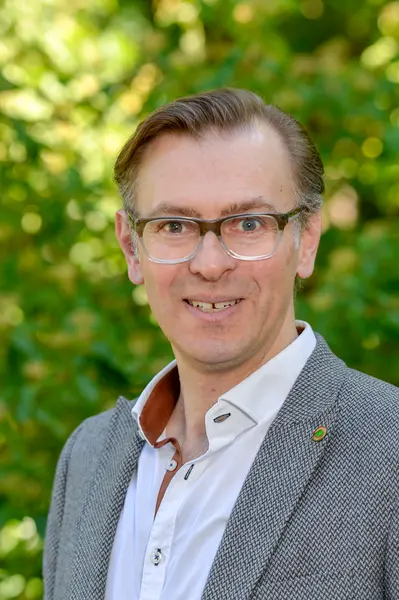
| martin.welp(at)hnee.de | |
| Phone | +49 3334 657-172 |
| Location | Forest Campus | Alfred-Möller-Straße 1 | 16225 Eberswalde |
| Room | 10.002 |
| Office Hours | by arrangement |
| Website | Head of Degree Programme Global Change Management |
Global Change Management (M.Sc.)
Wintersemester
• Condition and Tools: Change Management
• Objects and Dynamics: Global Systems Analysis
• Scientific Writing and Presenting
Sommersemester
• Response Strategies: Adaptation to Global Change
• Response Strategies: Mitigation of Global Change
• Natural Resource Management in Transformation Countries
• Research Colloquium
Forest Information Technology (M.Sc.)
Wintersemester
• Project Planning & Management
• Scientific Writing and Presenting
International Forest Ecosystem Management (B.Sc.)
Wintersemester
• Introduction to Socioeconomics
• Intercultural Communication
• Social Survey Methods
Sommersemester
• Social forestry & Extension Methods
• Project-based Conservation and Land-use Management
Forstwissenschaft (B.Sc.)
Wintersemester
• Kommunikation und Informationsmanagement
• Partizipatives Waldmanagement
- Socioeconomics and Communication
- Social-ecological transformations with regional focus on Asia
SMALLPAK - Innovations for resilient smallholder production sys-tems in Punjab, Pakistan.
Smallholder farmers in Pakistan face a wide range of challenges: low yields, increasing climatic and other environmental stresses, high input prices, and volatile markets. Nevertheless, their needs and vulnerabilities are often neglected in agricultural policy, which prioritizes modernization approaches that primarily benefit larger agricultural holdings and enterprises. National agricultural research primarily focuses on technical innovations and pays limited attention to the specific challenges, perspectives, and local knowledge of smallholder farmers. SMALLPAK addresses this gap in current agricultural research and policy in Pakistan. The aim is to place smallholder agriculture more firmly at the centre and to promote integrative and transdisciplinary perspectives on agricultural and food systems in both research and practice.
KonKoop - Cooperation and Conflict in Eastern Europe: The Consequences of the Reconfiguration of Political, Economic, and Social Spaces since the End of the Cold War
In this project, we look at conflict and cooperation in Eastern Europe since the end of the Cold War. Nowhere else in the world have there been so many wars of secession – some of them unresolved to this day – and newly founded states. Russia’s war of aggression against Ukraine is the latest shocking example. The research network will examine various conflict constellations and dynamics of cooperation in Eastern Europe, Southeast Europe, Central Asia and the Caucasus. Our focus as HNEE is to understand and explain natural resource conflicts with special focus on water.
Lokal Nachhaltig – Ehrenamtliche Kommunalpolitiker*innen als lokale Nachhaltigkeitsakteure
Socially acceptable climate and nature protection must also and above all be implemented at the local level. Therefore, the municipalities have a major task here. However, each municipality has its own individual potentials and obstacles. Therefore, we want to show the multitude of possibilities that help the local people and nature and thus also the global climate. In order to initiate and implement even more sustainable projects, we want to support people active in local politics on their way and learn from them. The findings should then be passed on to other municipalities via our platform.
VEGERA - Improving energy efficiency in the building sector through the use of renewable raw materials from agroforestry systems
The energy supply for building sector accounts for more than half of Uzbekistan’s primary energy consumption. There is great need to increase efficiency through improved insulation of houses and to substitute carbon-intensive building materials with locally available bio-based resources. Based on locally adapted building design, materials, and improved production methods, resource-saving alternatives will be developed that combine both traditional and modern construction using wood, agricultural residues, and clay. To demonstrate the advantages of such building systems we will build a model house in Uzbekistan’s capital, Tashkent.
TRANSECT - Agrarian Transformations and Social-Ecological Complexities (Local Bioeconomy Scenarios in Central and South Asia)
TRANSECT investigates social-ecological effects and interdependencies of agrarian transformations in Central and South Asia. The project investigates how pathways towards a bioeconomy can be shaped in a more socially just and ecologically sustainable manner. With case studies in Pakistan, Tajikistan, and Kazakhstan, the research focuses on a region that has been subjected to vast agricultural interventions. Moreover, the growth of China’s bioeconomy sector and the progress of the ‘Belt and Road Initiative’ are expected to shape future agricultural developments in the region. The project provides in-depth analyses of local effects, opportunities, and risks of agricultural intensification and other transformation pathways. Furthermore, a practice-oriented and integrative methodology of analysis, scenario development and management of bioeconomic transformation processes will be developed.
OekoFlussPlan - Preservation of selected Ecosystem Services in the Riparian Areas of the Naryn River (Kyrgyzstan)
The overall goal of ÖkoFlussPlan is to preserve the alluvial forests along the Naryn River in Kyrgyzstan and to offer and implement sustainable solutions for the local population. For this purpose, the condition of the alluvial forests are being analysed in order to identify areas particularly worth protecting. In order to reduce utilisation pressure, alternatives are also being systematically developed for harvesting wood from alluvial forests.
eAgroforestry - Food security and livelihood improvement through agroforestry
Agroforestry systems have huge potential to increase food security and add additional income to rural communities, while reducing soil erosion and other land degradation. This applies also for the three partner countries of this project – Kazakhstan, Kyrgyzstan, and Uzbekistan. Against this background, the project had five main objectives: (1) Compile the knowledge from literature about the major agroforestry systems of Central Asia, which includes their development, positive and negative effects on yields, income, and resilience; (2) Investigate the products, their yields, value chains, and current as well as potential income from the main agroforestry tree species; (3) explore potential local and regional value chains based on wood and other products form those agroforestry systems; (4) investigate yields and income from major crops and livestock from inside versus outside of agroforestry systems; (5) investigate the perspective of land users on agroforestry
EcoCAR - Ecosystem Assessment and Capacity Building for Sustainable Management of Floodplains along the Central Asian Rivers Tarim (Xinjiang/China) and Naryn (Kyrgyzstan)
The project started and developed methods for the terrestrial and remotely sensed monitoring of riparian ecosystems and its most important stress indicators in two selected investigation areas at the Tarim (Xinjiang) and the Naryn (Kyrgyzstan). Based on this the potential of providing certain ecosystem services was predicted and suggestions for sustainable land use given. A special focus was on the integration and networking with and among local scientists, decision makers and students to build up the necessary capacities to use the methods developed within this project.
CDKN – Exploring innovative ways of financing for climate compatible development in Asian cities.
Research partners Germanwatch, the Vasudha Foundation, the Institute for Essential Service Reform, the Institute for Climate and Sustainable Cities and Eberswalde University for Sustainable Development assessed the climate finance needs and gaps for climate compatible development in second-tier cities across three countries; India, Indonesia and The Philippines. The team explored how current opportunities can be harnessed to meet the climate finance needs. Based on this assessment, the project developed recommendations for how funding from the Global Climate Fund (GCF) and other sources can be more accessible to cities, for example through the creation of Urban Implementing Entities. Or how funding can be used in order to incentivise the deployment of national or sub-national resources such as revenues from fees, local taxes or municipal bonds for urban climate compatible development projects.
SuMaRiO - Sustainable Management of River Oasis along the Tarim River /China
Our research aimed at a better understanding the role of urban and peri-urban vegetation in the socio-environmental systems of selected oasis cities. We conducted an ex-post analysis of the peri-urban Kökyar-Shelterbelt project in Aksu focusing on institutional and economic dimensions. These insights were combined with empirical results from a socioeconomic survey, semi-structured interviews and several stakeholder dialogues.
Academic Director of the Biosphere Reserves Institute (UNESCO Cat 2) at the Eberswalde University for Sustainable Development
Research Professorship
Professorship in Socioeconomics and Communication
Senior scientist at the Potsdam Institute for Climate Impact Research (PIK), Department of Global Change & Social Systems. Founding member and contact person of European Climate Forum (later renamed to Global Climate Forum)
Center for Interdisciplinary Studies in Technology at the Darmstadt University of Technology.
Project work a.o. at the Cooperation and Consultancy Point for Environmental Questions (Technical University Berlin), European Forest Institute (Joensuu, Finland), Service Centre for Development Cooperation (Helsinki) and Coalition for Environment and
Development (Helsinki).
Doctoral Thesis at the Technical University Berlin, Institute for Management in Environmental Planning. Funded by the Academy of Finland and the Maj and Tor Nessling Foundation.
Masters Degree at the University of Helsinki, Faculty of Agriculture and Forestry, Department of Land Use Economics.
Biosphere Reserves Institute
Centre of Econics and Ecosystem Management
Kaiser, C., Meuer, K., Welp, M., Hope, K.N., Agyeman, Y.B. & Cremer, T.
Gan, L., Halik, Ü., Shi, L., Ru, J., Wei, Z., Li, J., Welp, M. & Alexakis, D. D.
Citizen Science in European UNESCO Biosphere Reserves. Workshop Proceedings.
Griestop, C., Kleegrewe, M., Carlo, F. de, Fiala, V., Eich, L., Welp, M., Mann, C. & Ferreira, A. F.
Selection and performance evaluation of roof materials in arid oasis cities: The advantages of white polymer materials. Building and Environment, 267, 112282.
Fu, W., Li, Y., Halik, Ü., Tian, A., Ainiwaer, A., Liu, Y., Wei, Z., Shi, L.. & Welp, M.
Chen, S., Halik, Ü., Shi, L., Fu, W., Gan, L., Welp, M., Al Sayah, M., Der Sarkissian, R. & Nedjaï, R.
Comparative Assessment of Energy and Carbon Footprint of Uzbek Houses: IDA ICE Study. In SBE Conference Series. ETH Zurich.
Azizova, B., Roswag-Klinge, E., Jahreis, M., & Welp, M.
Driving mechanisms of trunk internal decay of Populus euphratica within desert riparian forests in the lower reaches of the Tarim River. Forest Ecology and Management, 596, 123086.
Wei, Z., Shi, L., Halik, Ü., Welp, M., Zheng, J., Gan, L., & Ma, Y.
Multi-scenario dynamic prediction of ecological risk assessment in an arid area of northwest China
Gan, Lu ; Halik, Ümüt ; Shi, Lei ; Welp, Martin
Key Actors’ Perspectives on Agroforestry’s Potential in North Eastern Germany
Litschel, Johannes ; Berendt, Ferréol ; Wagner, Hanna ; Heidenreich, Simon ; Bauer, David ; Welp, Martin ; Cremer, Tobias
Path dependencies of (un-) sustainable land use in Central Asia. Central Asian Affairs, 10(3), 239-269.
Spies, M., Alff, H., Missall, S., & Welp, M.
Mit regenerativen Materialien zur Brandenburger Bauwende? Holz-Zentralblatt, 148(36), 608
Litschel, J., Berendt, F [Ferréol], Cremer, T. & Welp, M.
Missall, Siegmund ; Welp, Martin ; Mehta, Kedar ; Degembaeva, Nadira ; Akmatov, Kuban ; Zörner, Wilfried
Wei, Zhicheng ; Halik, Ümüt ; Aishan, Tayierjiang ; Abliz, Abdulla ; Welp, Martin
Stavi, Ilan ; Thevs, Niels ; Welp, Martin ; Zdruli, Pandi
Potential of Agroforestry to Provide Wood Resources to Central Asia
Thevs, Niels ; Aliev, Kumar ; Emileva, Begayim ; Yuldasheva, Dilfuza ; Eshchanova, Guzal ; Welp, Martin
Shi, Lei ; Halik, Ümüt ; Mamat, Zulpiya ; Aishan, Tayierjiang ; Welp, Martin
Shi, Lei ; Halik, Ümüt ; Mamat, Zulpiya ; Aishan, Tayierjiang ; Abliz, Abdulla ; Welp, Martin
Beyond post-Soviet: layered legacies and transformations in Central Asia. Beyond post-Soviet: layered legacies and transformations in Central Asia. Institut für Geographie, Universität Augsburg; Hochschule für nachhaltige Entwicklung Eberswalde.
Schmidt, M., Steenberg, R., Spies, M. & Alff, H. (Hrsg.).
Sustainable land use alternatives for the Tarim Basin. In: Cyffka, B.; Disse, M.; Betz, F. (Eds.) : Sustainable Management of River Oases along the Tarim River/China (SuMaRiO). - Stuttgart : Schweizerbart, 2021. S. 146-159. ISBN 978-3-510-65432-1
Rouzi, A., Halik, Ü.; Cyffka, B., Welp, M., Thevs, N. & Tayierjiang, A.
Stakeholder management. In: Cyffka, B.; Disse, M.; Betz, F. (Eds.) : Sustainable Management of River Oases along the Tarim River/China (SuMaRiO). - Stuttgart : Schweizerbart, 2021. S. 27-32. ISBN 978-3-510-65432-1
Welp, M. & Yiliminuer
Zou, Jie ; Ding, Jianli ; Welp, Martin ; Huang, Shuai ; Liu, Bohua
Urban Green Space Accessibility and Distribution Equity in an Arid Oasis City: Urumqi, China
Shi, Lei ; Halik, Ümüt ; Abliz, Abdulla ; Mamat, Zulpiya ; Welp, Martin
Farmers’ Perceptions of Tree Shelterbelts on Agricultural Land in Rural Kyrgyzstan
Ruppert, Daniel ; Welp, Martin ; Spies, Michael ; Thevs, Niels
Sun, Lingxiao ; Yu, Xiang ; Li, Boshan ; Zhang, Haiyan ; Sha, Dong ; Wang, Yao ; Lei, Jiaqiang ; Yu, Yang ; Welp, Martin ; Yu, Ruide
Zou, Jie ; Ding, Jianli ; Welp, Martin ; Huang, Shuai ; Liu, Bohua
Climate change in Central Asia: Sino-German cooperative research findings
Yu, Yang ; Chen, Xi ; Disse, Markus ; Cyffka, Bernd ; Lei, Jiaqiang ; Zhang, Haiyan ; Brieden, Andreas ; Welp, Martin ; Abuduwaili, Jilili ; Li, Yaoming ; Zeng, Fanjiang ; Gui, Dongwei ; Thevs, Niels ; Ta, Zhijie ; Gao, Xin ; Pi, Yuanyue ; Yu, Xiang ; Sun, Lingxiao ; Yu, Ruide
Afforestation and Reforestation of Walnut Forests in Southern Kyrgyzstan: An Economic Perspective. Mountain Research and Development 38(4): 332-342.
Hardy, K., Thevs, N., Aliev, K., Welp, M.
Walk, H., Ott, H. E. & Welp, M. (2018). Die Beteiligten: zivilgesellschaftliche Systeme. In: Ibisch, P. L., Molitor, H., Conrad, A., Walk, H, Mihotovic, V. & Geyer, J. (eds.) Der Mensch im globalen Ökosystem. Eine Einführung in die nachhaltige Entwicklung. oekom, München. 414 p. 241-260.
Missall, Siegmund ; Abliz, Abdulla ; Halik, Ümüt ; Thevs, Niels ; Welp, Martin
Rouzi, A., Halik, Ü., Thevs, N., Welp, M., & Aishan, T. (2017). Water Efficient Alternative Crops for Sustainable Agriculture along the Tarim Basin: A Comparison of the Economic Potentials of Apocynum pictum, Chinese Red Date and Cotton in Xinjiang, China. Sustainability, 10(1), 35.
Graef, F., Schneider, I., Fasse, A., Germer, J. U., Gevorgyan, E., Haule, F., Hoffmann, H., Kahimba, F.C., Kashaga, L., Kissoly, L., Lambert, C., Lana, M., Mahoo, H.F., Makoko, B., Mbaga, S.H., Mmbughu, A., Mkangwa, S., Mrosso, L., Mutabazi, K.D., Mwinuka, L., Ngazi, H., Nkonya, E., Said, S., Schaffert, A., Schäfer, M.P., Schindler, J., Sieber, S., Swamila, M., Welp, M., William, L. & Lambert, C. (2015). Assessment of upgrading strategies to improve regional food systems in Tanzania: Food processing, waste management and bioenergy, and income generation. Outlook on AGRICULTURE, 44(3), 179-186.
Kuba, M, Halik, Ü., Welp, M. & Cyffka, B. (2014). Nachhaltigkeit von Dienstleistungen in Ökosystemen unter Stress. In: Müller, M, Hemmer, I & Trappe, M. (eds.). Nachhaltigkeit neu denken. Rio+X: Impulse für Bildung und Wissenschaft. oekom, München. 312 p. 101-106.
Welp, M. and Frost, I. (2012). Non-knowledge and organisational learning. In: Ibisch, P., Geiger, L. and Cybulla, F. (eds.) Global Change Management: Knowledge Gaps, Blindspots and Unknowables. Nomos. 250 p. 213-222 (ISBN-10: 3832967141).
Krause, G. and Welp, M. (2012). Systems Thinking in Social Learning for Sustainability. In: Glaser, M., Krause, G., Ratter, B., and Welp, M. (eds.) Human-Nature Interactions in the Anthropocene: Potentials of Social-Ecological Systems Analysis. Routledge. 232 p. 13-33.
Glaser, M., Ratter, B., Krause, G. and Welp, M. (2012). New Approaches to the Analysis of Human-Nature Relations. In: Glaser, M., Ratter, B., Krause, G. and Welp, M. (eds.): Human-Nature Interactions in the Anthropocene: Potentials of Social-Ecological Systems Analysis. Routledge, New York, London. 256 p. 3-12.
Welp, M. (2009). Forest-related Climate Mitigation Options: Dialogues for exploring opportunities and threats. In: Spathelf, P. (ed.): Sustainable Forest Management in a Changing World: a European Perspective. Springer. 258 p. 155-168.
Stoll-Kleemann, S. and Welp, M. (2008). Participatory and Integrated Management of Biosphere Reserves - Lessons from Case Studies and a Global Survey. GAIA S1/08: 161-168.
Stakeholder Dialogues in Natural Resources Management · Theory and Practice. Springer Environmental Sciences, Berlin, Heidelberg. 386 p.
Stoll-Kleemann, S. and Welp, M. (eds.)
Lotze-Campen, H. and Welp, M. (2004). Mehr Nahrungsmittel mit weniger Wasser erzeugen: Effizienzgewinne, Lebensstile, Handel. In: Lozán, J.L., Graßl, H., Hupfer, P., Menzel, L. and Schönwiese, C.-D . (eds.) Warnsignal Klima: Genug Wasser für alle?
Welp, M. (1993). Metsälait ja metsäpolitiikka Saksan Liittotasavallassa (Forest Laws and Forest Policy in Germany). In: Palo, M. & Hellström, E. (eds.) 1993. Metsäpolitiikka valinkauhassa (Forest Policy in the Process of Change). Publications of the Finnish Forest Research Institute 471. 467 p. 23-73. (ISBN 951-40-1318-2).