

15 Years of the UNESCO World Natural Heritage Site ‘Ancient Beech Forests’ – Symposium
Symposium organised by the Federal Ministry for the Environment at the HNEE to mark the 15th anniversary of UNESCO’s recognition of Germany’s beech forest areas
Old beech forests preserve biodiversity and enable research into natural forest development in the context of climate change. Their protection and scientific monitoring were the focus of a symposium organised by the Federal Ministry for the Environment (BMUKN) at the Eberswalde University for Sustainable Development (HNEE) on 16 September 2026. The event marked the 15th anniversary of the inclusion of the five German beech forest areas on the UNESCO World Natural Heritage List.
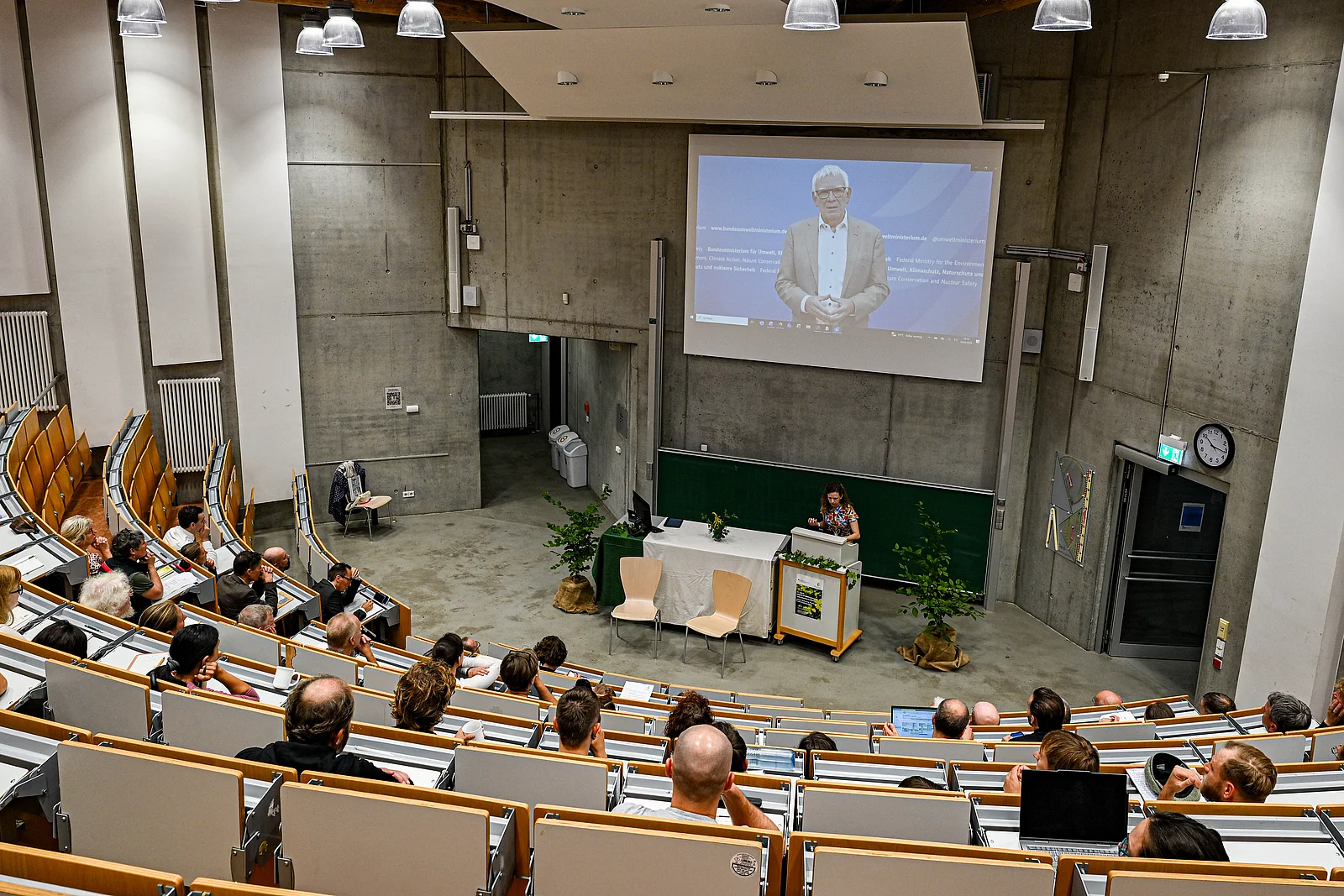
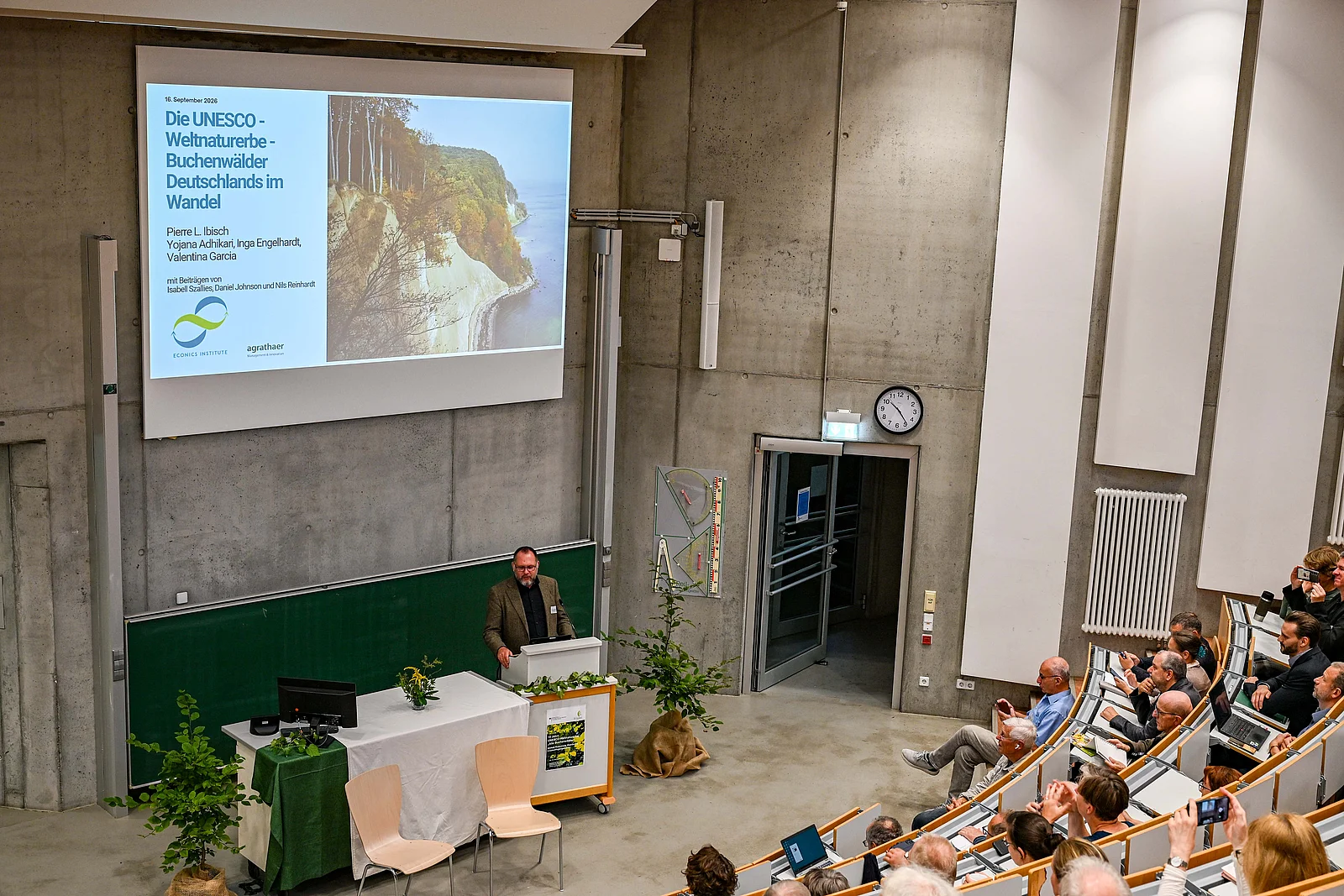
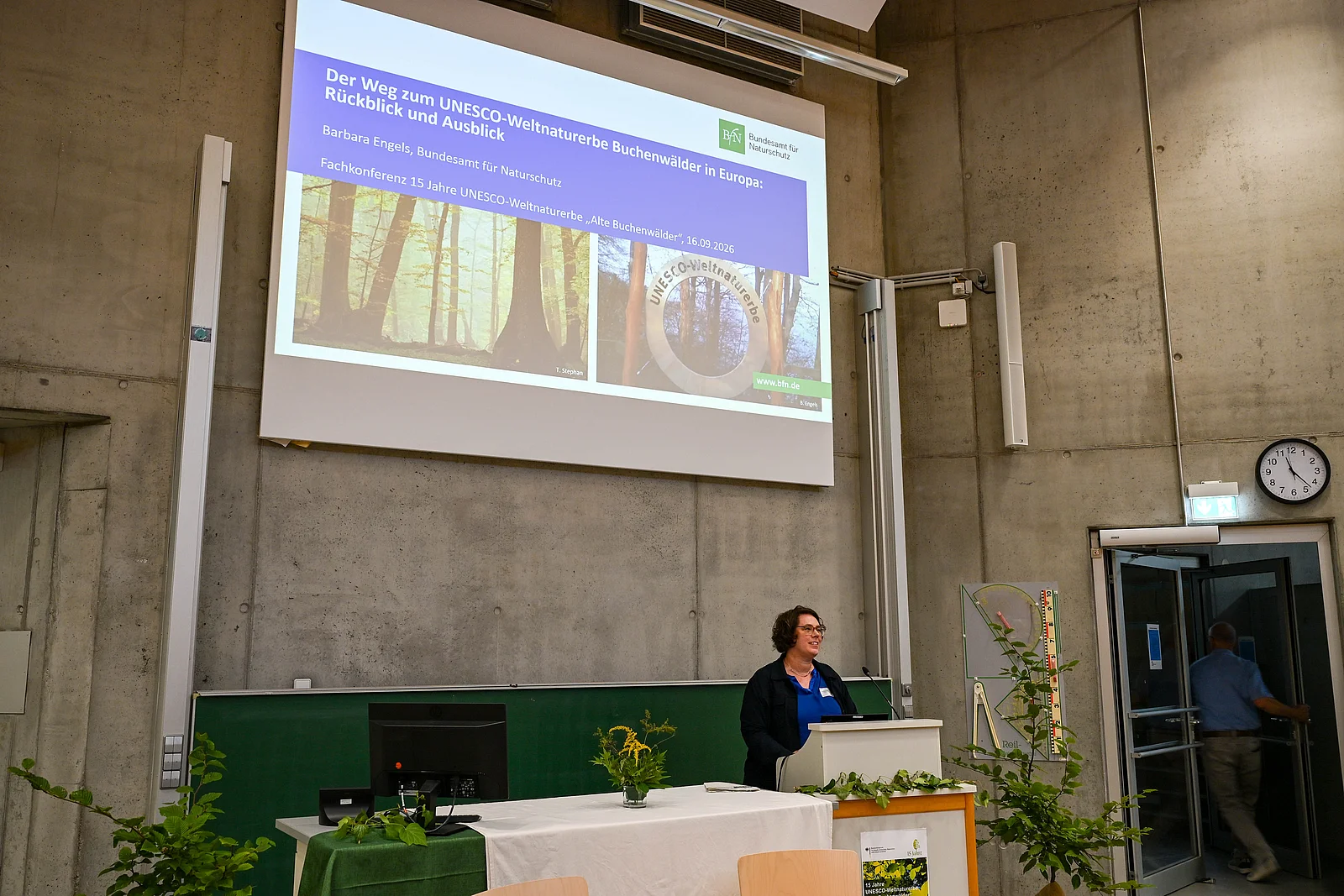

Following a welcome address by Prof. Dr Katharina Messerer on behalf of the HNEE, State Secretary for the Environment Jochen Flasbarth delivered an opening address to the participants via video message. He explained: “The UNESCO beech forests are a prime example of how climate adaptation, nature conservation and climate protection can be achieved simultaneously in the forest. Such near-natural old-growth forests act as water reservoirs and help to replenish groundwater. As natural air-conditioning systems, they cool the surrounding area; they are a haven for biodiversity and vital reference areas for natural forest development in Germany and Europe. Overall, they are more resilient than many surrounding forests and contribute to climate protection in the long term by sequestering large amounts of carbon. This makes it all the more important to preserve and protect this UNESCO World Natural Heritage Site for the future. We in Germany bear a special responsibility for this.”
This was followed by keynote speeches from Prof. Dr Pierre Ibisch (HNEE/ECONICS Institute) and Barbara Engels from the Federal Agency for Nature Conservation. Prof. Dr Ibisch presented new scientific findings on the changes in Germany’s UNESCO beech forests, whilst Engels looked back at the development of the European World Heritage site and examined its future prospects.
A key focus of the expert session was the findings of a comparative study commissioned by the Federal Ministry for the Environment. For this, monitoring data from the five German World Heritage sites were analysed with regard to their resilience to climate change and their function as carbon sinks. The results show that, over the past 25 years, carbon stocks have increased alongside biomass in all five sites. Furthermore, on hot days, these forests are among the coolest landscapes in Germany. However, the data also highlight the pressures caused by extreme weather events: whilst the forests have been able to recover repeatedly in recent years, their vitality has been significantly affected. The Ministry therefore considers measures for their protection and conservation to remain necessary.
The subsequent plenary discussion focused in particular on the comparability of long-term observations. Prof. Dr Andreas Bolte from the Thünen Institute emphasised the importance of protected forests as reference sites for studying natural forest development and different forms of forest management. Prof. Dr Ibisch called for standardised survey methods, greater coordination and better resources for monitoring. Engels emphasised the importance of fewer but more meaningful core indicators. These should make it possible to determine whether the outstanding universal value of the World Heritage site is being preserved and what threats exist.
The afternoon expert panel broadened the discussion to include international cooperation, experiences from the Wadden Sea World Natural Heritage Site and current research into the future of beech forests in the context of climate change. Contributions came, amongst others, from Vasyl Pokynchereda of the Ukrainian Carpathian Biosphere Reserve; from Jana Baumgartner on behalf of the Permanent Secretariat of the UNESCO World Natural Heritage site ‘Ancient and Primeval Beech Forests of the Carpathians and Other Regions of Europe’; from Dr Peter Meyer of the North-West German Forest Research Institute, Peter Südbeck of the National Cultural Landscapes Foundation and Prof. Dr Andreas Bolte on behalf of the Thünen Institute.
In the ensuing discussion, the participants addressed both the natural regeneration of old beech forests and the relationship between protected areas and their regional surroundings. During the plenary discussion, Prof. Dr Ibisch had already suggested extending the protection of older beech forests and also examining the possibility of expanding the protected UNESCO beech forest areas and their buffer zones. Taking the Grumsin as an example, difficulties arising from initially underestimated visitor numbers and inadequate infrastructure were discussed. Transparent communication and the involvement of the local population were highlighted as key prerequisites for acceptance.
In conclusion, Oliver Conz, Head of Department for Nature Conservation, Sustainable Use of Natural Resources and Natural Climate Protection at the Federal Ministry for the Environment, emphasised the unifying significance of the World Natural Heritage site. Whilst species conservation had been the main focus at the time of designation 15 years ago, the value of the transboundary network has since become clear. It brings people together and creates opportunities for exchange and cooperation. The beech forests are a shared heritage of humanity, fostering a sense of connection even in times of war and conflict. At the same time, Conz emphasised the importance of scientific monitoring: long-term observation of the forests makes it possible to track their development and learn from this for the future.
On 17 September, the programme included a field trip to the Grumsin sub-site of the UNESCO World Heritage Site within the Schorfheide-Chorin Biosphere Reserve, to gain a deeper understanding of research and monitoring approaches as well as the challenges of forest conservation on the ground.
The conference was funded and organised by the Federal Ministry for the Environment. The ECONICS INSTITUTE e. V. and agrathaer GmbH were responsible for the technical and organisational aspects of both days.