

Planetary Health Landscape Institute
As a research institute of the HNEE, the Planetary Health Landscape Institute (PHL‑I) aims to promote human health and well-being within stable, functioning ecosystems and, to this end, is establishing the scientific field of Planetary Health Landscape (PHL).
Areas of action
We work in four key, interrelated areas of focus:
- Planetary Health Landscape
We are developing and testing a scientifically sound yet practice-oriented concept for integrated, cross-scale landscape-based research, including common definitions, indicator logic and a data model for the Planetary Health Landscape. The focus here is on whether the vision of a Planetary Health Landscape could be achieved in specific regions or landscapes in a way that is appropriate to the local context.
- Visions of the Future
We develop visions of the future within the framework of possible future scenarios, in order to analyse location-specific, realistic options for action based on these and to devise pathways for transformation. We also analyse levers for sustainable land-use systems (e.g. diversification, circular approaches, resilience-building management) as well as interactions between different system components, and assess their impact under current conditions and in future scenarios.
- Transformation pathways
Building on cross-sectoral scenarios, we develop robust transformation pathways for forestry, arable farming, grassland, livestock farming and the processing of forestry and agricultural products – from processing right through to consumption (e.g. in local markets) – under future framework conditions. We operationalise PHL-compatible transformation pathways, including the development and assessment of new, resilient value-creation options.
- Assessment of policy options
To evaluate different transformation pathways, we are developing harmonised indicators that can be adapted to diverse contexts. The aim is to develop an integrated framework that evaluates landscape-level outcomes in terms of socio-ecological systems theory, ecosystem integrity, sustainable land use and human well-being, and which is transferable to other contexts. From this, we will derive scientifically sound recommendations for decision-makers in business, society, politics and public administration.
Projects
Team
Executive Board
The Executive Board comprises up to three professors who are members of the Institute. They are appointed by the Senate for a term of three years.
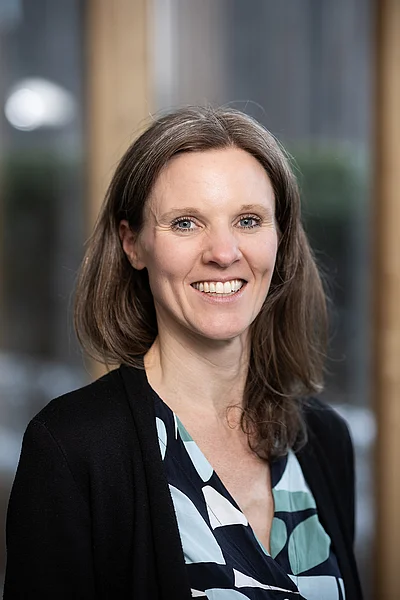
Professor of Socio-Ecological Forest Governance
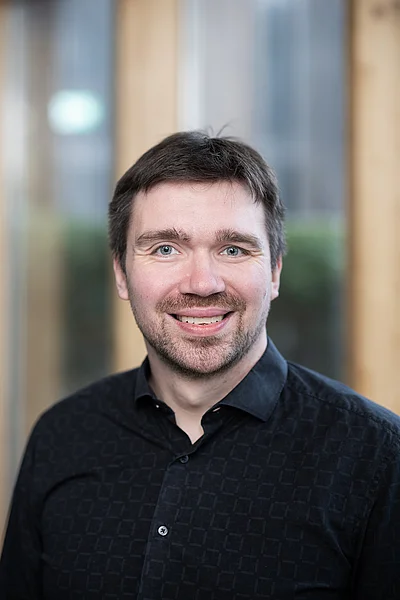
Professor of Technologies for Sustainable Production and Quality Assurance of Plant-Based Foods
Members
HNEE professors who are recognised for their academic contributions to the Institute’s aims and objectives may apply for membership.
Prof. Dr Ralf Bloch – Chair of Agroecology and Sustainable Farming Systems
Prof. Dr Tobias Cremer – Professor of Forest Utilisation and Timber Markets
Prof. Dr Sonja Geiger – Professor of Psychology and Marketing in Sustainable Food Systems
Prof. Dr Britta M. Gossel – Professor of Social Business Management
Prof. Dr Anna Maria Häring – Professor of Politics and Markets in the Agricultural and Food Sectors
Prof. Dr Daniel Johnson – Professor of Value-Based Forest Economics
Prof. Dr Stefan Julich – Professor of Landscape Studies
Prof. Dr Katharina Löhr – Professor of Socioecological Forest Governance
Prof. Dr Eva-Maria Saliu – Professor of Animal Husbandry in Organic Agriculture
Prof. Dr Inga Schleip – Professor of Sustainable Grassland Utilisation Systems and Grassland Ecology
Prof. Dr Marcus Schmidt – Professor of Technologies for Sustainable Production and Quality Assurance of Plant-Based Foods
Associate Members & Fellows
The appointed research assistants and visiting scholars are associate members of the Planetary Health Landscape Institute. Other individuals may apply for membership if they contribute to the fulfilment of the Institute’s objectives.
Associate members:
- Niklas Brachmann (PhD student)
- Dr Marco Donat (postdoctoral researcher)
- Louisa Janitschke (PhD student)
- Dr Laura Roos (postdoctoral researcher)
- Masomeh Shemshad (PhD student & visiting researcher)
Fellows:
- Michel Kabirigi
- Masoud Yazdanpanah
Contact
Professor of Socio-Ecological Forest Governance