

New Chair in Landscape Planning and Regional Development at HNEE
With the appointment of Prof. Dr Ulf Stein on 1 March 2026, the Eberswalde University for Sustainable Development (HNEE) has gained a recognised expert in sustainable landscape development, water resource management and biodiversity conservation. In the Chair of Landscape Planning and Regional Development, he will continue to advance teaching and research on key issues for the future, such as climate-resilient landscapes, nature-based solutions and sustainable regional development.
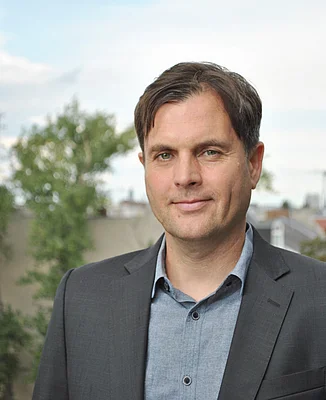
Portraitfoto Ulf Stein
At HNEE, Prof. Dr Ulf Stein will teach on the Landscape Use and Nature Conservation (B.Sc.) and Sustainable Regional Development (M.Sc.) degree programmes. He is particularly keen to combine academic principles with practical applications. Students will be introduced to current research questions at an early stage, whilst also gaining insights into the implementation of planning concepts.
The professorship focuses in particular on spatial theories, methods and tools at various planning levels, as well as environmental assessment procedures. Prof. Dr Ulf Stein views landscape planning both as a cross-disciplinary approach and as specialised planning for nature conservation and landscape management.
“It is precisely this interdisciplinary understanding that opens up numerous points of contact with other disciplines at HNEE,” says Prof. Dr. Stein. “I see great potential in collaborating with colleagues from different disciplines to tackle complex issues of sustainable regional development together.”
A particular focus of his work is on developing strategies for adapting landscapes to climate change. These include concepts such as sponge cities and sponge landscapes, which are designed to help make landscapes more resilient to extreme events and use water resources more sustainably.
“In light of climate change, biodiversity loss and societal transformation, the importance of long-term strategies for landscape development will continue to grow,” he emphasises. “Universities such as the HNEE can play a key role in this by combining scientific insights, practical training and social dialogue.”
The move to HNEE is also significant for him on a personal level: “I am particularly keen to work more closely with the north-east German region again and to devote myself to the protection and sustainable development of the natural and cultural landscapes I know so well.”
Prof. Dr Stein was born in Waren (Müritz) and studied landscape and open space planning at the University of Hanover. Even during his studies, he gained international experience through stays in Canada and Denmark, where he was able to familiarise himself with different planning approaches. He began his professional career in landscape planning practice at the Faktorgruen planning office in Denzlingen near Freiburg, where he advised towns and municipalities on issues of nature conservation and spatial development.
He then returned to academia and worked as a research assistant at the University of Kassel, where he was active in the fields of river ecology, river development, hydraulic engineering and water management, and obtained his PhD in the Department of Architecture, Urban Planning and Landscape Architecture.
From 2011 to 2025, Prof. Dr Stein worked at the Ecologic Institute in Berlin, where he coordinated the Water Studies department and was involved in numerous inter- and transdisciplinary research projects at national and international level. In addition, he served for several years as an expert for European institutions, including the European Environment Agency and the European Commission.
Most recently, at PD – Public Sector Consultants, he supported sustainable transformation processes in public administration in the fields of sustainability, the environment and climate.