

HNEE expertise in sustainable agriculture and genetic diversity
Climate change, biodiversity loss and increasingly extreme weather events are making it ever clearer that food security, competitiveness and resource conservation must be considered as an integrated whole. The role of genetic resources in this context was the subject of a technical discussion at the IPK Leibniz Institute in Gatersleben, attended by Federal Minister of Agriculture Alois Rainer, the Scientific Advisory Board for Biodiversity and Genetic Resources, and representatives from the research and political communities.
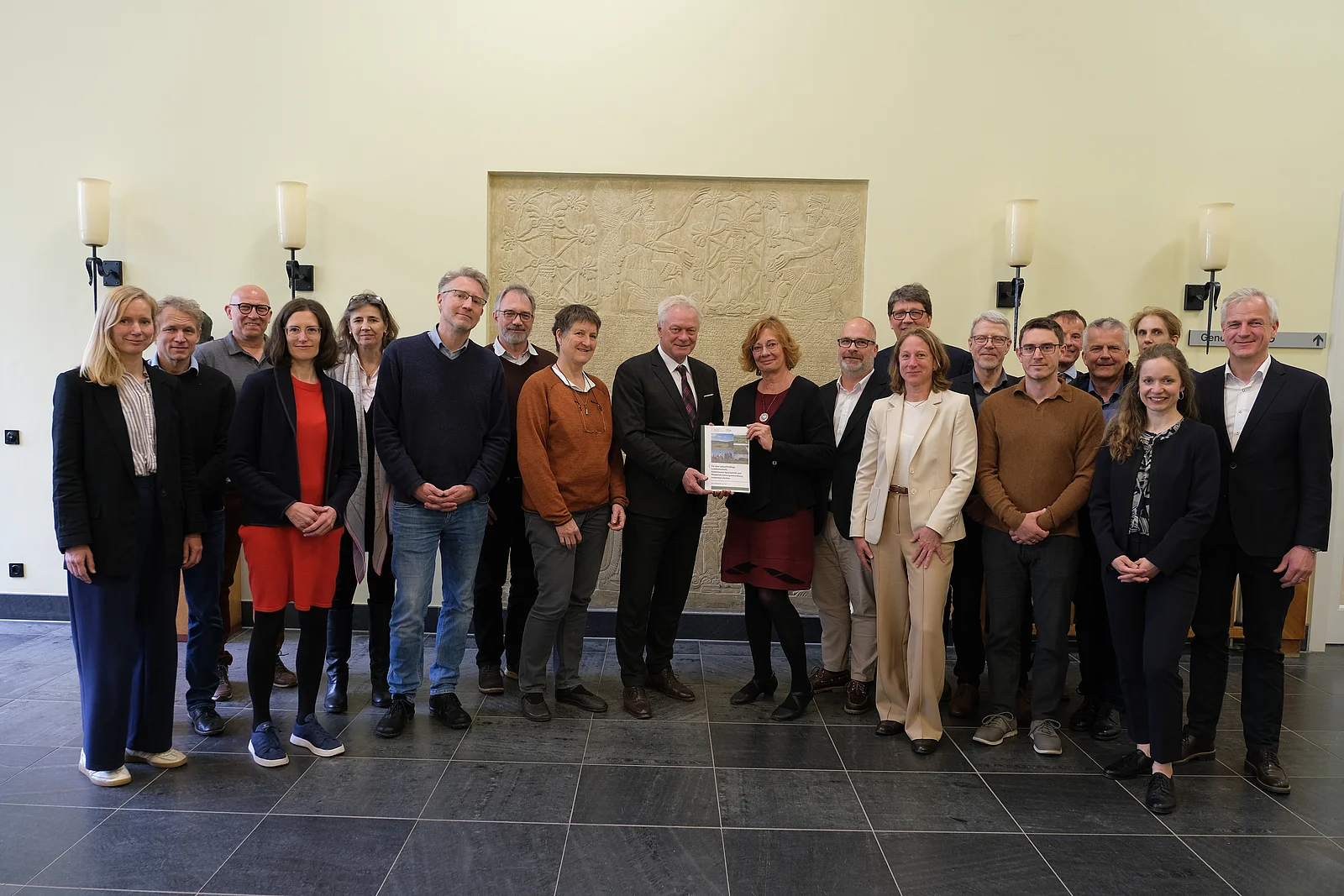
Prof. Dr Inga Schleip from the Eberswalde University for Sustainable Development (HNEE) took part. She is a member of the Scientific Advisory Board on Biodiversity and Genetic Resources, where she contributes her expertise on sustainable land use, agricultural systems and biodiversity.
The exchange focused on the importance of genetic resources for sustainable agriculture. The diversity of livestock breeds, crop species and varieties is a key foundation for food security, adaptability and resilience. Particularly in the context of climate change, research, innovation and practical solutions are needed to make agricultural systems more resilient and to conserve natural resources in the long term.
Together with the Scientific Advisory Board, Prof. Dr Inga Schleip presented the latest position paper on the implementation of the EU Recovery Regulation and on the Common Agricultural Policy post-2027. It addresses the question of how biodiversity, genetic diversity and the agricultural policy framework can be better integrated in future.
The exchange also provided insights into the work of the IPK Leibniz Institute, including a guided tour of the gene bank. The subsequent discussion focused on genetic resources, soil protection and the direction of agricultural policy.
Through its participation, HNEE is making a contribution where scientific expertise, policy advice and the transformation of land use converge. This highlights the university’s contribution to current issues shaping the future – from biodiversity and climate adaptation to resilient agricultural and food systems.