

New Chair in Arable and Crop Production in Organic Farming at the HNEE
Prof. Dr Andreas Muskolus has taken up the newly established Chair of Arable and Crop Production in Organic Farming at the Eberswalde University for Sustainable Development (HNEE) since 1 April 2026. With his many years of experience at the interface between research and agricultural practice, he is strengthening the HNEE’s profile in the field of sustainable land-use systems.
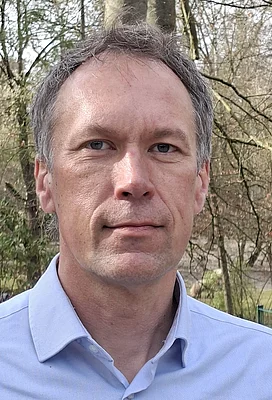
Prof. Dr. Andreas Muskolus
Prof. Muskolus was born in Leipzig and grew up on a farm in Saxony-Anhalt. He studied crop science at Humboldt University in Berlin and subsequently completed a Master’s degree in Natural Resources Management at Cranfield University in the UK. He also completed his PhD in crop science at Humboldt University. Following academic posts at the University of Southampton and the Institute for Sugar Beet Research in Göttingen, Prof. Muskolus has spent the last 15 years heading a crop research station in the Havelland region. There, he combined research and practical agriculture in a unique way, collaborating with both public sector clients and the private sector.
The professorship takes a distinctly practical and systemic approach. The focus is on the interactions between crop management, site and climatic conditions, and their effects on yields, ecological processes and sustainable production systems. This gives rise to a wide range of links within the university, for example to agroecology, soil science, plant medicine, crop production technologies, as well as GIS and remote sensing.
“I am particularly drawn to the ecological focus of arable and crop production, as well as the close integration of teaching, research and practice at HNEE,” says Prof. Muskolus.
In terms of teaching, Prof. Muskolus is involved in the Bachelor’s programme in Organic Farming and Marketing as well as the Master’s programme in Organic Agriculture and Food Systems. The aim is to raise students’ awareness of the complex interrelationships involved in agricultural decision-making and to prepare them for the challenges of a sustainable transformation.
His research focuses, among other things, on sustainable fertilisation systems, the use of recycled fertilisers, emission reduction and the application of modern technologies in crop production. He sees key future challenges in adapting agricultural systems to climate change and in reconciling ecological sustainability with economic viability.
With this new appointment, HNEE is strengthening its position as a practice-oriented and research-intensive university in the field of sustainable agriculture and food systems.
Notes on the image:
The photo provided here may be used in connection with this report. Please note the copyright notice ©private