

Prof. Dr. Benjamin Nölting
Professor of Governance of Regional Sustainability Transformation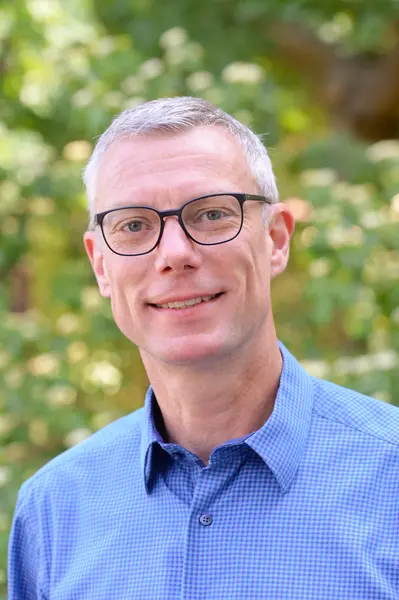
| Benjamin.Noelting(at)hnee.de | |
| Phone | +49 3334 657-335 |
| Location | City Campus | Schicklerstrasse 5 | 16225 Eberswalde |
| Room | 01.214 |
| Office Hours | by arrangement |
| Website | Head of Degree Programme Strategic Sustainability Management |
- Governance and institutional analyses on sustainable regional development, with a focus on rural areas in eastern Germany, covering land use, agriculture and food, energy policy, land and water management, public services, and digitalisation
- Numerous applied research projects in Brandenburg in collaboration with industry partners on the above-mentioned topics
- Concepts and methods of transdisciplinary sustainability research and sustainability transfer
- Research into the sustainability transformation of higher education institutions
- Sustainability transformation of regions and organisations
Universities in Society – Real-World Experiments in Transformative Learning and Research Processes for a Culture of Sustainability at Universities‘ (KuNaH)
The collaborative project ‘Real-world experiments in transformative learning and research processes for a culture of sustainability at universities – transfer phase’ (KuNaH-T) builds on the project of the same name and, in its second funding phase, focuses on the transfer of results. Culture(s) of Sustainability (KdN) is understood here as a lived practice of sustainability, reflected in artefacts, processes of negotiating values, and the underlying assumptions of university culture. The project provides clear and practical basic knowledge on the KdN concept, gives examples, and offers suggestions for developing one’s own initiatives and interventions. The HNEE is focusing on developing a multimedia KdN toolbox. University stakeholders can use the material to support cultures of sustainability at their institution.
Institutionalisation Laboratory Region 4.0
At the conclusion of the WIR! Alliance Region 4.0, the consolidation and institutionalisation of structures, results, networks, etc. is to be promoted from a strategic and scientific perspective. The iLab (1) reviews the results of the alliance's work to date, (2) identifies starting points for consolidation and (3) develops transfer formats for this purpose, which are tested on a trial basis with relevant actors in the Uckermark implementation region and beyond.
Transdisciplinary research at universities of applied sciences – status quo and potential of a sleeping giant – TDR4HAW
The research project ‘Transdisciplinary Research at Universities of Applied Sciences’ (TDR4HAW) is the first to systematically examine transdisciplinary research (TDR) at universities of applied sciences (HAW) in Germany. Research at HAWs has become increasingly important in recent decades and is characterised by close links with non-university practice, where research into social challenges is conducted jointly and in an application-oriented manner.
Polish-German Conference: ‘Sustainable Development of the Berlin-Szczecin Corridor’
With funding from the German-Polish Science Foundation (DPWS), the HNEE organised a symposium in collaboration with the Szczecin-based universities – Uniwersytet Szczeciński and Zachodniopomorski Uniwersytet Technologiczny w Szczecinie – as well as the University of Greifswald. The findings have been documented in a discussion paper.
InNoWest – Just do it
The InNoWest collaborative project – ‘Just do it! Working together towards sustainability and digitalisation in North-West Brandenburg’ – focuses on innovation in North-West Brandenburg and brings together two major challenges of transformation: sustainable development and digitalisation. The consortium supports the region’s sustainable development through transfer projects centred on user-centred digitalisation, sustainable restructuring and shaping society.
Working together towards sustainability and digitalisation in North-West Brandenburg
The InNoWest collaborative project – ‘Just do it! Working together towards sustainability and digitalisation in North-West Brandenburg’ – focuses on innovation in North-West Brandenburg and brings together two major challenges of transformation: sustainable development and digitalisation. The consortium supports the region’s sustainable development through transfer projects centred on user-centred digitalisation, sustainable restructuring and shaping society.
Future Forum for Climate-Friendly Universities (ZKH) – Small and medium-sized universities on the path to climate protection
As part of the project, fifteen small and medium-sized higher education institutions are being supported in developing holistic climate protection strategies and implementing initial measures. The results of these processes will be made available to other higher education institutions in the form of a guide to climate protection in higher education and a knowledge repository. This will make an important contribution to climate protection.
Research for a Culture of Sustainability at Universities
As part of the collaborative project ‘Universities in Society – Real-world experiments in transformative learning and research processes for a culture of sustainability at universities’ (KuNaH), we are developing a conceptual understanding of a culture of sustainability at universities and testing potential pathways to transformation through real-world experiments involving different stakeholder groups at five universities.
Our aim is to develop a practical concept for a culture of sustainability at universities, to test through a variety of real-world experiments how such a culture can be fostered, and to examine which of these approaches can be transferred to other university contexts and in what ways.
Logbuch der Veränderungen: Projektbaustein Co-Interpretation & Kommunikation für eine bürgerwissenschaftlich gestaltete Phase der Ergebnisinterpretation
Funded by the Hans Sauer Foundation, Munich
A short study on sustainability-oriented organisational and operational models for the development of local authority platforms
On behalf of the CO:DINA joint project – Transformation Roadmap for Digitalisation and Sustainability, funded by the Federal Ministry for the Environment, Nature Conservation, Nuclear Safety and Consumer Protection (BMUV) – HNEE, in collaboration with the Weizenbaum Institute, has developed a concept for civil society or local authority digital platforms.
Survey and visualisation of sustainability transfer at the Eberswalde University for Sustainable Development
An in-house project of the Research Centre [Sustainability – Transfer – Transformation]. Several discussion papers were published as part of the research:
No. 02: Sustainability Transfer – A Concept for Science-Practice Collaborations: An empirical analysis of potential using the HNEE as a case study, Roose I, Nölting B, König B, Demele U, Crewett W, Georgiev G, Göttert T, in collaboration with Hobelsberger C (2022). https://doi.org/10.57741/opus4-272
No. 09: Mapping sustainability transfer? – Development of a method for visualising sustainability transfer activities, Göttert T, Hobelsberger C, König B, Nölting N, Roose I (2023). https://doi.org/10.57741/opus4-666
Logbuch der Veränderungen. Bürgerwissenschaftliche Dokumentation von Alltagsbeobachtungen zur Corona-Pandemie
An in-house project of the [Sustainability – Transfer – Transformation] Research Centre, HNEE.
Sustainability at Universities (HOCHN): developing – networking – reporting
Collaborative project funded by the BMBF, Initiative: Sustainability in Science (SiSi), Programme: Research for Sustainability (FONA).
Head of the [Sustainability – Transformation – Transfer] Research Centre, HNEE
Professorship in ‘Governance of Regional Sustainability Transformation’
Head of the Strategic Sustainability Management programme (M.A.)
Visiting Professor for Regional Development at the Eberswalde University for Sustainable Development (substitute lecturer for the research professorship of Prof. Dr. Jürgen Peters)
Research associate at the Centre for Technology and Society at TU Berlin, head of the Sustainability Research Division and head of the Governance and Innovation Division; research projects on sustainable development
Doctorate in Political Science at the Free University of Berlin on local environmental policy; dissertation topic: Strategies and scope for action of local environmental groups in Brandenburg and East Berlin 1980-2000; supervisor: Prof. Dr. Martin Jänicke,
Prof. Dr. Udo E. Simonis
Studied history, political science and economics at the universities of Hamburg, Grenoble (France) and Freiburg
Member of the steering group of the Brandenburg Sustainability and Climate Platform
Member of the regional committee of the ‘Land.Gestalten’ culture and democracy project in the Britz–Chorin–Oderberg district, supported by the Aller.Land funding programme
Elected member of the HNEE Graduate School Assembly (since 2025)
Vice-Dean for Teaching in the Department of Landscape Management and Nature Conservation
Member of the Society for Transdisciplinary and Participatory Research (GTPF), contributing to the Institutionalisation Working Group
Deputy Programme Director for the ‘Sustainable Regional Development’ (M.Sc.) programme
Chair of the Continuing Professional Development Examination Board at FB2
Founding member of the German Society for Sustainability in Higher Education (DG HochN) (2020–2025: auditor)
Deputy Programme Director for the ‘Strategic Sustainability Management’ (MA) programme
Deputy Chair of the Faculty Council for Landscape Use and Nature Conservation
Active involvement in the HNEE’s strategic planning process for 2019–2021; co-author of the research strategy (2020), the knowledge transfer strategy (2020) and the HNEE’s mission statement (2021).
Member of the Transfer Advisory Board of the Eberswalde University for Sustainable Development
Programme Director for the ‘Strategic Sustainability Management’ (MA) programme
Co-author of the principles of sustainable development at HNE Eberswalde
Member of the Round Table on Sustainable Development at HNE Eberswalde
Schmitt, C.T., Giesenbauer, B., Nölting, B., Potthast, T., Rieckmann, M.
Kultur der Nachhaltigkeit an Hochschulen: Vom Ziel zur Normalität. DUZ Wissenschaft & Management (02/2024), S. 20-23.
Holst, J., Fritz, H., Nölting, B., Singer-Brodowski, M., Albiez, M., Betz, C., Lang, D. J., Meyer, S., Ober, S., Parodi, O., Schaltegger, S., Scheiding, C., Weynand, M., & Potthast, T.
Giesenbauer, B., Nölting, B., Potthast, T., Rieckmann, M., Schmitt, C.T.
Hamm, A., Ullrich, A., Rehak, R., Becker, K., Nölting, B.
Nachhaltige Unternehmensführung und Nachhaltigkeitsstrategien. In: Bühler, A., Nufer, G. (Hrsg.). Nachhaltigkeitsmanagement in Sport und Kultur. Grundlagen – Anwendungen – Praxisbeispiele (Sportmanagement, Band 9). Erich Schmidt Verlag: Berlin, S. 73-97. ISBN 978-3-503-23663-3.
Pape, J., Nölting, B.
InNoWest stärkt nachhaltige Entwicklung und Digitalisierung in Nord-West-Brandenburg
Hartwig, Corinna ; Graf, Verena ; Filipschack, Maria ; Krüth, Katharina ; Nölting, Benjamin ; Raich, Stefan ; Roose, Ilka
Transformationspfade für eine Kultur der Nachhaltigkeit an deutschen Hochschulen
Fritz, Hilke ; Holst, Jorrit ; Lang, Daniel J. ; Nölting, Benjamin ; Parodi, Oliver ; Potthast, Thomas ; Singer-Brodowski, Mandy
Dealing with the COVID-19 pandemic: an opportunity to reflect on sustainability research
Nölting, Benjamin ; König, Bettina ; Zimmermann, Anne B. ; Di Giulio, Antonietta ; Schäfer, Martina ; Schneider, Flurina
Göttert, Thomas ; Hobelsberger, Christine ; König, Bettina ; Nölting, Benjamin ; Roose, Ilka ; Barth, Matthias
Sustainability Transfer as a Concept for Universities in Regional Transformation—A Case Study
Demele, Uwe ; Nölting, Benjamin ; Crewett, Wibke ; Georgiev, Georgi
Dembski, Nadine ; Skroblin, Jan-Hendrik ; Nölting, Benjamin
Nölting, Benjamin ; Molitor, Heike ; Reimann, Julian ; Skroblin, Jan-Hendrick ; Dembski, Nadine
Participatory learning for transdisciplinary science in biosphere reserves
Walk, Heike ; Luthardt, Vera ; Nölting, Benjamin
Nölting, B.; Pape, J. 2015. Ein Ideenlabor für Nachhaltigkeit: Forschendes Lernen im berufsbegleitende Masterstudiengang Strategisches Nachhaltigkeitsmanagement. In UmweltWirtschaftsForum 23 (3/2015), S. 123-128.
Løes, A.; Nölting, B. 2009. Organic school meals — towards a more sustainable nutrition. In: Agronomy Research 7 (Special issue II), S. 647-653.
Schäfer, M.; Nölting, B.; Engel, A. 2009. Organic agriculture as a new player in sustainable regional development? Case studies of rural areas in Eastern Germany. In: International Journal of Agricultural Resources, Governance and Ecology (IJARGE) 8 (2/3/4, 2009), pp. 158-179.
Nölting, B. 2008. Neuer Wirtschaftszweig, neue Akteure, neue Impulse. Ökologische Land- und Ernährungswirtschaft in Ostdeutschland. In: Berliner Debatte INITIAL 19 (3/2008), S. 18-29.
Schäfer, M.; Nölting, B.; Engel, A. 2008. Regionale Impulse durch ökologischen Landbau. Potenziale für periphere ländliche Räume am Beispiel von Brandenburg und Mecklenburg-Vorpommern. In: Berichte über Landwirtschaft 86 (1/2008), S. 116-141.
Nölting, B.; Schäfer, M. 2008. Vermarktung regionaler Lebensmittel als Baustein ländlicher Entwicklung in Brandenburg. Erfahrungen eines LEADER-Kooperationsprojekts. In: Archiv für Forstwesen und Landschaftsökologie 42 (4/2008), S. 177-187.
Voß, J.-P.; Newig, J.; Kastens, B.; Monstadt, J.; Nölting, B. 2007. Steering for Sustainable Development: A Typology of Problems and Strategies with respect to Ambivalence, Uncertainty and Distributed Power. In: Journal of Environmental Policy & Planning, Volume 9, Issue 3 & 4 September 2007, pp. 193-212.
Nölting, B.; Schumacher, U. 2006. Visionen auf dem Boden der Tatsachen. Das Konzept nachhaltiger Entwicklung in der ostdeutschen Bewährungsprobe. In: Berliner Debatte INITIAL 17 (1/2-2006), S. 167-180.
Nölting, B.; Voß, J.-P.; Hayn, D. 2004. Nachhaltigkeitsforschung - jenseits von Disziplinierung und „anything goes“. In: GAIA 13 (4/2004), S. 272-279.