

Prof. Dr. Erik Aschenbrand
Professor of International Nature Conservation and Socio-Ecological Sustainability Processes in UNESCO Biosphere Reserves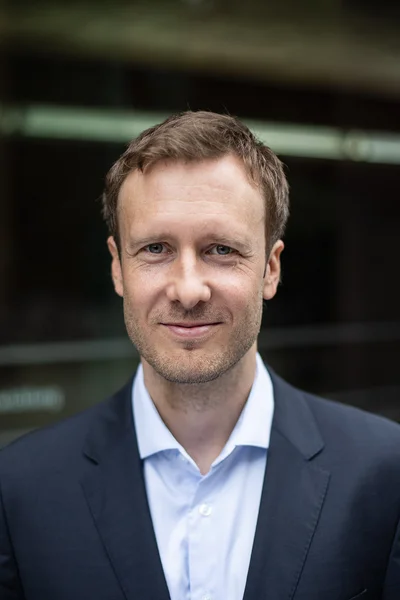
| Erik.Aschenbrand(at)hnee.de | |
| Phone | +49 3334 657-567 |
| Location | City Campus | Schicklerstrasse 5 | 16225 Eberswalde |
| Office Hours | by arrangement |
| Website | Biosphere Reserves Management (Degree Programme) |
- Political, legal and international framework conditions of UNESCO biosphere reserves
- Approaches and tools for research and monitoring using empirical social research methods
- Governance, administration and management for biosphere reserves and protected areas
- Nature tourism and cultural identity
- Research project in UNESCO biosphere reserves or in organisations related to them
- Research colloquium in the M.Sc. programme Biosphere Reserves Management
- Protected areas – biosphere reserves and national parks: objectives, management, learning from international comparisons
- Social relations with nature – landscape research, socio-ecological systems, nature's contributions to humans, ecosystem services, biodiversity, naturalness, religion, activism
- Conflicts – theory and practice of conflict resolution
- Urbanisation and experiencing nature
- Nature tourism – sociological perspective
MoPa – Monitoring for protected areas with a special focus on biodiversity and sustainable development of the areas
Very specific monitoring methods are used in protected areas for the ongoing observation and analysis of nature conservation tasks. In Germany, the Federal Agency for Nature Conservation and, in Poland, the Generalna Dyrekcja Ochrony Środowiska (GIOŚ) are attempting to standardise biodiversity monitoring. Existing monitoring systems do not yet adequately reflect the importance of protected areas as communicators of the value of biodiversity.
RANGER – Shaping the future of protected area management
The aim of the project is to support those responsible for managing protected areas in Germany in expanding and improving area management systems and to adapt the relevant training programmes to current needs.
TRANSECTS - Transdisciplinary Research Education for Transformations in Sustainability
TRANSECTS is a six-year research collaboration that offers professionals, students and practitioners in the field of transdisciplinary research innovative learning and research opportunities to jointly address complex challenges in the field of sustainability.
We are an international community of practice that promotes diverse forms of learning in different groups. Our international, socially and culturally diverse team includes researchers and early-career scientists, local and indigenous leaders, First Nations, experts in sustainability practice, practitioners from UNESCO biosphere reserves, government agencies, international networks, and private and civil society organisations and foundations.
Preserving biodiversity and harnessing ecosystem services through rewilding – learning from the Oder Delta
The REWILD_DE research project is investigating the concept of rewilding in the Oder Delta, the only rewilding area in Germany. The project team is addressing the following questions and developing practical solutions based on them: What can rewilding do to preserve and restore biodiversity? What ecosystem services does this provide for the regional economy and society? What impact does rewilding have in this region and how can the findings be transferred to nature conservation in Germany?
Professorship in ‘International Nature Conservation and Socio-Ecological Sustainability Processes in UNESCO Biosphere Reserves’
Head of the Northern Division of the UNESCO Middle Elbe Biosphere Reserve
Managing Director of Naturpark Reinhardswald e.V.
Research assistant at the Chair of Urban and Regional Development, Geography Research Unit, Eberhard Karls University of Tübingen.
Working on a research project on conflicts surrounding the extraction of mineral resources.
Regional Development and Tourism Officer at the Bavarian Forest National Park Administration
Doctorate from the Faculty of Mathematics and Natural Sciences at Eberhard Karls University of Tübingen, research area: geography.
Title of the dissertation: The landscape of tourism – how landscape is staged by tour operators and consumed by tourists. Supervisors: Prof. Dr. Dr. Olaf Kühne and Prof. Dr. Sebastian Kinder
Research assistant at Dresden University of Technology, Chair of Tropical Forestry.
Project coordinator for “Chances in Sustainability – Promoting Product Chains of Natural Products in Eastern Africa”
Freelance tour guide at Terranova Touristik KG and Wikinger Reisen GmbH
Studied geography at the Universities of Marburg and Passau
Community service in home nursing at Diakonie Berlin Hermsdorf-Frohnau
Member of the departmental council
Chairperson of the Joint Commission of the Biosphere Reserves Institute
Internationalisation Officer for the Department of Landscape Use and Nature Conservation
Massenberg, J.R., Jahn, S., Fernández, N., Berghöfer, A., Schröter-Schlaack, C., Kaddatz, B., Sharma, S., Brenner, W., Hansjürgens, B., Aschenbrand, E., Tröger, U., Stöcker, U., Berghöfer, U. & Schiller, J.
Aschenbrand, E. & Rein, H. (2023): Nachhaltiger Tourismus und Landschaft. In: Kühne, O./Sedelmeyer, T./Jenal, C./ Freytag, T. : Landschaft und Tourismus. Springer VS.
Aschenbrand, E (2021): From the mountains to the city to the ocean. How interaction with landscape creates meaningful experiences in alpinism, skateboarding and surfing. In: Kühne O./Edler, D./Jenal, C.: The construction of landscape in games. Springer Nature.
Aschenbrand, E./Michler, T. (2020): Linking socio-scientific landscape research with the ecosystem services approach to analyze conflicts about protected area management – the case of the Bavarian Forest National Park. In: Kühne, O./Eder, D.: Landscape Visualizations. Springer Nature (im Druck).
Aschenbrand, E/Michler, T. (2020): Forest and Tourism. In: Jenal, C./Berr, K.: Wald in der Vielfalt möglicher Perspektiven. Springer VS. Wiesbaden (im Druck).
Michler, T./ Aschenbrand, E. (2020): „Natur Natur sein lassen“ – Entstehung und Bedeutung des deut-schen Nationalpark-Leitbildes in internationaler Perspektive. In: Heurich, M./Mauch, C.: Von der Serengeti in den Bayerwald. Geschichte und Wildnis im Nationalpark Bayerischer Wald (im Druck)
Aschenbrand, E./Michler, T. (2019): Gestörte Heimat: Nationalparks zwischen Naturschutz, Tourismus und lokaler Akzeptanz. Naturschutz und Landschaftsplanung 51 (04). 160-165.
Aschenbrand, E. (2019): Tourismus und Landschaft. In: Kühne, O./Weber, F./Berr, K./Jenal, C. (2019): Handbuch Landschaft. Springer VS. Wiesbaden. 631-640.
Michler, T./Aschenbrand, E./Leibl, F. (2019): Gestört, aber grün: 30 Jahre Forschung zu Landschaftskonflikten im Nationalpark Bayerischer Wald. In: Berr, K./Jenal, C. (2019): Landschaftskonflikte. Springer VS. Wiesbaden. 291-311.
Aschenbrand, E. (2018): ‚Eine Landschaft wie ein Gemälde?‘ – Die Inszenierung von Landschaft im Wander- und Fahrradtourismus. Zeitschrift für Tourismuswissenschaft. 10 (1). 121-141.
Weber, F./ Kühne, O./Jenal, C./Aschenbrand, E./Artukovic, A. (2018): Sand im Getriebe. Aushandlungsprozesse um die Gewinnung mineralischer Rohstoffe aus Konflikttheoretischer Perspektive nach Ralf Dahrendorf. Springer VS. Wiesbaden.
Aschenbrand, E./Grebe, C. (2018): Erneuerbare Energie oder ‚intakte‘ Landschaft? Wie Naturtourismus und Energiewende zusammenpassen. In: Kühne, O. und Weber, F. (Hrsg.): Bausteine der Energiewende. Springer VS. Wiesbaden. 523-538.
Aschenbrand, E. (2018): Ein neuer Naturpark in Hessen - Der Naturpark Reinhardswald. Jahrbuch Naturschutz in Hessen. Band 17. Nordhessische Gesellschaft für Naturkunde und Naturwissenschaften e.V. 161-162.
Artukovic, A./Aschenbrand, E./Weber, F. (2017): Der Stein des Anstoßes. Konflikte um die Rohstoffgewinnung zwischen Wirtschaft, Gesellschaft und Planung. Zwischenergebnisse eines praxisorientierten Forschungsvorhabens. Naturschutz und Landschaftsplanung 49 (11). 348-354.
Aschenbrand, E. (2017): Die Landschaft des Tourismus. Wie Landschaft von Reiseveranstaltern inszeniert und von Touristen konsumiert wird. Springer VS. Wiesbaden.
Aschenbrand, E./Kühne, O./Weber, F. (2017): Rohstoffgewinnung in Deutschland: Auseinandersetzungen und Konflikte. Eine Analyse aus sozialkonstruktivistischer Perspektive. Umweltwirtschaftsforum 2017.
Aschenbrand, E./Kühne, O./Weber, F. (2017): Steinharter Widerstand? Bürgerinitiativen und die Akzeptanz der Rohstoffgewinnung. Gesteinsperspektiven 2/2017. 8-12.
Aschenbrand, E. (2016): Einsamkeit im Paradies. Touristische Distinktionspraktiken bei der Aneignung von Landschaft. Berichte. Geographie und Landeskunde. Heft 3/2016. 219-234.
Aschenbrand, E./Dohmen, K./Kurth, K./Mank, L./Noack, A. (2016): Die Entwicklung privater Nutzgärten in Passau von 1827-2012. In: Scheuer, H./Schaffner, R./Fickert, T./Wurster, H./Wennerhold, M./Gröschel, C. (Hrsg.): Zu Nutzen und Erbauung. Passauer Gartenkultur im Licht der Jahrhunderte. Selbstverlag der Stadt Passau. Passau.
Natur Natur sein lassen oder Modellregion für nachhaltige Entwicklung? Wie können Biosphärenreservate von Nationalparken lernen? Deutsche Akademie für Landesplanung Jahrestagung: "Großschutzgebiete: Manager einer nachhaltigen Regionalentwicklung?".
Online. 13.10.2021.
Moderation of the 2. Meeting of ELBE PARKS – the Elbe River Network of Protected Areas. Online. 24.02.2021.
Why Berlins only Nature Park should become the first UNESCO Urban Biosphere. Berlin Wilderness City initiative. Online. 17.02.2021.
Die Vertiefungsrichtung Schutzgebietsbetreuung im Bachelor Landnutzung und Naturschutz. Naturschutzfonds Brandenburg. Tagung: Einsatz von Rangern in Verantwortung von Naturschutzstiftungen. 19.11.2020.
Das Länderübergreifende UNESCO-Biosphärenreservat Flusslandschaft Elbe. Fachgespräche zur internationalen Zusammenarbeit im Naturschutz entlang der Elbe. Nationalpark Sächsische Schweiz. 10.09.2020.