

Prof. Dr. Peter Spathelf
Professorship of Applied Silviculture, Chair of the Senate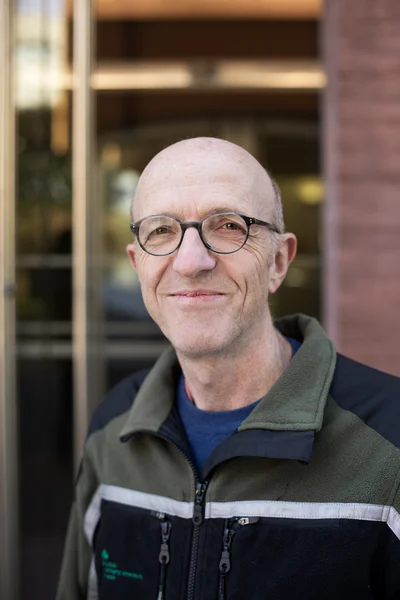
| Peter.Spathelf(at)hnee.de | |
| Phone | +49 3334 657-171 |
| Location | Forest Campus | Alfred-Möller-Straße 1 | 16225 Eberswalde |
| Room | 11.206 |
| Office Hours | by arrangement |
| Website | Senate Chairperson |
Head of International Relations at HNEE
Chair of the Senate (since April 2025)
- Applied Silviculture
- Natural Forest Management
- Forestry and Climate Change
- Forest Landscape Restoration
- Introduction to Forestry for Lanus
- Introduction to Sustainable Development
- Forest Management and Future Silvicultural Strategies
- Natural forestry
- Forestry and forest management in temperate, tropical and subtropical regions
- Forest adaptation and climate change
- Forest restoration
European Higher Education in Forest Ecology and Forest Management
The aim of the European Higher Education in Forest Ecology and Forest Management project is to create an international open access learning platform with teaching content in the field of forest ecology and management.
Forest management as a prerequisite for the development of productive, fire-resistant, and climate-resilient forests in Ukraine
The aim of the project is to improve the stability and growth of various forest types through management measures. In addition, the project aims to establish a scientific foundation for forest management in Ukraine and to build an initial database on the effects of management on growth, wood quality, and other ecosystem services provided by forests. Particular attention is being paid to the prevention and control of wildfires in Ukraine to support the adaptation of Ukraine’s wildfire strategy to changing conditions.
ADAPTive Forest Resource Management for a Sustainable Timber Industry in the Brandenburg-Berlin Region (ADAPT-Wald-Holz)
In this project, a group of early-career researchers is developing an adaptive forest-timber management system for the Brandenburg-Berlin region, using Scots pine as a case study. The focus is on creating a regional value chain that conserves ecosystems and resources—from forest management and timber harvesting to timber processing.
Forest bogs and their contribution to biodiversity and climate protection
The goal of the project is to ecologically characterize forest types on peatlands and link them to emissions data and water balance data. Ultimately, the project aims to draw conclusions regarding good forestry practices and share examples of best practices.
Conversion of pine forests to near-natural forest management in Ukraine – with a particular focus on resilience to fire and extreme weather events such as drought, in accordance with the principles of integrated fire management
Forestry in Ukraine remains heavily focused on clear-cutting and the management of monoculture stands. While alternatives such as long-term natural regeneration or other harvesting methods are, of course, well known, they have not yet been incorporated into forest management practices. The Resilpine project was therefore designed to provide an impetus for the conversion of pine forests—particularly those in the west—into climate-resilient permanent mixed forests, through the establishment and evaluation of test and demonstration plots, as well as through training and continuing education.
Professor of Applied Silviculture at the Eberswalde University for Sustainable Development, Germany (Schicklerstraße 5, 16225 Eberswalde, Germany)
Forestry officer at the Baden-Württemberg State Forestry Administration, Germany (various departments: Forest Planning and Human Resources)
Lecturer and researcher at the Federal University of Santa Maria, Brazil (DAAD Visiting Professor)
Lecturer and researcher at the Federal University of Santa Maria, Brazil (DAAD Visiting Professor)
Forestry officer at the Baden-Württemberg State Forestry Administration, Germany (various departments: Forest Planning and Human Resources)
Ph.D. at the University of Freiburg (Department of Forest Growth; Advisor: Prof. Dr. H. Spiecker)
Forestry officer at the Baden-Württemberg State Forestry Administration, Germany (various departments: Forest Planning and Human Resources)
Studied forestry at the University of Freiburg (degree: Diplom)
Climate Change Officer at the German Forestry Association
Member of the Forestry Committee of the State of Brandenburg
Member of the Scientific Advisory Board of F.I.B. e.V.
Assessor at the accreditation organization Asiin
Member of the DFWR’s Expert Committee on Climate Protection and Biodiversity
Member of the KWF Working Committee on “Silviculture and Forestry Technology”
Student Representative at the Friedrich Ebert Foundation
Alternate Member of IUFRO Working Group 1.01.10, “Ecology and Silviculture of Pine”
Die temperaturausgleichende Wirkung von Waldbeständen am Beispiel der Intensivmonitoringfläche Britz. Project brief Thünen Institut für Waldökosysteme. 2 S. (auch auf Englisch)
Thater, N., Natkhin, M., Holzhausen, M., Spathelf, P.
Robinson, D., Ammer, C., Polle, A., Bauhus, J., Aloni, R., Annighöfer, P., Baskin, T., Blatt, M., Bolte, A., Bugmann, H., Cohen, J., Davies, P., Draguhn, A., Hartmann, H., Hasenauer, H., Hepler, P., Kohnle, U., Lang, F., Löf, M., … Näsholm, T.
Spathelf, P., Lavnyy, V., Matysevych, O., Danchuk, O.
Spathelf, P., Lavnyy, V., Kravchuk, R., & Vytseha, R.
Volk, H. & Spathelf, P. (2023): Kulturwald in Mitteleuropa – Schwarzwald und Choriner Wald. AFZ-DerWald 23. 48-51.
Robinson, D.G., Ammer, C., Polle, A., Aloni, R., Annighöfer, P., Bauhus, J., Baskin, T., Blatt, M.R., Bolte, A., Bugmann, H., Cohen, J.D., Davies, P.J., Draguhn, A., Fitter, A., Geitmann, A., Hartmann, H, Hasenauer, H, Kohnle, U., Löf, M., Messier, C,
Murphy, A., Puettmann, K.J., Marchant, I.Q., Raven, P.H., Robinson, D., Sanders, D., Schwechheimer, C., Spathelf, P., Steer, M., Taiz, L., Wagner, S, Henriksson, N. and Näsholm, T. (2023): Mother Trees, Altruistic Fungi, and the Perils of Plant Personifcation. Trends in Plant Science. DOI:https://doi.org/10.1016/j.tplants.2023.08.010.
Thom, D. & Spathelf, P. (2023): Adaptive Waldbewirtschaftung zur Minderung von Störungen. Schweiz Z Forstwesen 174. 70-75.
Spathelf, P., Ammer, C., Annighöfer, P., Bolte, A., Seifert, T., Weimar, H. (2022): Fakten zum Thema: Wälder und Holznutzung. AFZ-DerWald 7. 39-44.
Pach, M., Bielak, K., Bončina, A., Coll, L., Höhn, M., Kašanin-Grubin, M., Lesiński, J., Pretzsch, H., Skrzyszewski, J., Spathelf, P., Tonon, G., Weatherall, A., Zlatanov, T. (2022): Climate-smart silviculture in mountain regions.
In Tognetti, R, Smith M. & Panzacchi, P. (Eds): Climate-smart forestry in mountain regions. Springer. Managing Forest Ecosystems, Volume 40. 263-316.
Lavnyy, V., Spathelf, P., Vytseha, R. (2021): Continuous investigations of thinning in pine stands. International scientific conference "The latest achievements in the modern agro-industrial complex":
conference proceedings (December 28–29, 2021. Lublin, the Republic of Poland). Riga, Latvia: "Baltija Publishing", 2021. 70-73. doi.org/10.30525/978-9934-26-184-8-16.
Lindner, M., Schwarz, M., Spathelf, P., de Koning, J.H.C., Jandl, R., Vizlai, I., Vančo, M. (2020): Adaptation to Climate Change in Sustainable Forest Management in Europe. EFI, Liaison Unit Bratislava, Zvolen.52 pp.
Sanders, T., Spathelf, P. & Bolte, A. (2020): The response of forest trees to abiotic stress. In: Stanturf, J. (Ed.): Achieving sustainable forestry Volume 1: Boreal and temperate forests. book chapter, Burleigh Dodds Science Publishing.
dx.doi.org/10.19103/AS.2019.0057.05
Jandl, R., Spathelf, P., Bolte, A. & Prescott, C. (2019): Forest adaptation to climate change – is non-management an option? Annals of Forest Science, SI. https://doi.org/10.1007/s13595-019-0827-x
Mason, B., Lof, M., Pach M., Spathelf, P. (2018): The Development of Silvicultural Guidelines for Creating Mixed Forests.
In Bravo-Oviedo, A., Pretzsch, H. & del Rio, M. (Eds.): Dynamics, Silviculture and Management of Mixed Forests. 255-270. book chapter, Springer.
Spathelf, P., Stanturf, J., Kleine, M., Jandl, R., Chiatante, D., Bolte, A. (2018): Adaptive Measures: Integrating Adaptive Forest Management and Forest Landscape Restoration. Annals of Forest Science.
Published online: May 7, 2018; doi.org/10.1007/s13595-018-0736-4.
del Río, M., Pretzsch, H., Alberdi, I., Bielak, K., Bravo, F., Brunner, A., Condés, S., Ducey, M.J., Fonseca, T., von Lüpke, N., Pach, M., Peric, S., Perot, T., Souidi, Z., Spathelf, P., Sterba, H., Tijardovic, M., Tomé, M., Vallet, P.,
Bravo-Oviedo, A. (2018): Characterization of mixed forests. In Bravo-Oviedo, A., Pretzsch, H. & del Rio, M. (Eds.): 27-71. book chapter, Springer.
Coll, L., Ameztegui, A., Collet, C., Löf, M., Mason, B., Pach, M., Verheyen, K., Abrudan, I., Barbati, A., Barreiro, S., Bielak, K., Bravo-Oviedo, A., Ferrari, B., Govedar, Z., Kulhavy, J., Lazdina, D., Metslaid, M., Mohren, F., Pereira, M.,
Peric, S. Rasztovits, E., Short, I., Spathelf, P., Sterba, H., Stojanovic,D. Valsta, L., Zlatanov, T., Ponette, Q. (2018): Knowledge gaps about mixed forests: what do European forest managers want to know and what answers can science provide? Forest Ecology and Management, 407. 106-115.
Reque Kilchenmann, J., Garcia Ochoa, M. & Spathelf, P. (2017): Bringing the forest to the classroom: developing virtual tours in forestry. Proceedings First International Engineering Education for the XXI Century (ICEE21C). 23-26.
Spathelf, P., Bolte, A. & van der Maaten, E. (2016): Is Close-to-Nature Silviculture (CNS) an adequate concept to adapt forests to climate change? Landbauforschung. 1-10. DOI:10.3220/LBF1452526188000.
Spathelf, P. & Ammer, C. (2015): Mixed forest management with Scots pine (Pinus sylvestris L.) in Germany – history and current trends. Forstarchiv 86, Heft 3. 59-66.
Keskitalo, E.C.H., Legay, M., Marchetti, M., Nocentini, S., Spathelf, P. (2015): The role of forestry in national climate change adaptation policy; cases from Sweden, Germany, France and Italy. International Forestry Review Vol 17(1). 30-42.
Bravo-Oviedo,,A., Pretzsch, H., Ammer, C., Andenmatten, E., Barbati, A., Barreiro, S., Brang, P., Bravo, F., Coll, L., Corona, P., den Ouden, J., Ducey, M. J., Forrester, D. I., Giergiczny, M., Jacobsen, J. B., Lesinski, J., Löf, M., Mason, W. L.,
Matovic, B., Metslaid, M., Morneau, F., Motiejunaite, J., O’Reilly, C., Pach, M., Ponette, Q., del Rio, M., Short, I., Skovsgaard, J. P., Soliño, M., Spathelf, P., Sterba, H., Stojanovic, D., Strelcova, K., Svoboda, M., Verheyen, K., von Lüpke, N., & Zlatanov, T. (2014): European Mixed Forests: definition and research perspectives. Forest Systems, 23(3), 518-533. doi.org/10.5424/fs/2014233-06256.
Brang, P., Spathelf, P., Larsen, J.B. et al. (2014): Suitability of close-to-nature silviculture for adapting temperate European forests to climate change. Forestry 87 (4). 492-503.
Spathelf, P., van der Maaten, E., van der Maaten-Theunissen, M., Campioli, M., Dobrowolska, D. (2014): Climate change impacts in European forests: the expert-views of local observers. Annals of Forest Science 71 (2). 131-137