

Sabrina Scholz
Research Assistant in the Agricultural and Food Industry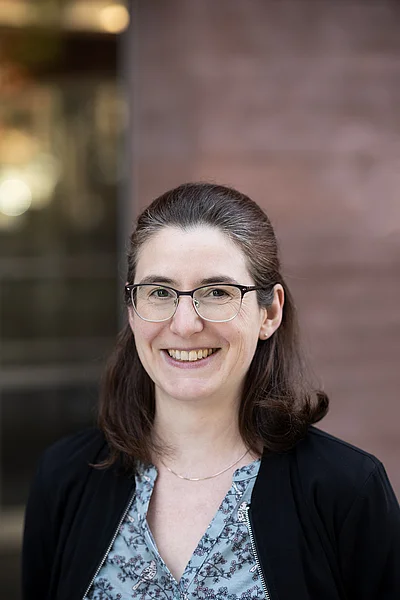
| Sabrina.Scholz(at)hnee.de | |
| Phone | +49 3334 657-425 |
| Location | City Campus | Schicklerstrasse 5 | 16225 Eberswalde |
| Room | 01.218.1 |
Geschäftsstelle des Naturschutzbeirats des MLEUV im Land Brandenburg
Nature Conservation Advisory Boards are scientific advisory bodies that assist the relevant nature conservation authorities with technical issues related to nature conservation. In Brandenburg, this role is established by the Brandenburg Nature Conservation Implementation Act, Section 35, Paragraph 1. Additional responsibilities and authorities, as well as the work of the Nature Conservation Advisory Board, are further defined by the Nature Conservation Advisory Boards Ordinance of 2004 and the Nature Conservation Advisory Boards Decree of 2005. Every county and every city independent of a county has a Nature Conservation Advisory Board for its lower nature conservation authority (UNB). At the state level, there is an advisory board that provides technical advice to the Ministry of Agriculture, Food, Environment, and Consumer Protection (MLEUV).
Entwicklung eines Aktionsplans für die Zukunftsfähigkeit des landwirtschaftlich und gartenbaulichen Feldversuchswesens im Land Brandenburg
The project aims to develop an action plan for agricultural and horticultural field trials (LGFV) in Brandenburg. The goal is to make agriculture sustainable in the face of climate and economic challenges. Through the participatory involvement of research institutions, farmers, advisors, and educational institutions, concrete areas of action and measures will be developed to implement the visions of the future scenario already developed in the predecessor project “AnpaG.” The action plan is intended to strengthen cooperation and networking among stakeholders, promote the innovative capacity of the LGFV, and contribute to achieving overarching state goals, such as climate protection and biodiversity.
Klimaresiliente Anbauverfahren zur Risikooptimierung (KARO)
The goal of the project “Climate-Resilient Farming Practices for Risk Optimization – With Special Emphasis on Cropping Strategies and Their Regional Requirements” (KARO) is to further develop existing crop production systems in a region-specific manner to make them more resilient to climate change phenomena.
In collaboration with the Julius Kühn Institute, the Leibniz Centre for Agricultural Landscape Research (ZALF), the Potsdam Institute for Climate Impact Research, and Justus Liebig University Giessen, the project examines climatic, agronomic, phytosanitary, and environmental risks, as well as business and economic risks. Based on an already established network of stakeholders in three climatically distinct focus regions in northern, eastern, and southwestern Germany, potential adaptation scenarios are quantified in terms of their effects, discussed with the stakeholders, and used to derive possible optimizations for regional cropping systems. Some of these are then tested for feasibility in demonstration projects on farms and presented to facilitate knowledge transfer.
Erprobung und Anpassung von Wissenstransfer- und gruppenbezogenen Beratungskonzepten für eine nachhaltige Landwirtschaft in Brandenburg“ (AnpaG)
AnpaG – which stands for “Anpacken” (getting things done); driving the transformation of agriculture toward sustainability.
At AnpaG, we contribute to this by testing peer group counseling as a methodological approach to agricultural consulting. Through events such as field days and consultant days, we help connect Brandenburg farmers, consultants, and research staff. In addition, we are developing an → informational website about agricultural advisory services in Brandenburg, which contributes to greater visibility for advisors and their expertise.
Furthermore, the importance of field trials in Brandenburg as a central hub for knowledge transfer between research and practice was highlighted. To increase visibility, there is a need for stronger networking among institutes with affiliated experimental facilities, as well as the identification of common goals. As a first step, the current status was assessed in collaboration with stakeholders from research, practice, advisory services, education, and administration, and subsequently a shared vision for the future of agricultural and horticultural field trials in Brandenburg was formulated.
Praxisnetzwerkes Biodiversität im Ackerbau
Entwicklung, Erprobung und Evaluierung eines übertragbaren Modells einer einzelbetrieblichen Naturschutzberatung im Land Brandenburg
Kompetenznetzwerk Ökologischer Acker- und Pflanzenbau Nordost Brandenburg - Cropping School
Bildungseinheiten zur Stärkung experimenteller Kompetenzen in der Landwirtschaft (BeLa)
Research Assistant in the Department of Agroecology and Sustainable Farming Systems at HNEE
Research Associate in the Politics and Markets Division of the Agriculture and Food Industry
GIS Analyst Training Program at the GIS Academy Berlin
Master's Program in Eco-Agricultural Management at HNEE
Erasmus Study Abroad Program in Environmental Engineering at the Escola Superior Agrária de Coimbra, Portugal
Bachelor's Program in Land Use and Nature Conservation at HNEE
Scholz, S., R. Bloch, 2025: Bedeutung des landwirtschaftlichen und gartenbaulichen Feldversuchswesens für die Transformation in der Landwirtschaft – Ergebnisse aus dem Land Brandenburg. In: 65. Jahrestagung der Gesellschaft für Pflanzenbauwissenschaften e. V. : Planetary Boundaries: Rising to the Challenges Ahead ; Kurzfassungen der Vorträge und Poster ; 23. bis 24. September 2025, Halle (Saale), Mitteilungen der Gesellschaft für Pflanzenbauwissenschaften, S. 401-402
Krengel-Horney, S., C. Bethwell, T. Conradt, N. Qasim, J. Aurbacher, S. Bellingrath-Kimura, R. Bloch, F. Busch, M. Glemnitz, J. Helbig, L. Löllmann, A.- M. Moroder, S. Scholz, J. Strassemeyer, L. Stroedter, C. von Buttlar, T. von Steimker, T. Waldau 2025: Integrierter Ansatz zur Risikominimierung: Regional passfähige Anpassung an den Klimawandel.In: 65. Jahrestagung der Gesellschaft für Pflanzenbauwissenschaften e. V. : Planetary Boundaries: Rising to the Challenges Ahead ; Kurzfassungen der Vorträge und Poster ; 23. bis 24. September 2025, Halle (Saale), Mitteilungen der Gesellschaft für Pflanzenbauwissenschaften, S. 199-200
Sabrina Scholz, Ralf Bloch. 2025. Role of agricultural experiment stations in AKIS: How could the Brandenburg’s (Germany) agricultural experiment stations be well set up for the undergoing agriculture transformations?. In: ESEE 2025 - 27th European Seminar on Extension and Education. Inclusivity and transformations of agricultural extension and education, p. 70-75. DOI: 10.5281/zenodo.18111917
S. Scholz, R. Bloch, 2025. Zukunftsbild für das landwirtschaftliche und gartenbauliche Feldversuchswesen in Brandenburg, HNEE
Hofstätter J., Häring A., Scholz S. 2023: Blühstreifen für Brandenburg – Neue Richtlinie, neue Perspektiven. Beitrag zur 16. Wissenschaftstagung Ökologischer Landbau
Scholz S., Bloch R., Häring A. 2022: Are farmers willing to pay for regional framers' networks? - in search of business models. In: Farming Systems Facing Climate Change and Resource Challenges.14th European Farming Systems Conference (IFSA), University of Évora, Portugal. p.759-772
Scholz S., Kling C., Häring A. 2021: Researchers as process intermediaries in agricultural knowledge innovation networks – analysis of roles and competences. 25th European Seminar on Extension & Education (ESEE), Teagasc Ballyhaise Agricultural College, Ireland
Scholz S. 2020. „Self-learning Through Networking and On Farm Trails". In Ewa SmukStratenwerth, Apostol Apostolov, Tomasz Maliszewski, Martin Nobelmann, Barbara Tokarska, 2020. Folk High Schools facing the challenges of the Anthropocene. What to teach in 21st century, and how?, Grzybów 2020, ISBN: 978-83-949813-3-4 (Seite 58-59)
Scholz S., Bloch R., Häring A. 2019: Cropping School: Entwicklung betriebsspezifischer Anpassungskonzepte an den Klimawandel durch regionale Vernetzung von Landwirten und Durchführung von Praxisversuchen. In: Kuratorium für Technik und Bauwesen in der Landwirtschaft e. V. (KTBL) (Hrsg.) 2019: Kühlen Kopf bewahren – Anpassung der Landwirtschaft an den Klimawandel.
Scholz, S., Bloch, R., Häring A. 2019: Cropping School: Wir lernen gemeinsam mit und voneinander - eine kooperative Zusammenarbeit zwischen Landwirten, Wissenschaftlern und Beratern. Beitrag zur 15. Wissenschaftstagung Ökologischer Landbau
Bloch R., Ehlers K., Hofmeier M., Nabel M., Pfeffer H., Scholz S., Wittenberg J. 2019: Nachhaltigkeit im Ackerbau Eckpunkte für eine Ackerbaustrategie. Bundesministeriums für Umwelt, Naturschutz und nukleare Sicherheit (BMU), Bonn
Scholz S., Bloch R., Münchhausen S., Häring a. 2018: “Cropping School” - An alternative to advisory services in Brandenburg, Germany? In: Farming systems: facing uncertainies and enhancing opportunities. 13th European IFSA Symposium - 1th -5th July 2018, Chania (Greece)
Scholz S., Bloch R., Knuth U., Häring A. M. 2017: Strengthening On-Farm Research in upper secondary agricultural education in Germany. In: Transformative learning: new directions in agricultural extension and education. 23rd European Seminar on Extension (and) Education- 4th - 7th July 2017, Chania (Greece)
Knuth U, Bloch R., Häring A., Scholz S. 2016: Praxisversuche in der landwirtschaftlichen Beratung: Erfahrungen und Wissensbedarfe in Deutschland. In: Wolfrum, S.; Heuwinkel, H.; Reents, H.J.; Hülsenbergen, K.J. (Hrsg.) 2017: Ökologischen Landbau weiterdenken - Verantwortung übernehmen, Vertrauen stärken (7.-10. März 2017 Freisingen). Beiträge zur 14. Wissenschaftstagung Ökologischer Landbau. Verlag Dr. Köster, Berlin. S. 714-717
Scholz S. 2022: Cropping School für einen innovativen Ackerbau. In: B&B Agrar online November/2022
Scholz S., Bloch R., Häring A. 2021: Ackerbauer lernen mit- und voneinander. In: Land in Form 3/21. S. 46-47
Knuth U., Scholz S., Bloch R., Häring A. 2017: On-Farm Versuche in der Beratung. In: B&B Agrar 5/2017. S.26-28
Scholz S. 2017: Eigene Daten sind die besten Daten - Eine Anleitung erklärt, wie man Praxisversuche auf dem eigenen landwirtschaftlichen Betrieb planen, durchführen und auswerten kann. In: Bauern Zeitung 35. Woche 2017, Seite 42-43