Computed Tomography Laboratory of HNEE
The Computed Tomography Laboratory, or CT Lab for short, is a digital hub within the Centre for Data Science (C4DS). It combines modern imaging techniques with data-driven analysis and modelling. The aim is to precisely capture material samples, digitally map them and make them accessible for further scientific analysis.
As an open research infrastructure at HNEE, the laboratory supports collaboration in research, teaching and knowledge transfer. It is available for scientific projects, practical teaching formats, final-year dissertations and collaborations with partners from academia and industry.
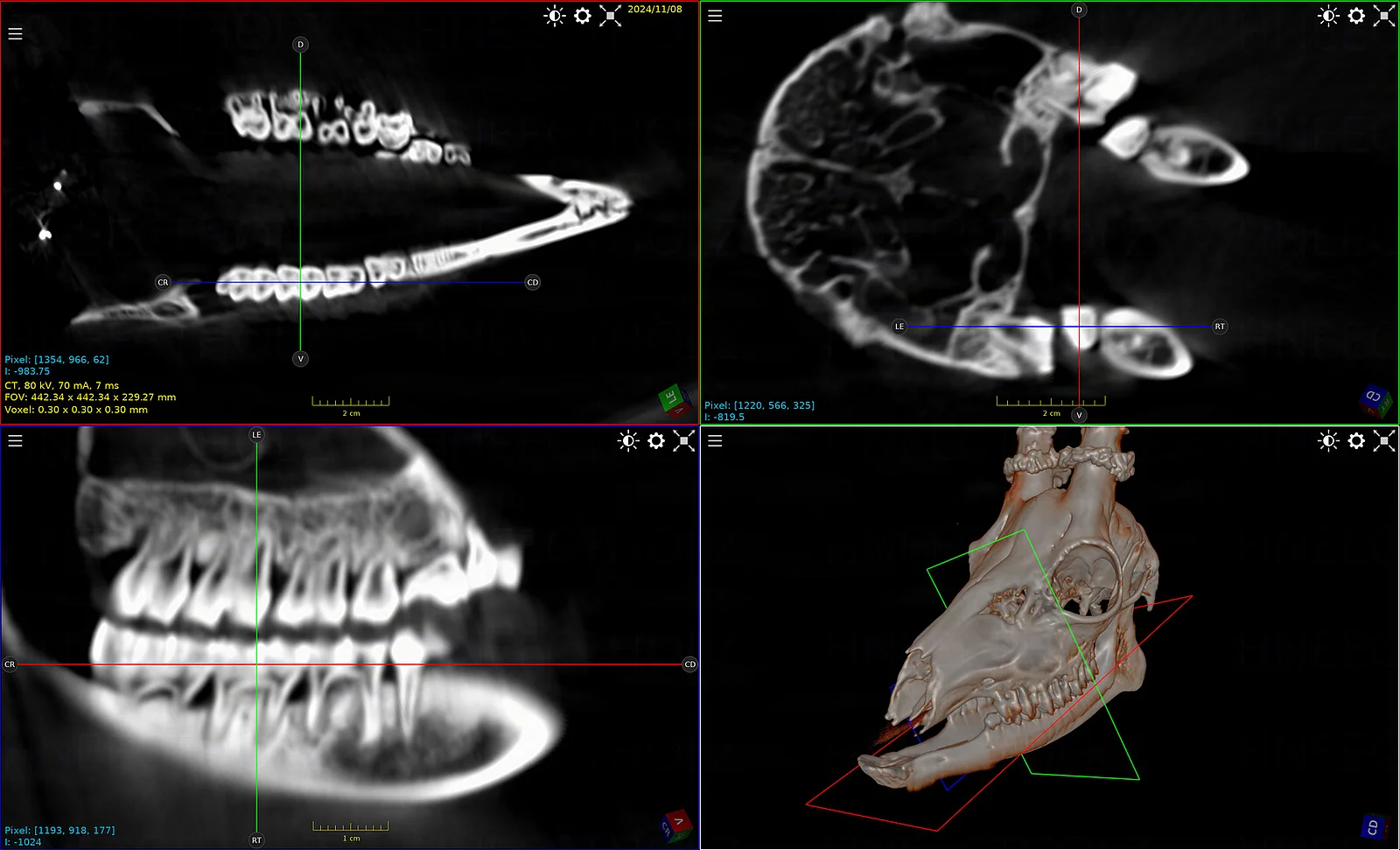
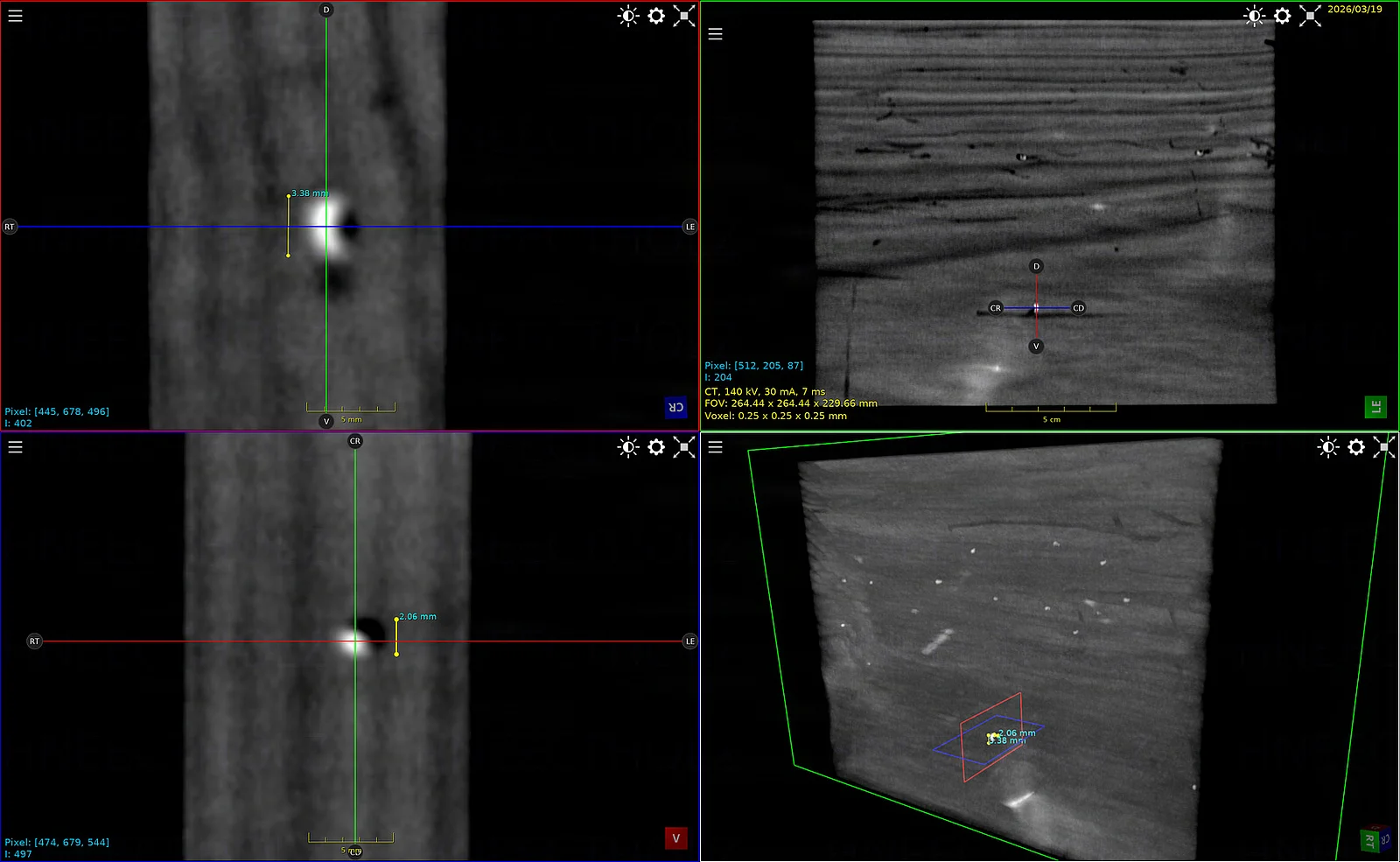
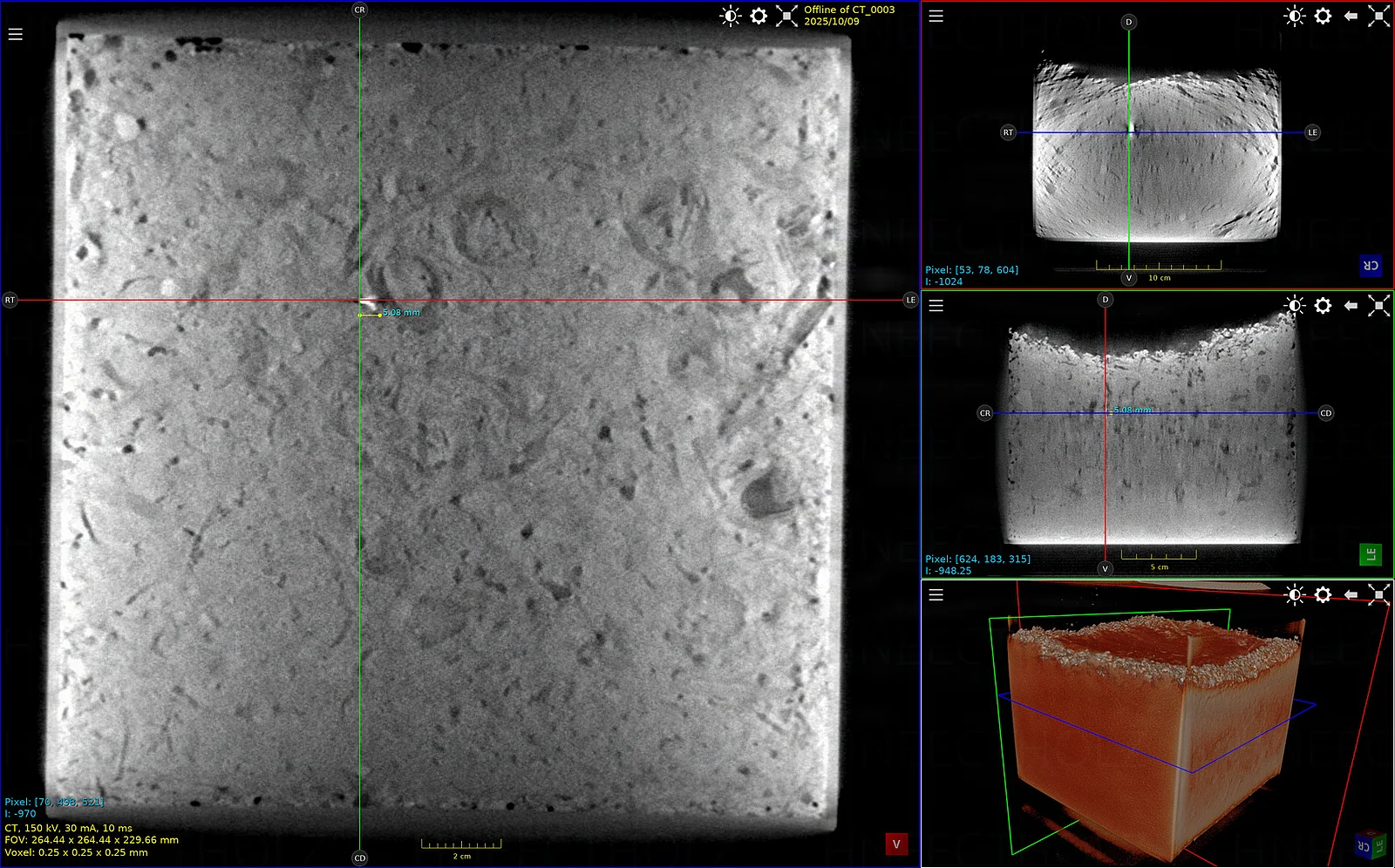
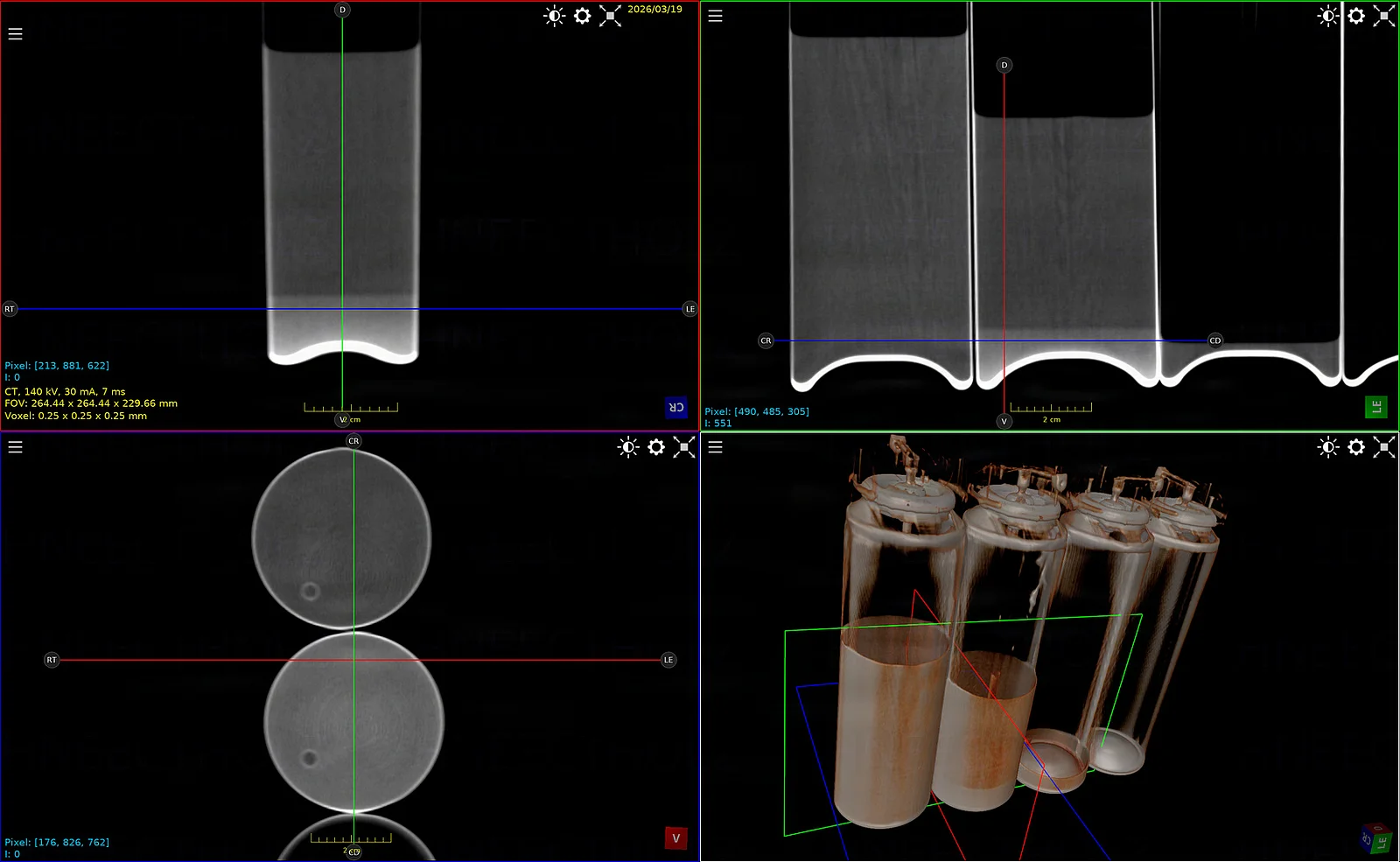
CT scans
CT scans provide three-dimensional, voxel-based datasets that can be used to visualise and quantitatively analyse internal structures, density distributions and material inhomogeneities.
Note: Clicking on the images will open an enlarged view

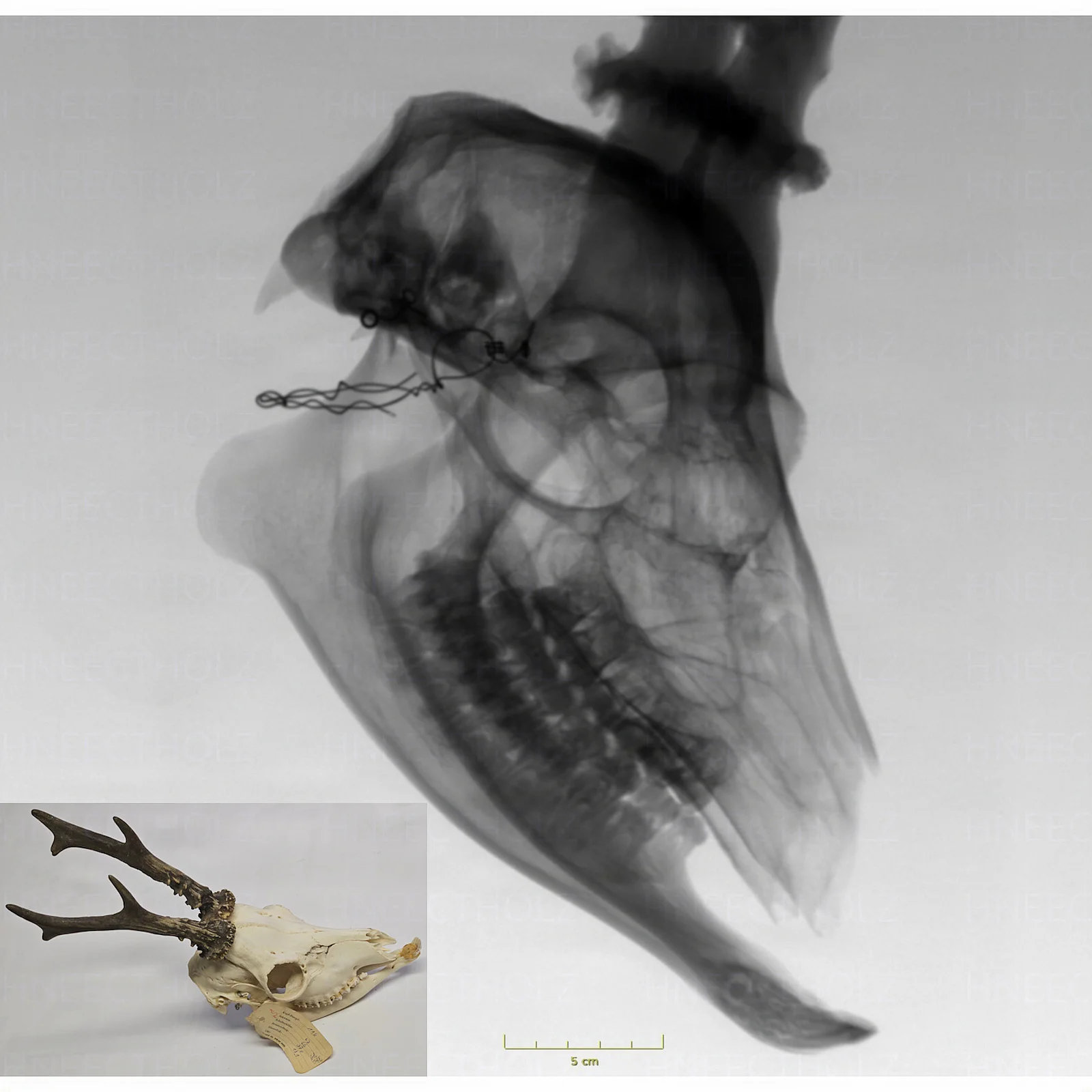
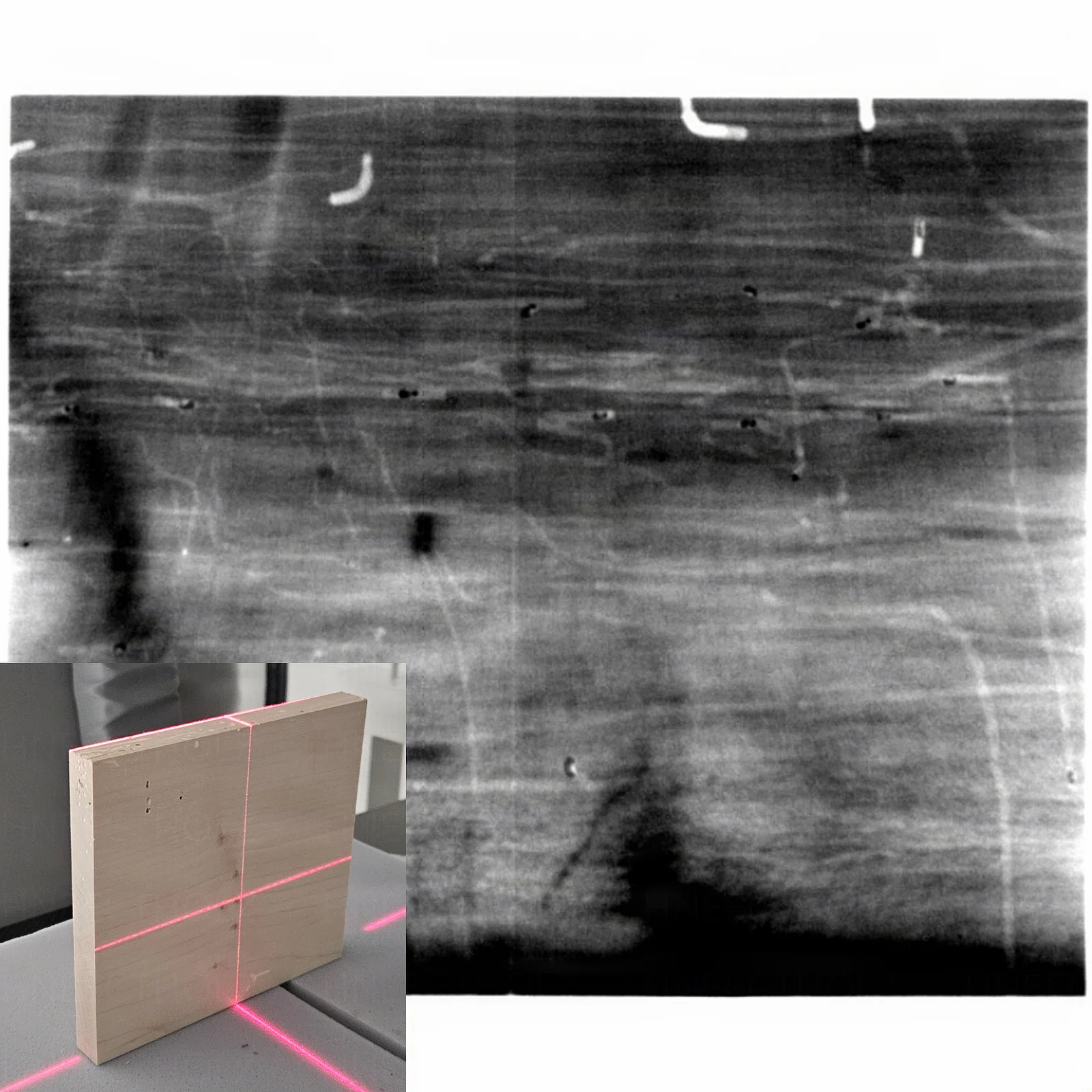
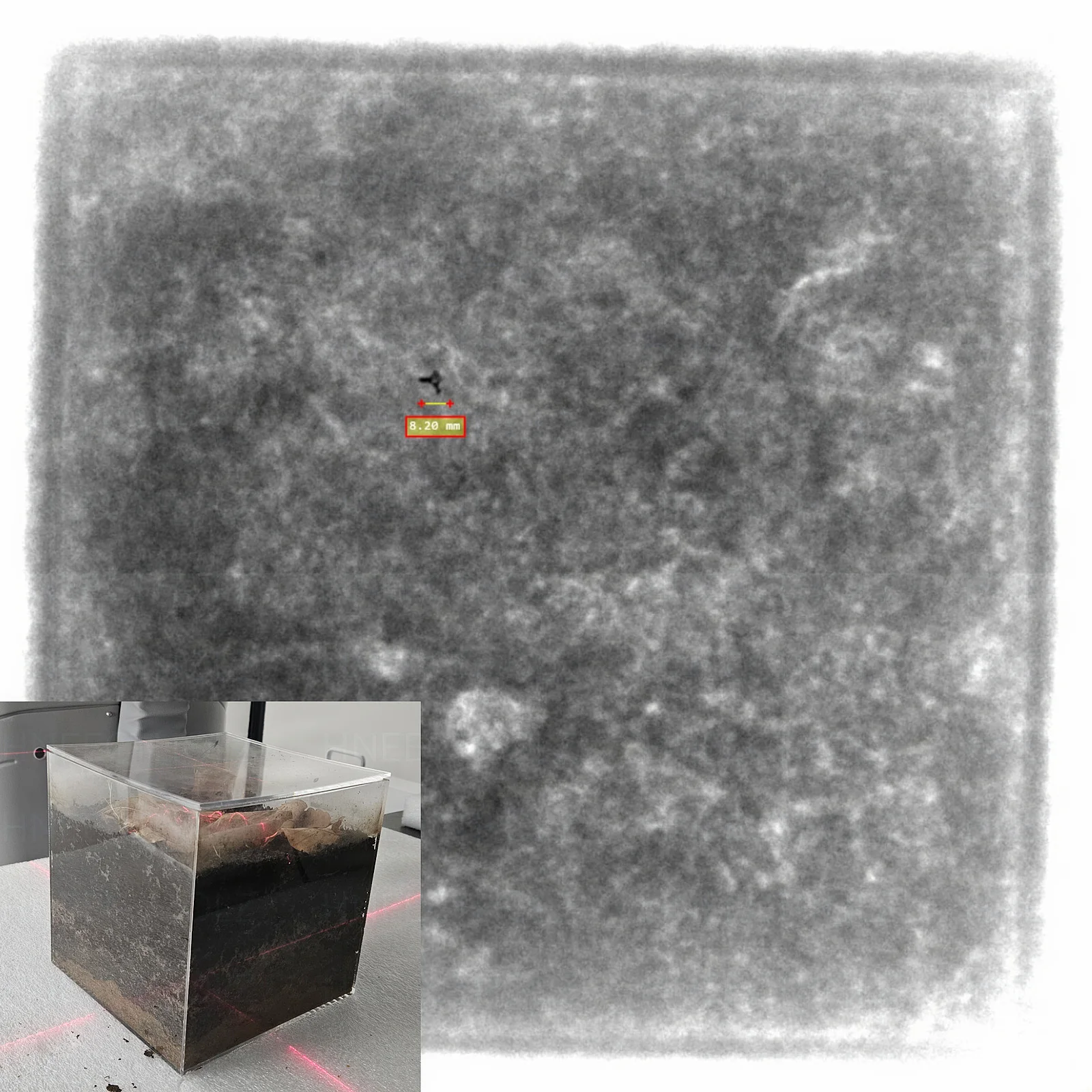
Fluoroscopy images
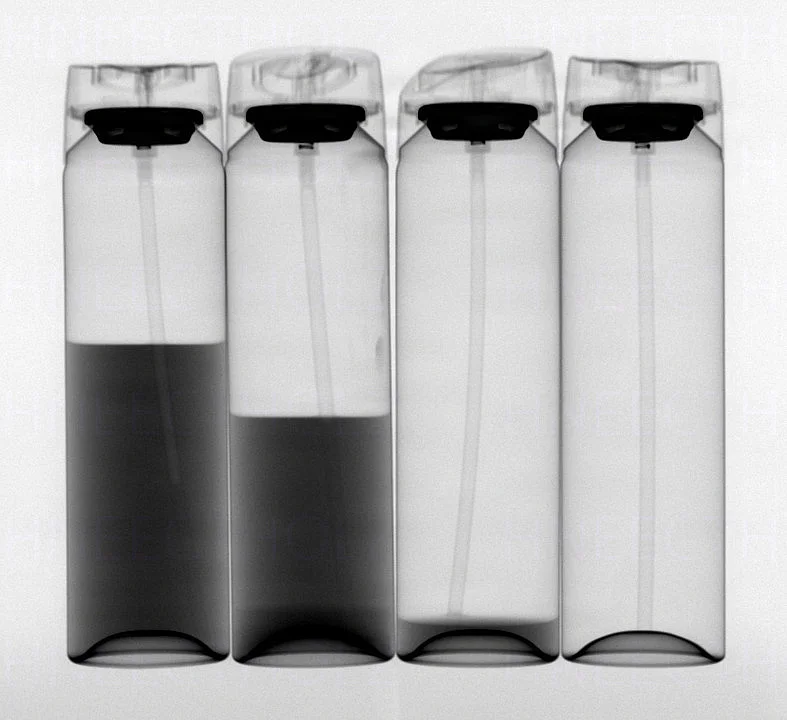
In addition to computed tomography, the fluoroscopy mode allows the recording of X-ray fluoroscopy sequences comprising up to 300 sequential individual images.
Note: Clicking on the images opens an enlarged view
Opportunities for collaboration
As part of HNEE’s research infrastructure, the Computed Tomography Laboratory is open to various forms of collaboration. For external partners from academia and industry, both commissioned measurements and joint research projects are possible. Samples such as wood, materials, soil samples, plant materials or biological objects can be examined non-destructively and made available as digital datasets.
For students and teaching staff, the CT laboratory offers opportunities for practical projects, courses, and Bachelor’s and Master’s theses. Within HNEE, the laboratory serves as a cross-disciplinary infrastructure for the Centre for Data Science (C4DS): the CT data generated can be incorporated into modelling, AI development, materials research and environmental science research.
For Research & Industry
Contract Research & Services: We analyse your samples (wood, materials, environmental samples, biological specimens) and provide you with datasets for your analyses.
Research collaborations: Joint acquisition of third-party funding for applied research projects across the timber supply chain and in the environmental sciences.
For HNEE staff
Practical projects & dissertations: Students can use the CT laboratory for their Bachelor’s and Master’s dissertations as well as for research projects.
C4DS Interdisciplinary Laboratory: The laboratory serves as a data source for all departments. The CT data is directly incorporated into the HNEE’s modelling, AI development and materials research.
The system: Pegaso Evolution CT
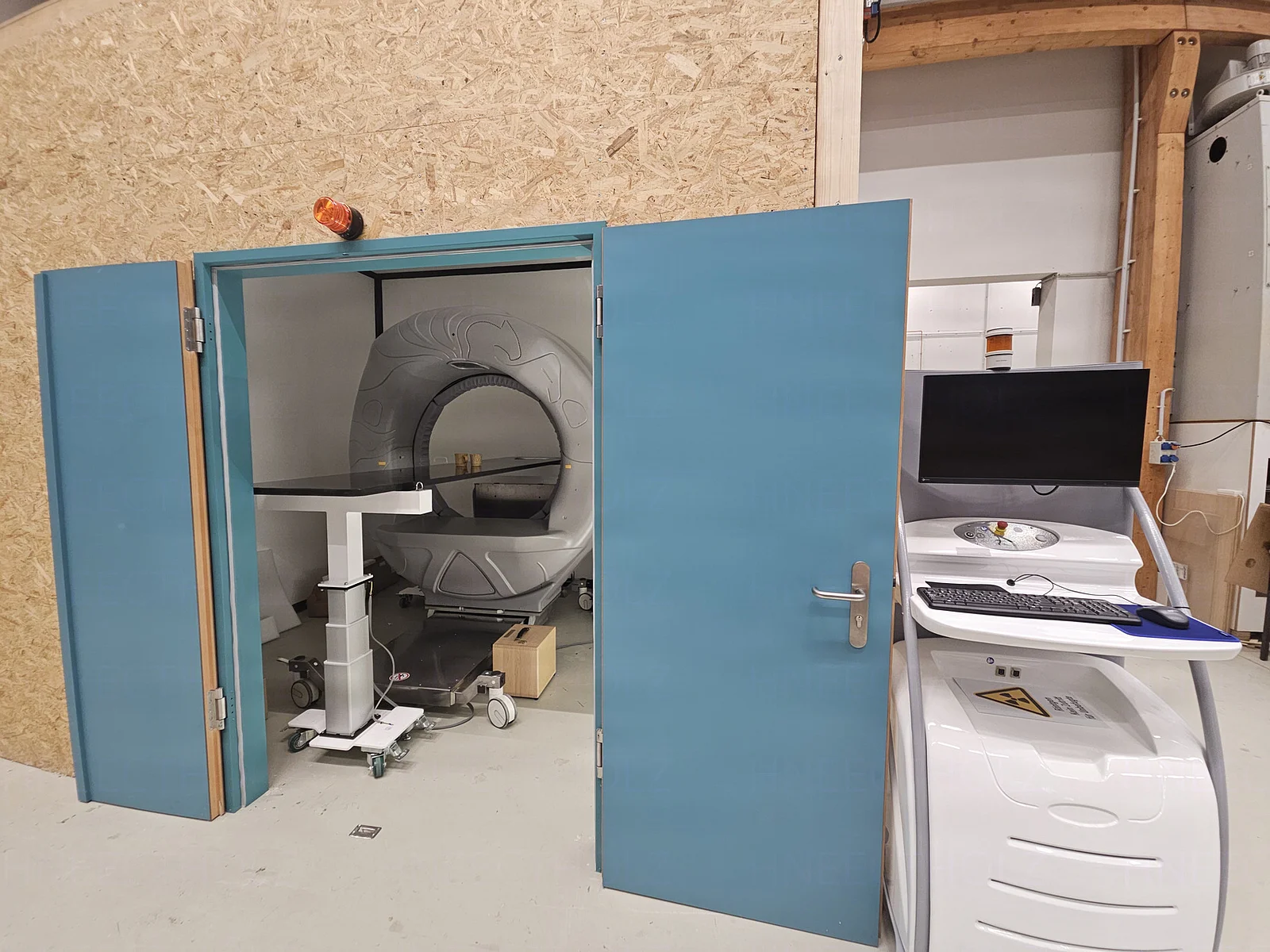
As part of the DFG-funded infrastructure project CT-Holz, a Pegaso Evolution CT system manufactured by Imaginalis has been commissioned. The system combines computed tomography and fluoroscopy, enabling the non-destructive examination of various material samples.
The CT scans provide three-dimensional, voxel-based datasets that can be used to visualise and quantitatively analyse internal structures, density distributions and material inhomogeneities. The fluoroscopy mode complements these investigations with direct, real-time X-ray imaging.
- Tube voltage: 50 to 150 kV
- Tube current: 30 to 250 mA
- Voxel resolution: Isotropic from 0.25 mm to 0.8 mm
- Field of View (FOV): Diameter: Standard 265 mm / Large 440 mm, Depth: 230 mm
- Imaging modes: Volumetric CT & fluoroscopy (up to 28 fps)
Technical specifications
Contact
Management
Professorship for Environmental Data Analysis and Programming
Technical Assistant | Radiation Protection Officer