

BRI. New publication on intergenerational knowledge exchange
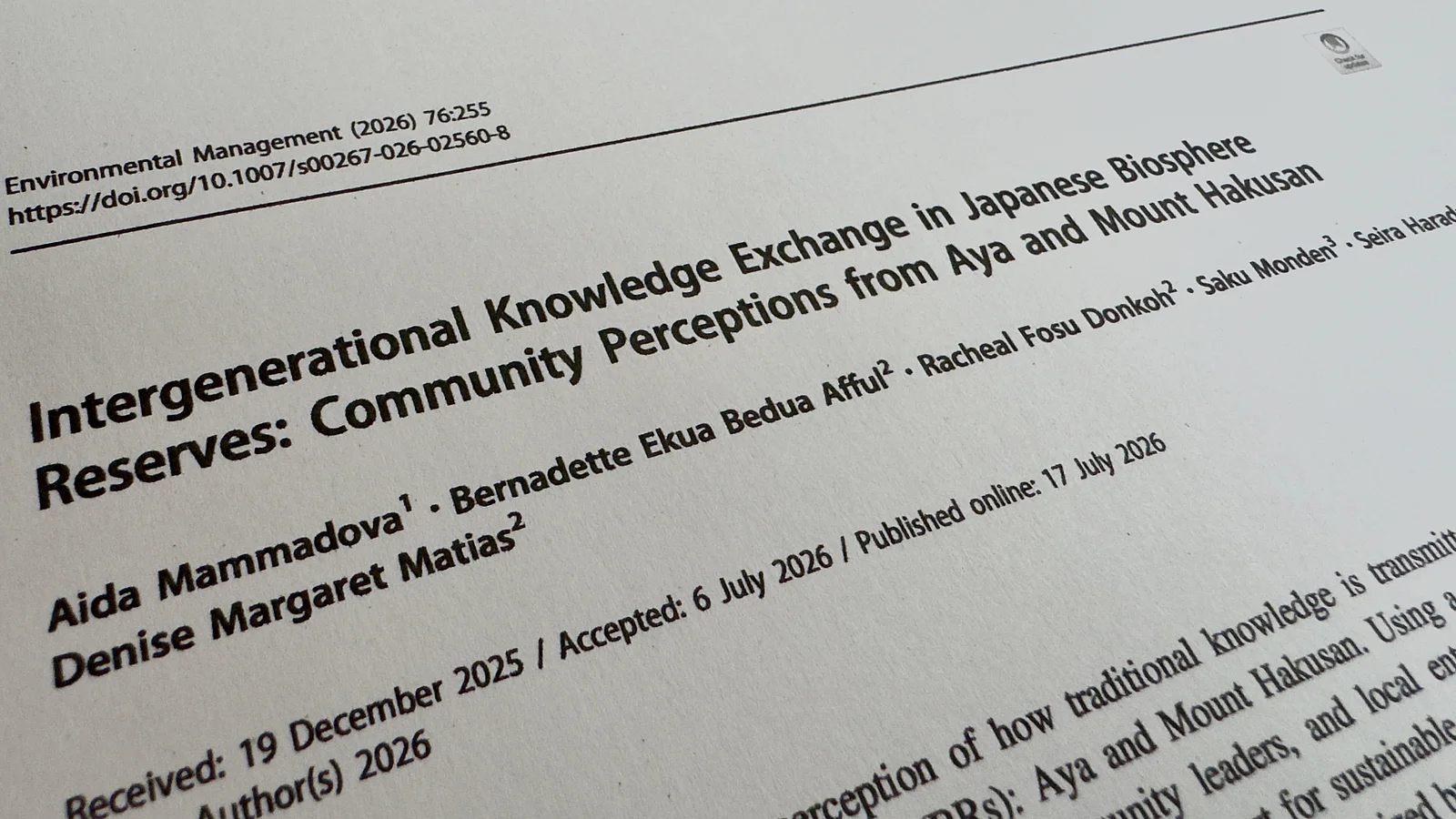
A new publication, produced in collaboration with the Eberswalde University for Sustainable Development, examines how traditional knowledge is passed down through the generations in the Japanese UNESCO biosphere reserves of Aya and Mount Hakusan. It examines the question of how, from the perspective of the local population, this exchange contributes to sustainable practices and ecotourism-based livelihoods.
The study combines surveys and interviews with older people, young people, local leaders and entrepreneurs. In both biosphere reserves, those surveyed regard traditional ecological knowledge as a vital foundation for the preservation of their culture and the resilience of their communities. Young people see the older generation as key custodians of this knowledge.
At the same time, the study highlights differences: in Aya, according to the respondents, social cohesion and the fact that the reserve is confined to a single community facilitate regular, structured exchange. In the Mount Hakusan Biosphere Reserve, which encompasses several communities, coordination and the involvement of young people are, by contrast, more difficult.
The findings suggest that intergenerational learning can strengthen appreciation of nature conservation and support sustainable entrepreneurship. The authors therefore emphasise the importance of shared learning spaces, mentoring networks and educational programmes within the communities to preserve traditional knowledge in rural regions.
Bernadette Ekua Bedua Afful, Racheal Fosu Donkoh and Denise Margaret Matias from the HNEE are contributors to the publication.
Mammadova, A., Afful, B. E. B., Donkoh, R. F., Monden, S., Harada, S. & Matias, D. M. (2026). Intergenerational Knowledge Exchange in Japanese Biosphere Reserves: Community Perceptions from Aya and Mount Hakusan. Environmental Management, 76, Article 255. https://doi.org/10.1007/s00267-026-02560-8