

International research and global partnerships: the Biosphere Reserves Institute takes stock
One year after the inaugural meeting of its international Supervisory Board, the Biosphere Reserves Institute (BRI) at the Eberswalde University for Sustainable Development (HNEE) has drawn a positive conclusion at a meeting of the Supervisory Board. Over the past twelve months, the institute – which operates under the auspices of UNESCO – has significantly expanded its research activities, strengthened international collaborations and further consolidated its role as a scientific platform for UNESCO biosphere reserves.
This development is evident, amongst other things, in two new PhD positions and a Marie Skłodowska-Curie Fellowship funded by the European Union. PhD student Charlotte Griestop is investigating how biosphere reserves can foster transformative human–nature relationships and support societal shifts towards sustainability. Luzmila Rosales is researching governance structures in mountain biosphere reserves and analysing how different stakeholder groups work together to shape sustainable development processes. From autumn 2026, Dr Alebel Melaku will investigate, as part of the EU-funded ‘YouthREST’ project, the contribution that cultural landscapes can make to the mental health of young people. The comparative study in Germany and Ethiopia examines the links between sustainable development, perceptions of the landscape and the mental wellbeing of young people.
The BRI now oversees seven research and transfer projects with a total volume of around €700,000 in third-party funding in 2026. Key areas of focus include biodiversity, governance, climate adaptation, sustainable resource management and education for sustainable development. This is based on the Institute’s research strategy, adopted in spring 2026, which sets out the BRI’s scientific development path until 2032.
The BRI is also driving innovation in academic training and professional development. The international Master’s programme in Biosphere Reserves Management (BIOM) is seeing growing international demand and most recently welcomed students from six countries. Furthermore, the BRI is involved in providing further training for professionals from biosphere reserves worldwide – ranging from agroforestry training in Ghana to courses on the use of AI-supported monitoring methods in protected areas in Côte d’Ivoire.
Another key focus was on expanding international networks. At the 5th UNESCO World Congress of Biosphere Reserves in Hangzhou, China, the BRI was represented with several specialist events, scientific presentations and its own information stand. Furthermore, the Institute initiated and coordinated international workshops, research collaborations and exchange programmes with partners in Europe, Africa, Asia and North America. Particular attention was paid to an international networking meeting of European biosphere reserves in Eberswalde, which brought together researchers, practitioners and policy-makers.
At the same time, the BRI has further professionalised its communication and knowledge transfer activities. With the relaunch of its bilingual website, a stronger presence in digital media and regular internal exchange and team-building sessions, the groundwork has been laid for even closer collaboration within the Institute and with international partners.
“The past few months have demonstrated the potential that lies in combining research, education and international cooperation,” says Dr Ana Filipa Ferreira, Executive Director of the BRI. “Our aim remains to provide scientific support to UNESCO biosphere reserves worldwide as model regions for sustainable development and, together with our partners, to develop innovative solutions for processes of social transformation.”
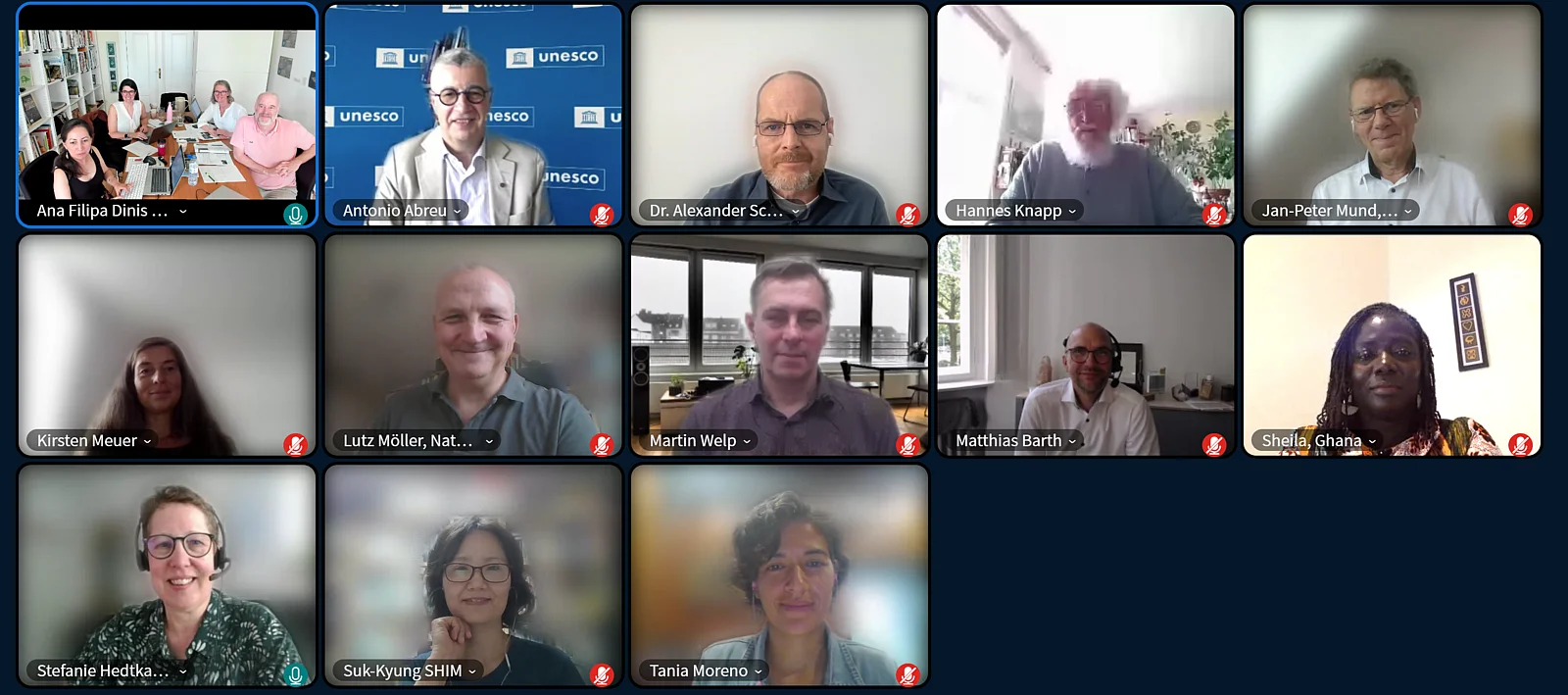
The second meeting of the Supervisory Board once again brought together representatives from academia, UNESCO, politics and international partner institutions. The board guides the strategic development of the BRI and supports its continued international profile.