

Germany’s most famous moose has died – ‘Bert’, the moose fitted with a tracking device, has died at the age of 10
For almost nine years, wildlife biologists at the Eberswalde University for Sustainable Development (HNEE) have been conducting scientific research on the moose ‘Bert’. Now, this extraordinary wild animal has died at the age of ten. Thanks to the long-term telemetric monitoring, Bert leaves behind an exceptionally valuable scientific dataset on the spatial use and behaviour of moose in Germany.
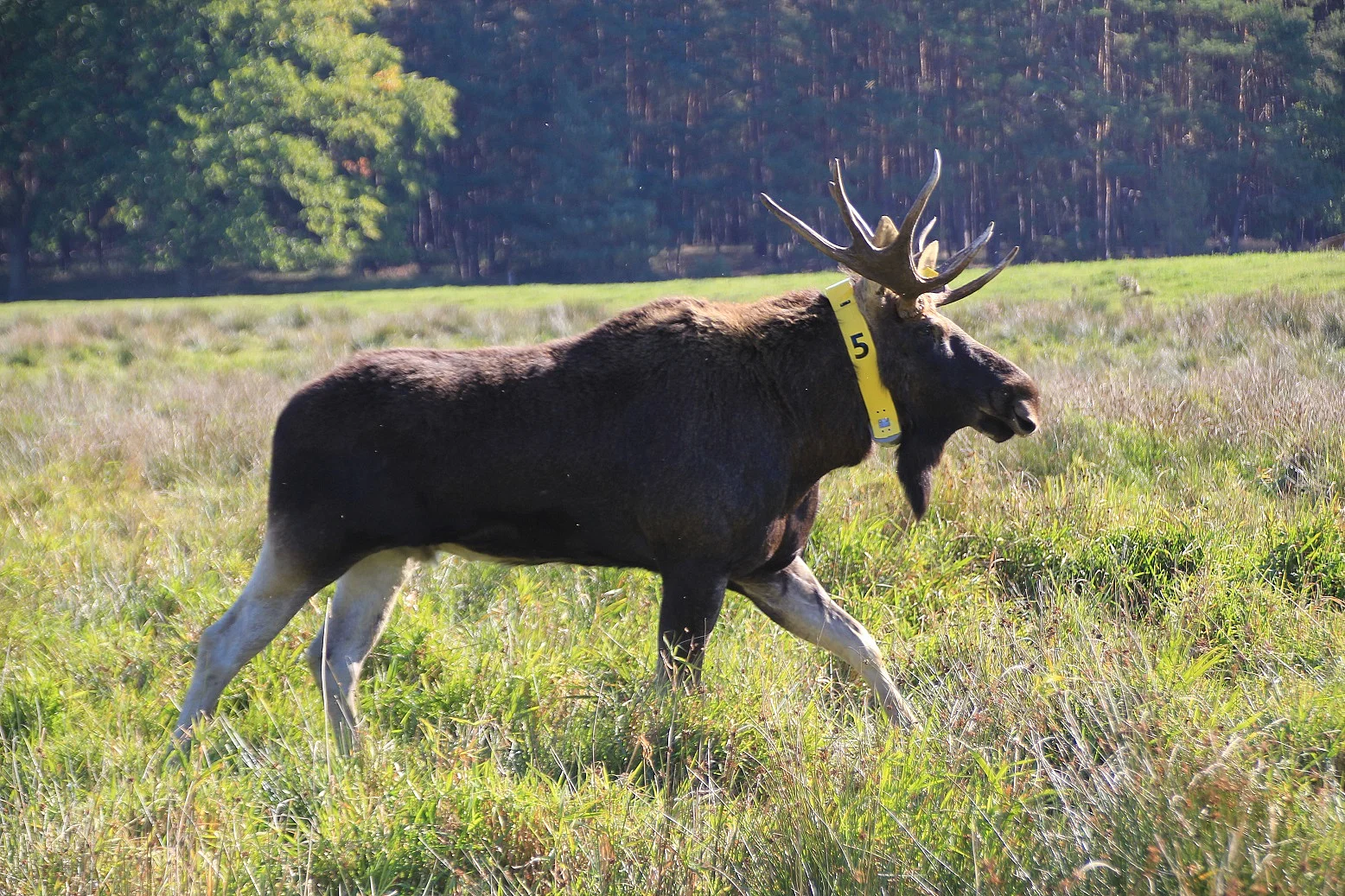
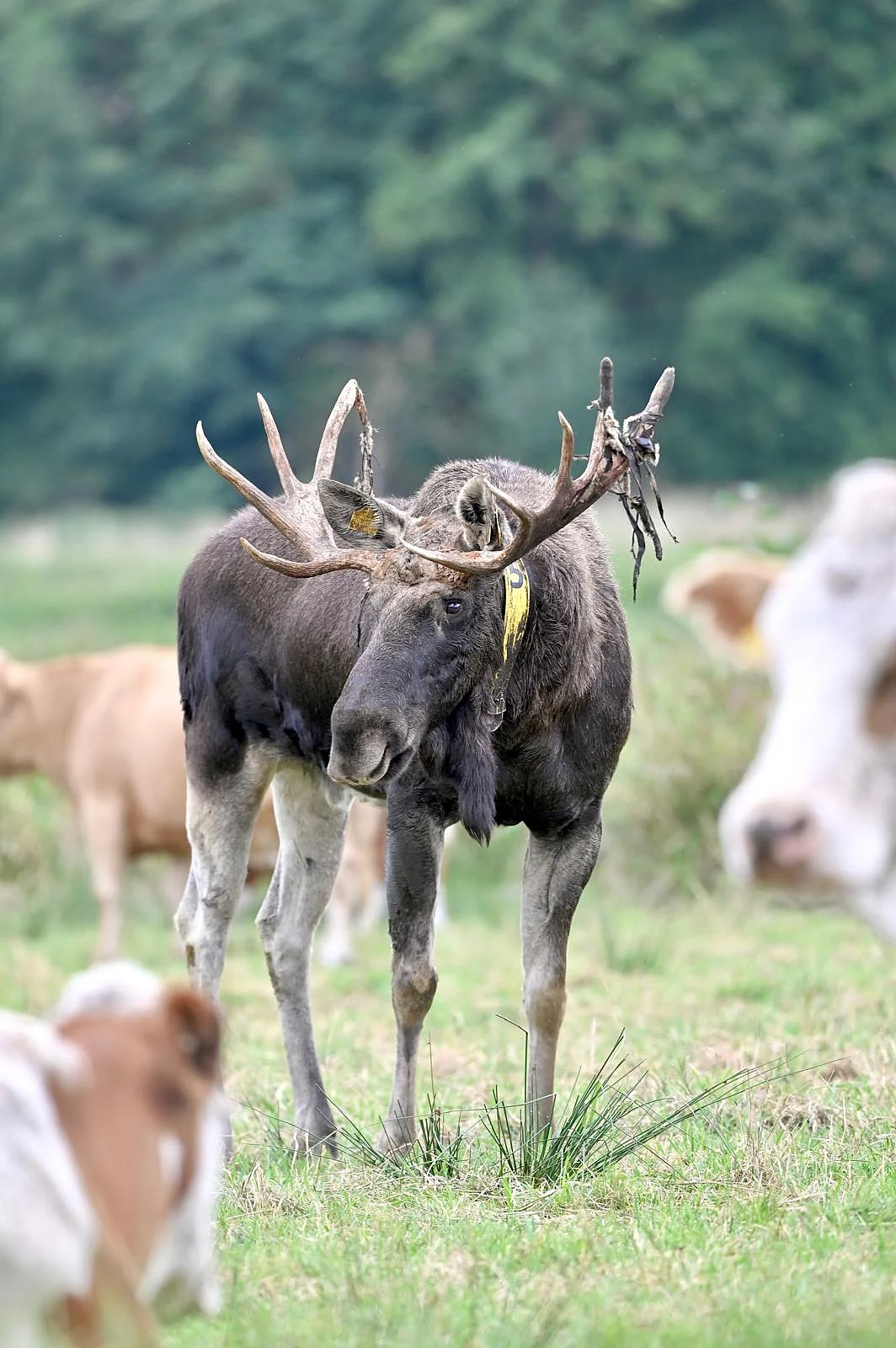
Germany’s most famous elk is dead. “Bert”, the elk fitted with a tracking collar who had been under scientific observation by wildlife biologists from the Eberswalde University for Sustainable Development (HNEE) since February 2018, died last weekend.
From Saturday morning onwards, the scientists detected no further movement on the moose’s part. At around 6 am on Sunday morning, his GPS collar finally transmitted a mortality signal. Bert was subsequently recovered immediately and sent for a post-mortem examination.
The post-mortem was carried out on Monday, 21 September, at the Leibniz Institute for Zoo and Wildlife Research (IZW) in Berlin under the supervision of veterinary pathologist Dr Gudrun Wibbelt. The post-mortem revealed severe internal injuries resulting from blunt force trauma, which ultimately caused the elk’s death. It is no longer possible to determine with certainty, in retrospect, how these injuries occurred.
At the time of his death – as in previous years – Bert was on a cattle pasture during the rutting season. There had been isolated incidents of interaction with cattle there in the past. At the same time, another male elk was in Bert’s territory in the days leading up to his death. As recently as Friday, this bull was observed and filmed just 100 metres away from Bert. Encounters between male moose during the rutting season can involve physical altercations. Some of the external injuries identified during the post-mortem examination could also be linked to such an altercation. However, it remains unclear what force ultimately caused the fatal injury.
The appearance of a second male moose in Bert’s long-standing home range is also a remarkable observation for the scientists. The younger bull has since left the area and moved further north-east.
Bert was born in north-eastern Poland in 2016 and was therefore in his eleventh year of life. He was first recorded in southern Brandenburg in February 2018. Since then, wildlife biologists Dr Frank-Uwe Michler from the HNEE and Dr Benjamin Gillich – who was also with the HNEE at the time and is now at the Eberswalde State Forestry Centre (LFE) – have monitored him for practically his entire life in Germany.
During the nearly nine years of scientific monitoring, Bert wore a total of five different GPS neck collars. This makes him one of the moose that have been monitored by telemetry for the longest period worldwide. The continuously collected tracking data provides exceptionally detailed insights into the spatial and migratory behaviour of a moose in the Central European cultural landscape.
Bert was also of particular significance because, until now, he was the only known moose to have permanently established himself in a fixed home range in Germany. After undertaking longer migrations in his early years, he found his permanent home in the Nuthe-Nieplitz Nature Park in the spring of 2019. There, he utilised a home range averaging around 10,000 hectares each year.
Over the years, this impressive moose became known far beyond the region. In the Nuthe-Nieplitz Nature Park, he became something of a mascot and was frequently spotted and photographed by many people.
For the scientists involved, his death is therefore a great loss, and not just from a scientific point of view.
“We have been tracking Bert since he first appeared in Germany in February 2018 and have learnt an incredible amount from him over the years. For almost nine years, we knew practically every day where he was and how he used his habitat. Being able to scientifically monitor a single wild animal over such a long period of time is something quite special. Bert has left us an invaluable set of data – after so many years, he has long been far more to us than just a data point. His death saddens us deeply,” says Dr Frank-Uwe Michler of the HNEE.
Together with Benjamin Gillich, Michler monitored the moose from the first time it was recorded in Germany right up until its death. The telemetry data collected over many years is now to be subjected to further scientific analysis. It documents, almost without interruption, an exceptionally long period in the life of a wild moose and provides important insights into how the world’s largest deer species lives in Germany’s densely populated cultural landscape.
Bert’s story comes to an end after almost nine years of scientific monitoring – yet his almost completely documented life leaves behind an extraordinary scientific dataset and will continue to be a subject of elk research for a long time to come.