

From well-intentioned to well done
The Eberswalde study model aims to turn a shared commitment to high-quality teaching into everyday practice. Prof. Dr Uta Steinhardt, Vice President for Academic and Student Affairs and head of the funded project, explains what happens in the curriculum workshops, why the university is starting with voluntary pioneers – and why the Schools are important for implementation.
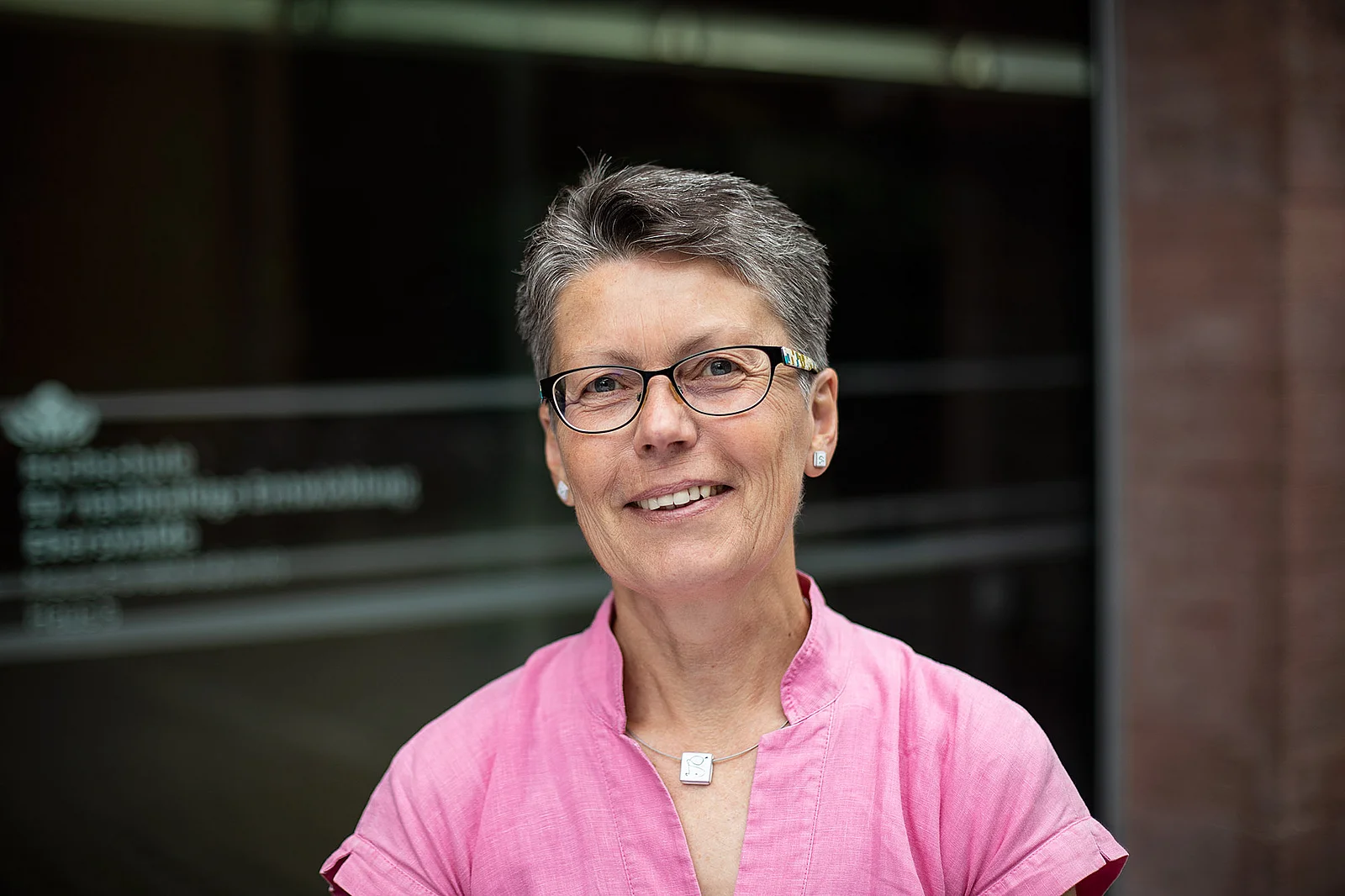
Question: Sustainability is a feature of all degree programmes at HNEE. What else is a joint degree programme intended to achieve?
Prof. Dr Uta Steinhardt: We want to provide vocational education for people who can help shape the sustainability transition over the course of their professional careers – ideally in leadership roles. This requires more than just the subject-specific and methodical expertise taught in individual degree programmes. What is crucial is how key competences for sustainable development are integrated with the subject-specific content. This should not take the form of an additional sustainability module that is simply ticked off at some point. These competences must run throughout the degree programme and be further developed in various contexts. We want to highlight what sets Eberswalde students apart – regardless of their chosen subject.
Question: What happens in the curriculum workshops – and why are they more than just a revision of module plans?
Prof. Dr Uta Steinhardt: Firstly, we want to highlight where the degree programmes already address the common areas of competence. Often, a great deal is already in place; it has simply not yet been explicitly named or linked across the entire course of study. We can then identify areas where these competences can be addressed even more effectively or explicitly. In doing so, we do not question the specific nature of the subjects at all. Systemic thinking takes a different form in Forestry than in a degree programme that examines the food system. The competence may be the same, but its subject-specific manifestation is not. The common framework must be able to accommodate these differences.
Question: Revising curricula means extra work. How do you prevent the study model from being perceived as an additional burden?
Prof. Dr Uta Steinhardt: Concerns about the additional workload are justified. The workload is real. That is why we must make it clear what benefits this can bring: lecturers receive subject-specific support and, together with people who have expertise in this area, can examine more closely how a competence fits into their own module. Every Head of study programme and every individual lecturer would be overwhelmed if they had to do this on their own. It is crucial that everyone perceives the project as support rather than a burden. We must emphasise these benefits time and again.
Question: You are starting with an ‘alliance of the willing’. Why does a development project also need the freedom to fail from time to time?
Prof. Dr Uta Steinhardt: Because we shouldn’t pretend that we already know exactly how everything works. We’re starting with four out of around twenty degree programmes, planning and testing the process, evaluating it and learning for the next round. To this end, we have sought out degree programmes that themselves recognise a need and are curious about the process. If positive experiences emerge there, this can increase openness in the next round. For me, however, this also involves a different approach to dealing with mistakes. At universities, there’s a great deal of talk about ‘best practice’ or ‘good practice’. We talk far less often about things that don’t work out. If we conceal mistakes or sweep them under the carpet, we’re likely to make them again. Perhaps we can’t avoid them entirely – but we can learn to fail better.
Question: What role do the Undergraduate School and the Graduate School play in the implementation?
Prof. Dr Uta Steinhardt: For me, collaboration with the schools is essential to success. Inter- and transdisciplinarity require students to be able to learn together across the boundaries of their degree programmes. We have been trying to do this for a long time, but we repeatedly come up against organisational barriers within the degree programmes. Degree programmes operate with different block structures and time slots. A joint programme is of little use if there is no room for it in the timetable or the curriculum. That is why we also use the curriculum workshops to – to put it somewhat colloquially – ‘declutter’ the curricula. The schools can create the organisational framework to better coordinate courses within the Bachelor’s and Master’s programmes. However, the new structure alone will not solve this problem. We must take the specific characteristics of the degree programmes seriously, communicate extensively and find compromises.
Question: How would you gauge the success of the project – and how is working on it changing your own teaching?
Prof. Dr Uta Steinhardt: An initial milestone would be reached if the pilot phase is successful and degree programmes sign up for the next round, saying: ‘We want this too, because it will help us move forward.’ For me, success is also evident in good processes: how are cross-programme courses developed? How do we make them visible to everyone, and how can we ensure a transparent enrolment process? A more difficult question is how to measure the development of skills. In the long term, alumni could tell us what their degree programme has actually equipped them with for their work. At the same time, I realise that I, too, still need support when it comes to embedding key competences within the curriculum of my own modules. So far, I’ve been making many decisions based on my own understanding. When it’s our degree programme’s turn to take part in a curriculum workshop later on, I hope to receive genuine expert support for this. So that we can move from ‘well-intentioned’ to ‘well-executed’. This applies to individual classes – and probably to the entire project.
The interview was conducted by Ulrich Wessollek.