

Gender Equality Lab brings the tourism industry together
Fair career opportunities for all genders, unconscious bias, corporate culture and financial independence were the focus of the first Gender Equality Lab in Berlin. Around 40 staff members, managers and directors from the tourism industry gathered at Chamäleon Reisen to share experiences, scrutinise existing structures and develop concrete approaches to achieving greater gender equality.
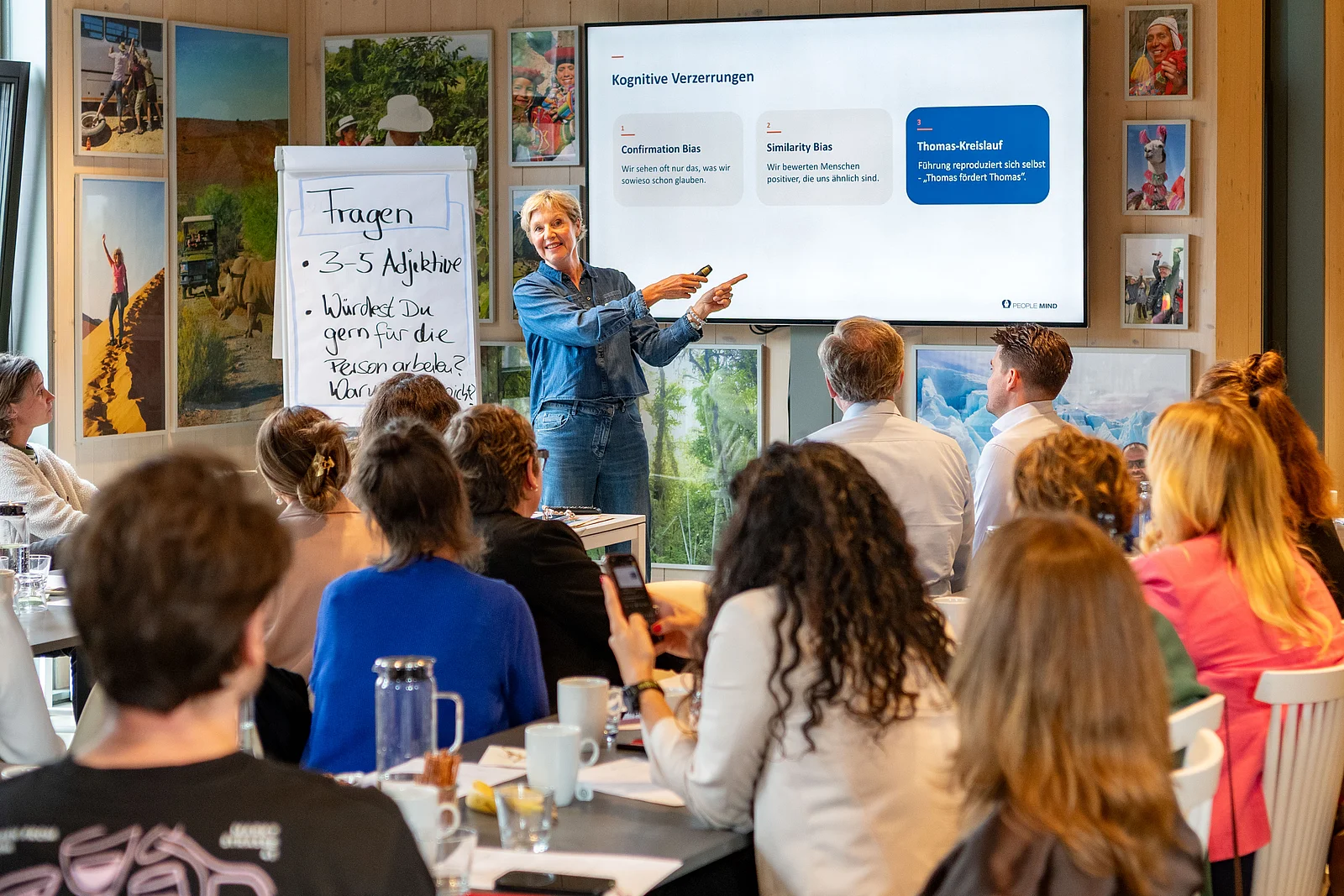
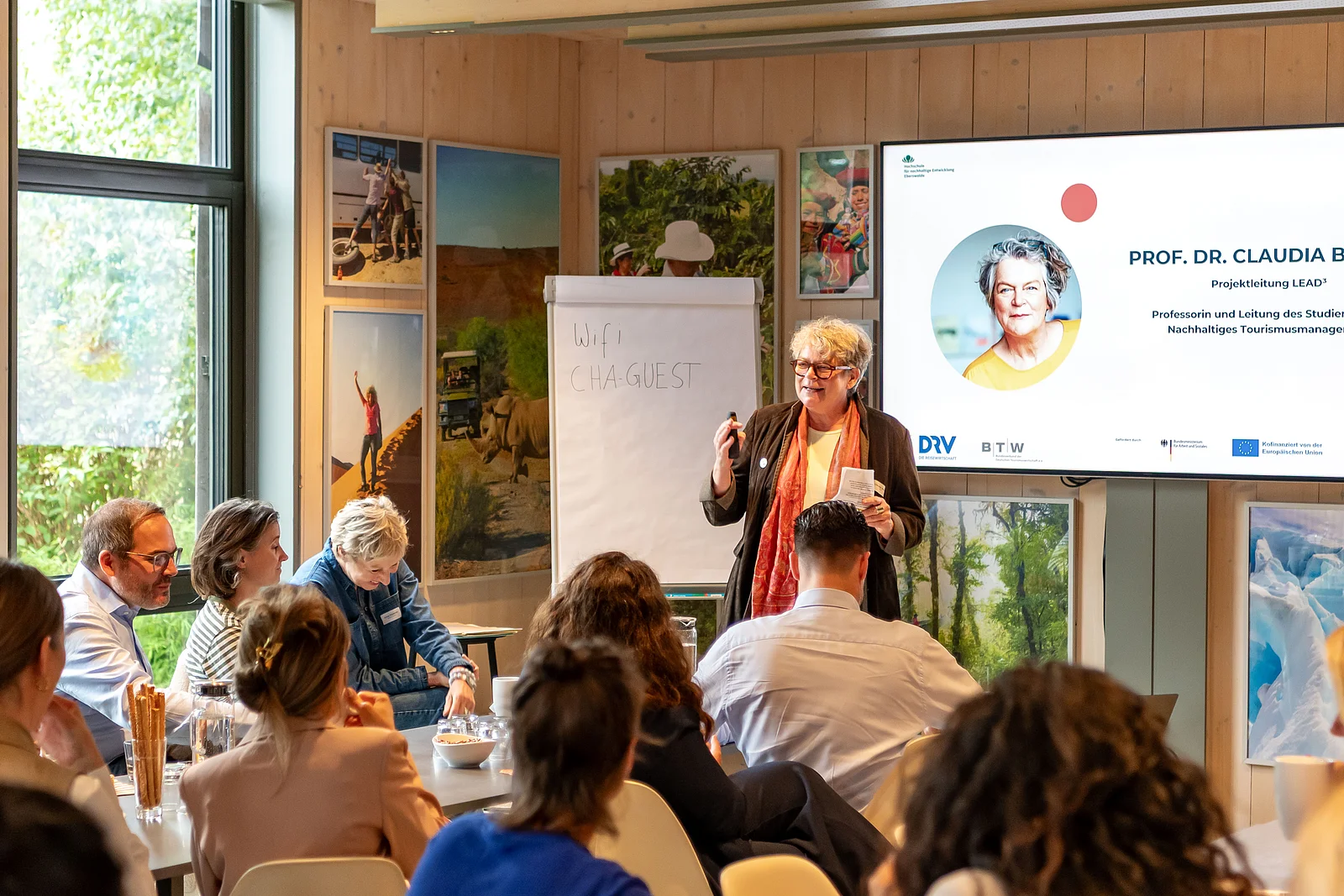
On 25 September, the tourism industry gathered in Berlin to discuss fair career opportunities, reflect on gender roles and explore the importance of financial independence, particularly for women. The event marked the launch of the new workshop format as part of the HNEE project “LEAD³ – Learn.Empower.Advance.Develop.” led by Prof. Dr Claudia Brözel. The project is supported by the German Travel Association (DRV) and the Federal Association of the German Tourism Industry (BTW).
DRV Chief Executive Achim Wehrmann and BTW Secretary-General Sven Liebert emphasised the importance of the topic for the sector at the start of the event and attended throughout the day.
“The tourism industry thrives on diversity, openness and the people who shape it. This makes it all the more important that women and men have equal opportunities to take on responsibility, advance their careers and realise their potential. This is precisely where the Gender Equality Lab comes in: it provides important impetus for practical action and a space for honest discussion and concrete ideas on how we can further strengthen fair conditions within our companies and organisations,” said Sven Liebert, Secretary-General of the BTW.
“Gender equality is not just a women’s issue. True equality of opportunity can only be achieved if both women and men get involved. This applies in particular to managers who bear responsibility for staff, corporate culture and development opportunities,” explains Achim Wehrmann, Chief Executive of the DRV. “The Gender Equality Lab creates an important space to talk openly about existing barriers, highlight different experiences and work together to bring about concrete change.”
The event kicked off with a focus on statistics and structural interrelationships. In the fact-check by Anne Rösener (PEOPLE MIND), it became clear that only 29.1 per cent of leadership positions in Germany are held by women, meaning Germany lies below the EU average of 35.2 per cent (Federal Statistical Office, 2025). Rösener also highlighted just how persistent unconscious biases and stereotypical role models are. At the same time, she presented a different perspective on power: as a means of empowering and supporting people.
Following this, Claudia Müller (Female Finance Forum) emphasised in her keynote speech how closely professional development and financial inequality are linked – from the gender pay gap and the gender pension gap to a potential gender lifetime earnings gap of over one million euros. She therefore emphasised the importance of wealth accumulation for women in order to remain financially independent in the long term and outlined five steps towards achieving this.
“Women still talk about power and money far too rarely. That is precisely what we did at the Gender Equality Lab. We see both as forms of empowerment: power to help shape decisions, and money to remain independent. Companies bear responsibility for this, as fair structures and fair pay are the prerequisites for ‘power over’ to become ‘power with’,” says Prof. Dr Claudia Brözel, LEAD³ project lead, Professor of tourism economy and Head of the Sustainable Tourism Management degree programme at HNEE.
In the afternoon, the focus shifted to the participants’ personal experiences. In the case study workshop, they spoke openly in small groups about specific instances of unequal treatment in their day-to-day working lives, shared their own experiences, reflected on what they had heard earlier and consulted with one another. Together, they developed ideas on how those affected by unfair situations can make their voices heard and challenge existing structures.
In the subsequent transfer workshop, each participant first noted down for themselves what should be implemented, changed or initiated in their own working environment. These plans were then further refined through a joint discussion.
The great need for discussion surrounding gender equality and fair career opportunities was also evident in the consistently positive feedback from the participants. In addition to the expert insights, the open and personal exchange was particularly highlighted as valuable.
The project website features a photo gallery and a press release about the day. In addition, some participants share their impressions of the day in a video:
https://empowher.today/blog/gender-equality-lab
The Gender Equality Lab was the first of a total of three planned public events as part of LEAD³. The next event is scheduled for autumn 2027.