

HNEE welcomes new students
Thinking critically, finding your own path and shaping the future together: HNEE kicks off the 2026/27 winter semester
The Eberswalde University for Sustainable Development (HNEE) welcomed its new students at the enrolment ceremony. The focus of the semester’s opening event was on the question of what higher education must achieve in times of social, environmental and technological upheaval. Around 600 first-year students are beginning their studies at HNEE – a quarter of whom come from abroad. The presentation of the City of Eberswalde Sustainability Prize and the DAAD Prize also recognised outstanding academic achievements, active commitment and the transfer of knowledge beyond the university.
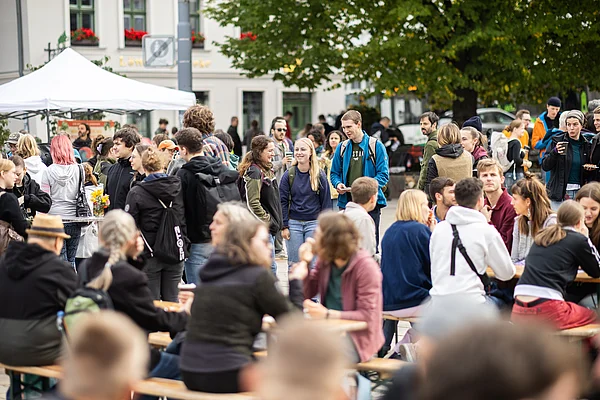
Der Eberswalder Marktplatz füllte sich mit zahlreichen Studierenden – ein lebendiger Auftakt ins neue Semester.
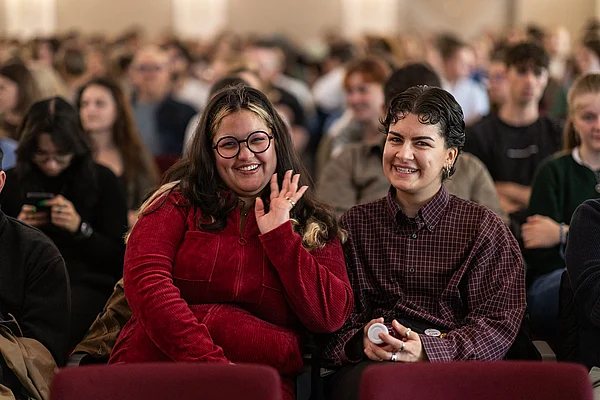
Voller Freude und Neugier: Unsere Erstsemesterstudierenden
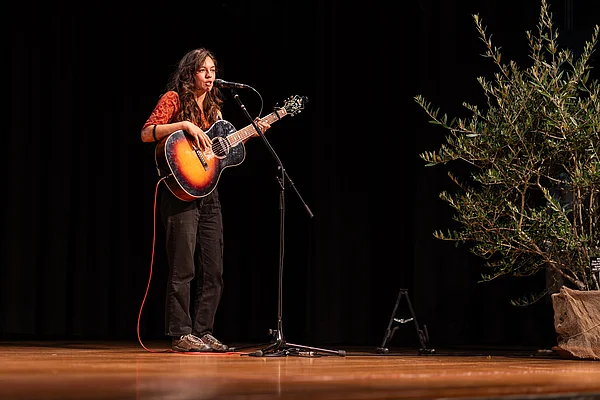
Mit Gitarre und Gesang sorgte HNEE-Alumna Camila Morgenstern auf der Bühne für eine besondere Atmosphäre.
Thinking critically, making scientifically sound judgements, taking responsibility and developing solutions together: it was with these messages that the HNEE welcomed its new intake of students to Haus Schwärzetal on Thursday, 24 September 2026. The enrolment ceremony formed the highlight of the induction week and, at the same time, highlighted what studying at the HNEE is all about: empowering people not only to understand change, but also to play an active role in shaping it.
In his welcome address, HNEE President Prof. Dr Matthias Barth focused on the major changes facing both universities and students alike. Academic research and social discourse are coming under increasing pressure, whilst at the same time artificial intelligence is fundamentally transforming how knowledge is generated, how learning takes place and how work will be carried out in the future. This makes skills that go beyond mere specialist knowledge all the more important.
“We want to empower our students to shape change based on analysis – in a considered, scientifically sound manner and in collaboration with others. Particularly at a time when artificial intelligence is transforming the way we learn and work, critical thinking, creativity, empathy and the ability to collaborate are becoming increasingly important. At the HNEE, we create spaces where students can develop precisely these skills and hone their own thinking,” said Barth.
The HNEE sees itself as an empowering, impact-oriented and caring university. Subject-specific and methodological knowledge, sustainability competencies and professional skills are just as much a part of this as learning and conducting research on real-world challenges together with partners from academia, business and society. At the same time, the university aims to remain a place where critical engagement, diverse perspectives and respectful coexistence are possible.
This was also the theme of the keynote address by Katharina van Bronswijk, a psychologist, psychotherapist and author. She encouraged the new students not to measure their time at university solely by exams and academic performance, but to view it as a journey of personal development. Studying also means questioning one’s own thinking, recognising connections, learning to cooperate and experiencing the ability to make a difference oneself.
With around 600 new students, the university currently has a total of approximately 2,300 students. The new intake also underlines the university’s international focus: around a quarter of first-year students come from abroad. The international demand is particularly evident in the English-taught Master's study programmes. As a result, the international academic community is also continuing to grow in importance – both for academic and cultural exchange on the two campuses and for the HNEE’s international networking in study and teaching.
Within Germany, a particularly large number came from Berlin and Brandenburg, followed by Lower Saxony and North Rhine-Westphalia. All 16 federal states are represented.
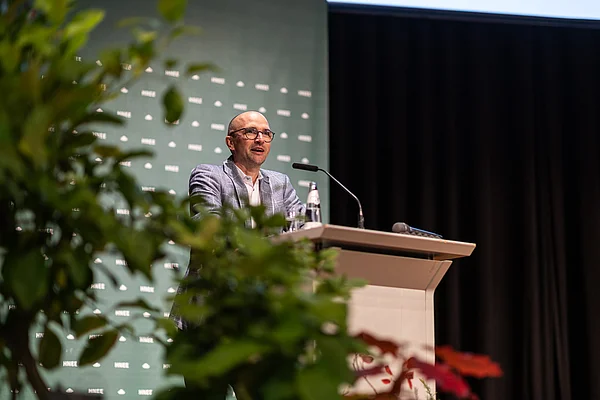
Hochschulpräsident Prof. Dr. Matthias Barth eröffnete die Feierliche Immatrikulation.
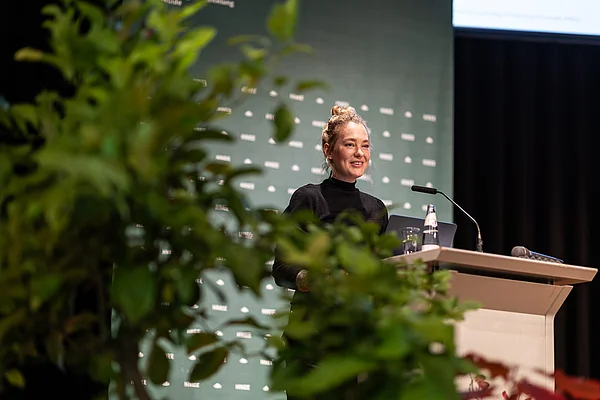
Auch die stv. studentische Vizepräsidentin Kim Kastir begrüßte die Erstsemester herzlich.
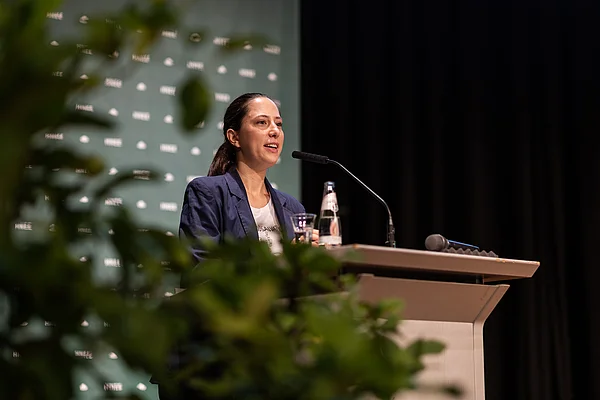
Festrednerin Katharina van Bronswijk
Sustainability Award: Research with tangible benefits for Eberswalde
Sustainability Award: Research with tangible benefits for Eberswalde
The presentation of the 7th Sustainability Award by the City of Eberswalde demonstrated how academic study can provide concrete impetus for sustainable development.
The award went to Sophie Krüger, a graduate of the bachelor's degree programme in Landscape Management and Nature Conservation. In her Bachelor’s thesis, ‘Less Land – More Future? Principles of Sufficiency in Addressing Land Use in the City of Eberswalde’s Climate Adaptation Concept’, she examined how the principle of sufficiency can be put into practice at local authority level. To this end, Krüger analysed the City of Eberswalde’s climate adaptation strategy and identified where sufficiency principles are already being taken into account and where there is scope for further development. In addition, she developed a set of guidelines linking these principles to specific local measures.
At its core is the question of how existing space can be better utilised and further land sealing avoided – for example, through attractive public spaces and community-based initiatives. The jury recognised the work as scientifically sound and particularly highlighted its high potential for practical application.
The Sustainability Prize, worth 1,000 euros, recognises theses that make a special contribution to the sustainable and forward-looking development of Eberswalde. At the same time, it symbolises the close collaboration between the town and the university. Krüger’s bachelor’s thesis was supervised by Prof. Dr Benjamin Nölting and Prof. Dr Uta Steinhardt.
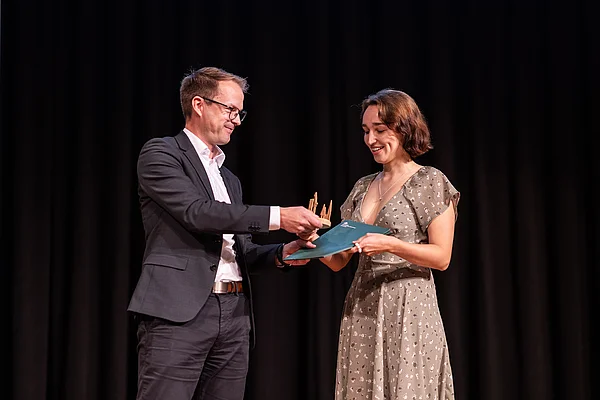
Mit großer Anerkennung übergab Dezernent für Bau und Stadtentwicklung Ilja Haub (links) den Nachhaltigkeitspreis der Stadt Eberswalde an Sophie Krüger.
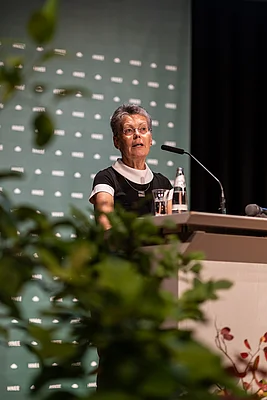
Prof.in Dr. Uta Steinhardt, Vizepräsidentin für Studium und Lehre, gratuliert der DAAD-Preisträgerin Azenegash Abebe Belachew herzlich.
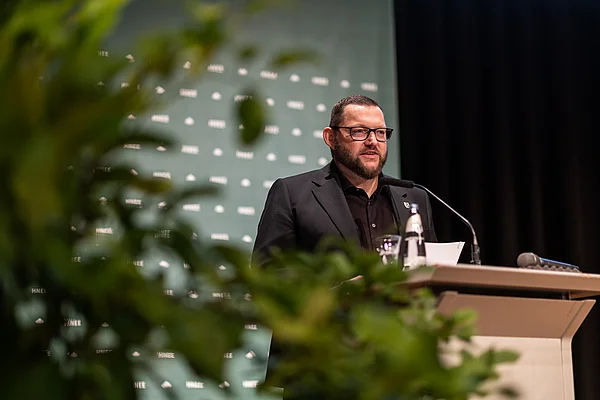
Bürgermeister der Stadt Eberswalde Götz Herrmann heißt die Erstsemesterstudierenden herzlich willkommen.
DAAD Prize recognises achievement and commitment
The second award of the day demonstrated that a university community also thrives on mutual support. The 2026 DAAD Prize for outstanding achievements by international students at German universities was awarded to Azenegash Abebe Belachew from Ethiopia.
Belachew successfully completed the international Master's study programme in Biosphere Reserves Management (BIOM) during the summer semester. Professor Denise Matias nominated her on the basis of her outstanding academic achievements and her exceptional commitment. During her time at university, she took part in intercultural activities and the University Information Day, helped new BIOM students settle in at the HNEE and, as a student buddy, supported a PhD student from Kenya.
“Azenegash Abebe Belachew’s story is a wonderful example of how international students enrich our university and are an indispensable part of our diverse community,” said Prof. Dr Uta Steinhardt, Vice President for Academic and Student Affairs, in her tribute to the award winner.
Belachew has since returned to Ethiopia, where she is working as a research assistant at her former university and is currently looking for a PhD position. She sent a video message from her home country for the award ceremony.
Mayor Götz Herrmann emphasised that studying at the HNEE also means becoming part of the local community. He welcomed the new students at the enrolment ceremony in Eberswalde. Afterwards, the opportunity to get to know one another continued at the town’s traditional reception on Eberswalde’s market square.
Highlights
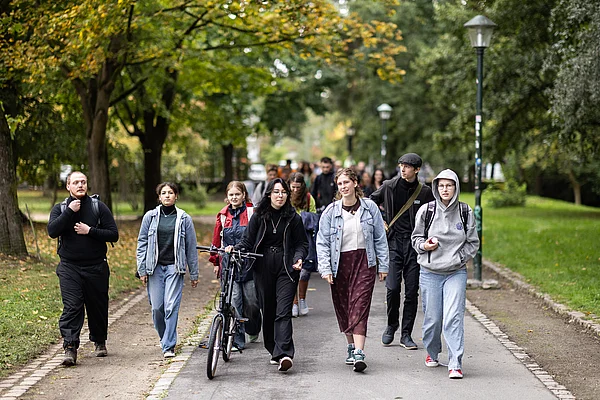
Mit viel Energie und guter Stimmung machen sich Studierende auf den Weg zum Haus Schwärzetal – Veranstaltungsort der Feierlichen Immatrikulation.
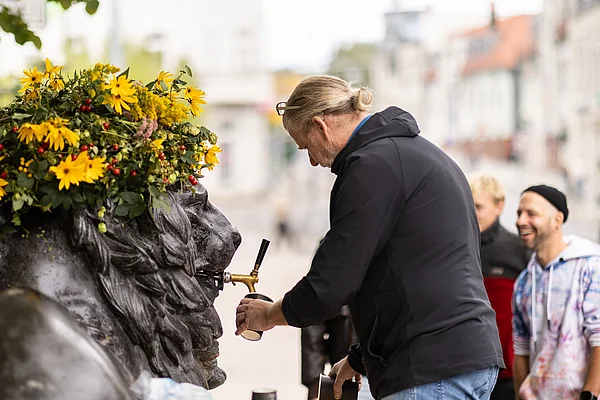
Schon fast legendär: Zum Semesterstart fließt für die Erstsemesterstudierenden Freibier aus dem Löwenbrunnen auf dem Eberswalder Marktplatz.
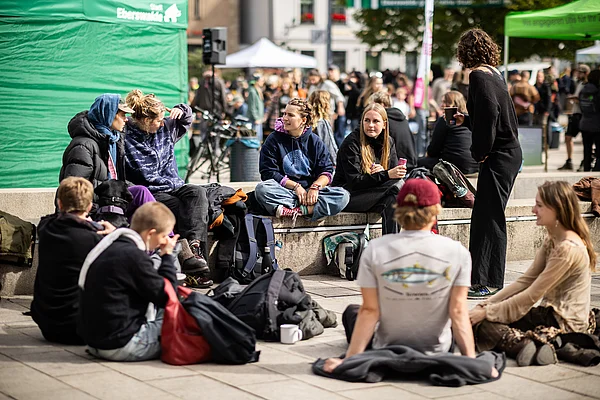
Zahlreiche Studierende feiern auf dem Eberswalder Marktplatz den Semesterstart in ausgelassener Atmosphäre.
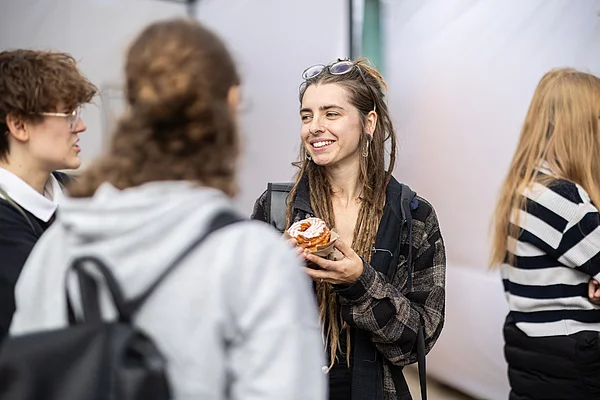
Glückliche Erstsemesterstudierende genießen gemeinsam den Start ihres Studiums an der HNEE.
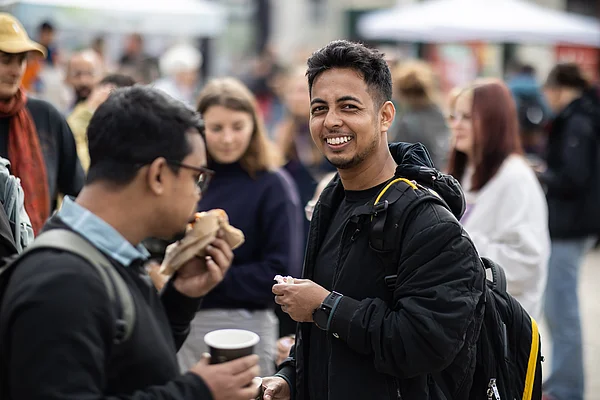
Glückliche Erstsemesterstudierende genießen gemeinsam den Start ihres Studiums an der HNEE.
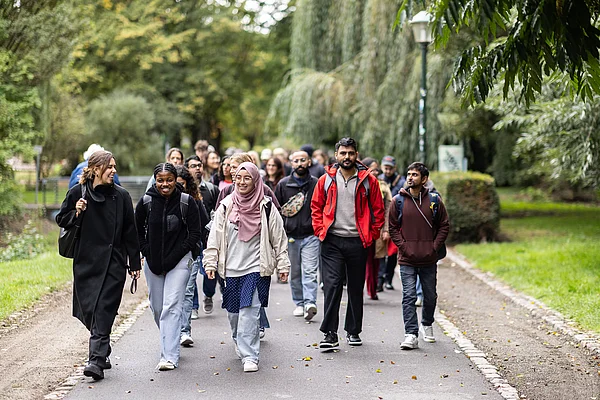
Mit viel Energie und guter Stimmung machen sich Studierende auf den Weg zum Haus Schwärzetal – Veranstaltungsort der Feierlichen Immatrikulation.
About the HNEE
With its holistic approach to sustainability, its unique range of degree programmes focused on future-oriented topics, and its status as a leading institution in the field of sustainability research, the Eberswalde University for Sustainable Development (HNEE) is a driving force for sustainable development. Around 2,300 students from some 60 countries are studying here, whilst more than 400 staff members are involved in teaching, research and work at this modern campus-based university. HNEE’s mission is to drive the transformation towards a sustainable society by developing viable model solutions and to equip students with the necessary skills to shape the future.
Note on images
The photos available here may be used in the context of reporting. Please note the copyright notice © HNEE | Florian Reischauer