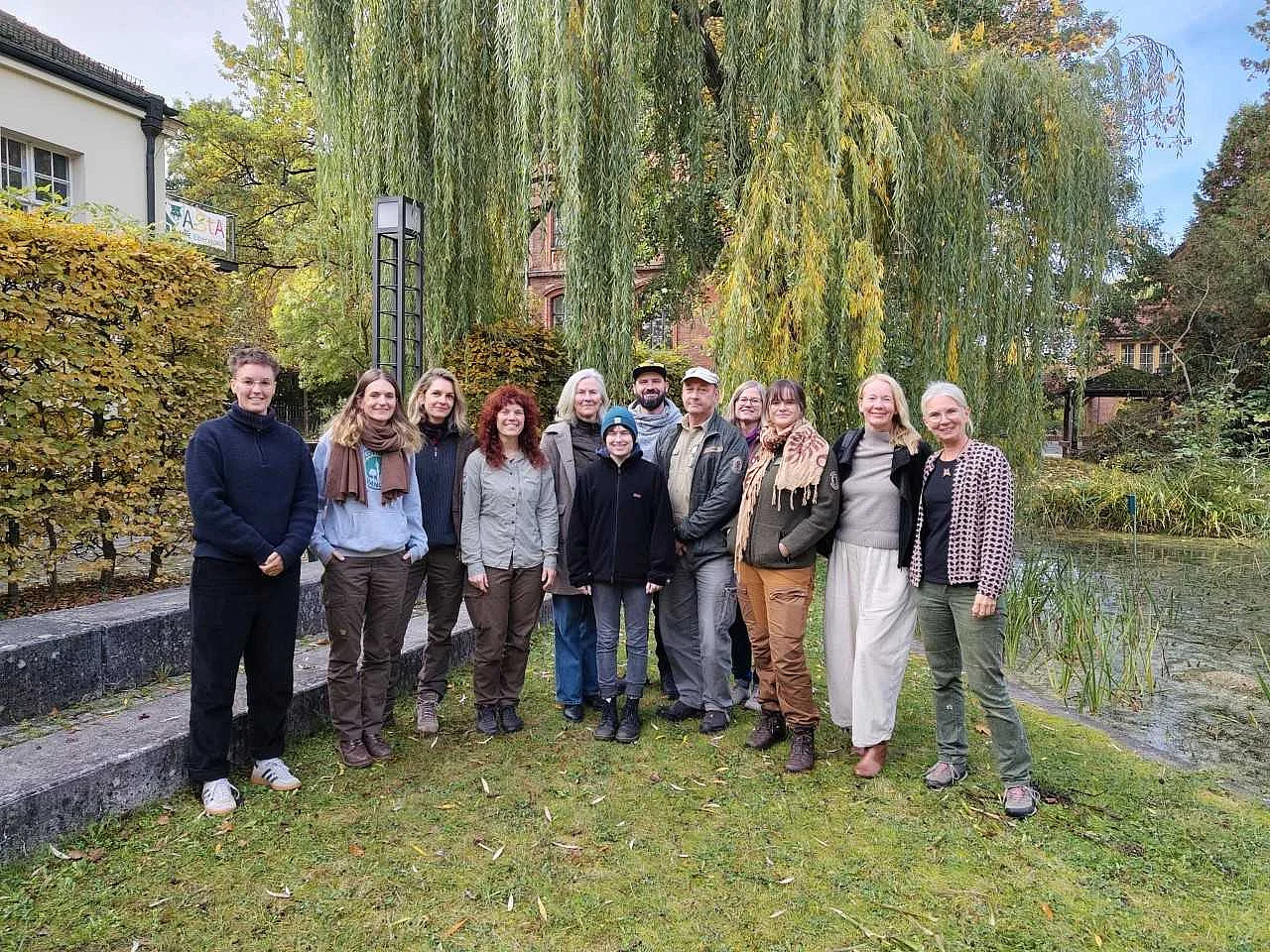
Ranger teams work together to further develop Protected Area Management
On 23 October 2026, a workshop was held at HNEE as part of the BRI project “RANGER – Shaping the Future of Protected Area Management by Rangers”. The workshop brought together stakeholders involved in protected area management in Barnim Nature Park. Its aim was to jointly explore ways to ensure the long-term development and sustainability of protected area management by rangers in the nature park.
Barnim Nature Park is a cross-state nature park jointly supported by the federal states of Brandenburg and Berlin. One of its distinctive features is its organisational structure: protected area management by rangers is the responsibility of three different organisations: Brandenburg´s ranger organization (Naturwacht Brandenburg), district of Pankow and Berlin Nature Conservation Foundation (Stiftung Naturschutz Berlin). The cooperation between these three organisations makes Barnim Nature Park a distinctive example of how protected area management by rangers can be organised in Germany. The Ranger Workshop brought together representatives from these three organisations, including both management-level representatives and members of the ranger teams. Discussions focused on reflecting jointly on the different task areas and brainstorming potential approaches to their further development. The project team, comprising Judith Kloiber (project coordination and research) and Lena Stumpf (research), presented an analysis of protected area management by rangers in Barnim Nature Park and facilitated the subsequent exchange.
The discussions drew on ”Quality Objectives and Recommendations for the Further Development of Protected Area Management by Rangers”, developed as part of the RANGER project. These recommendations are intended not only for nature parks, but also for national parks, biosphere reserves and ranger services responsible for Natura 2000 sites outside the large protected areas, as well as nature reserves in urban environments. The quality objectives and recommendations are scheduled for publication in the BfN Publication Series (Federal Agency for Nature Conservation) later this year.