

Fancy some sheep? HNEE is developing strategies to raise the profile of sheep farming
The importance of sheep farming for the preservation of cultural landscapes, biodiversity and regional value creation was the theme of the second ‘Mähwert trifft Mährwert’ conference, held on 19 November 2026 at the Eberswalde University for Sustainable Development (HNEE). Around 40 participants from across Germany, with a particular focus on Brandenburg, discussed how to raise public awareness of the societal benefits of sheep farming and developed concrete approaches for improved communication.
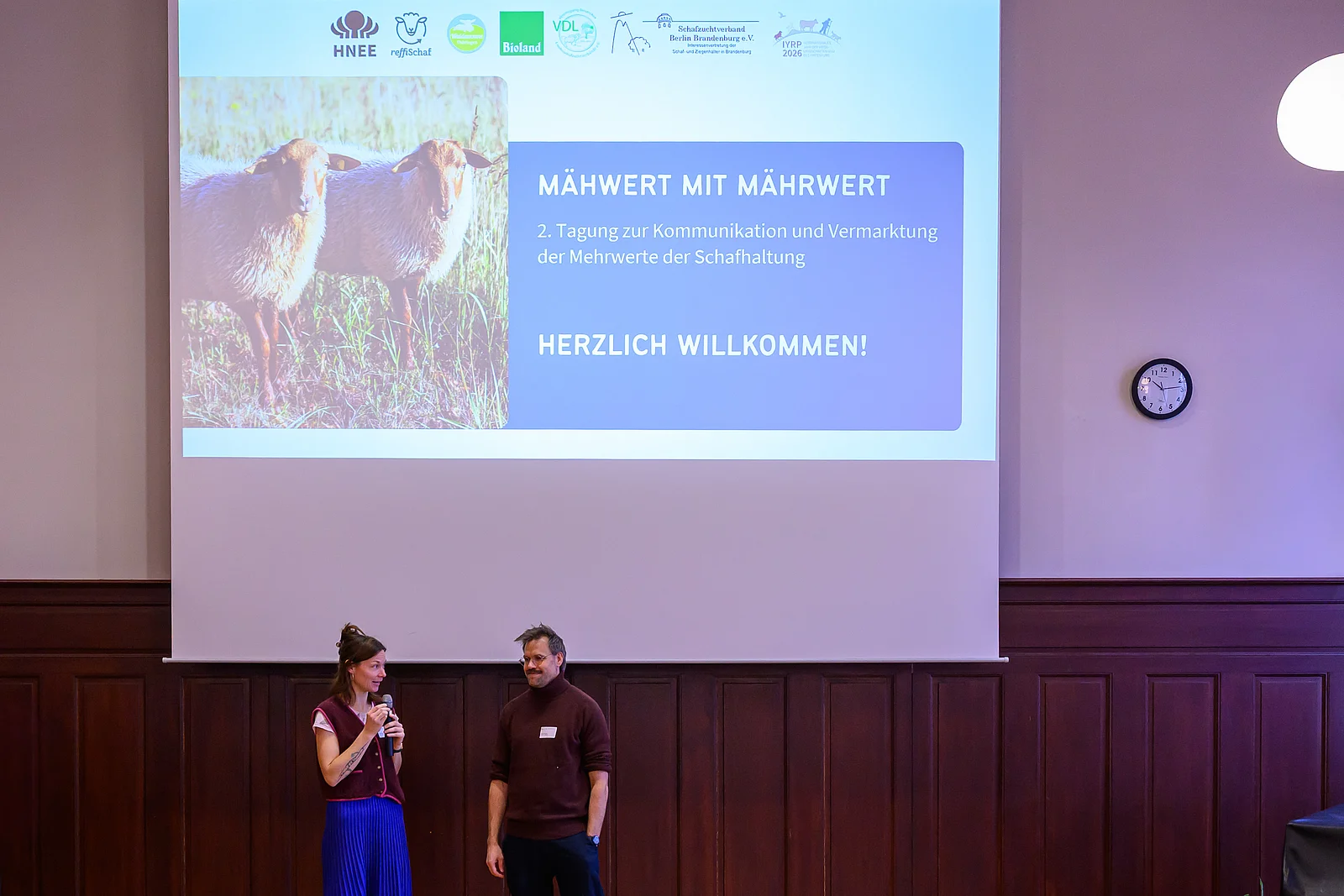
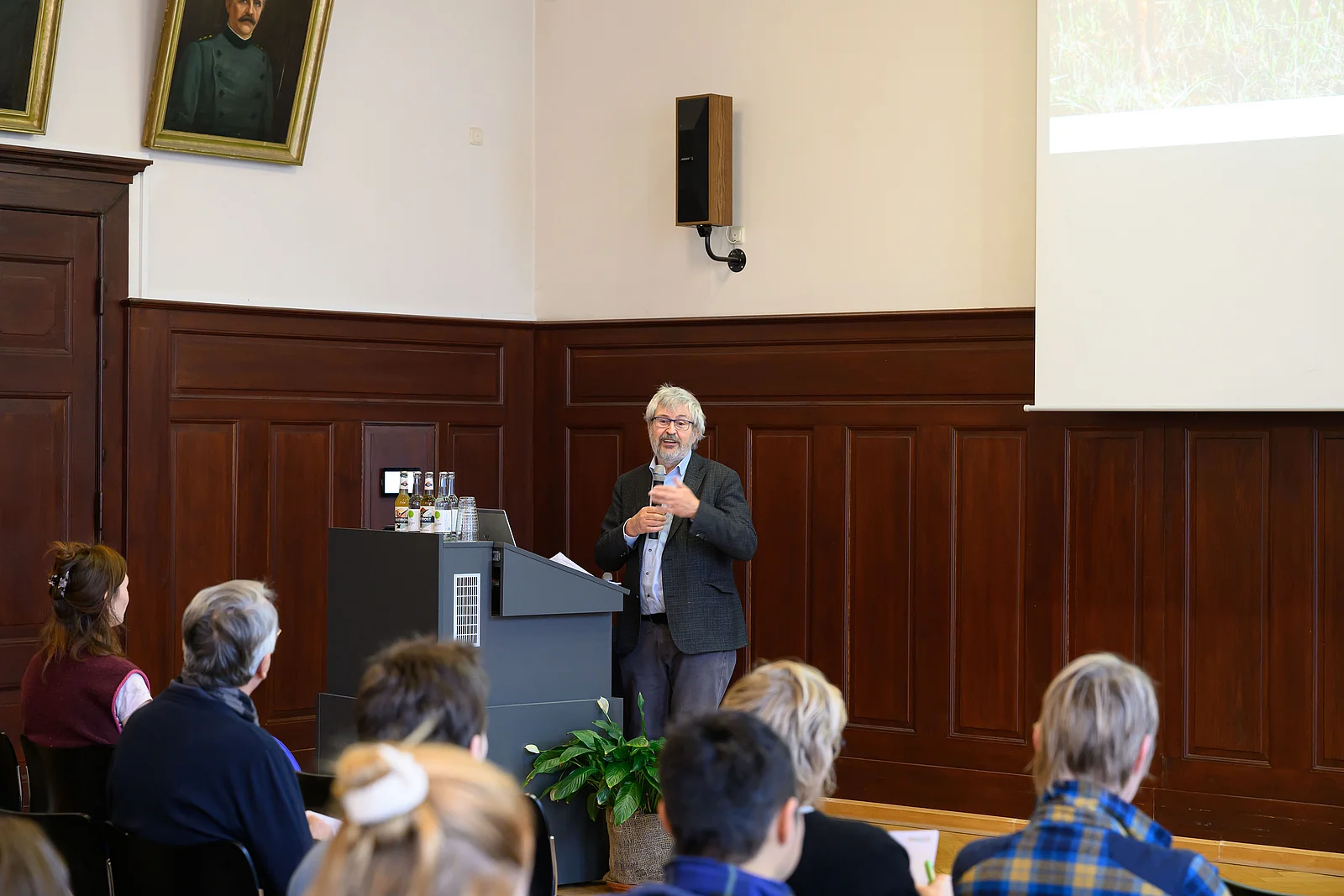
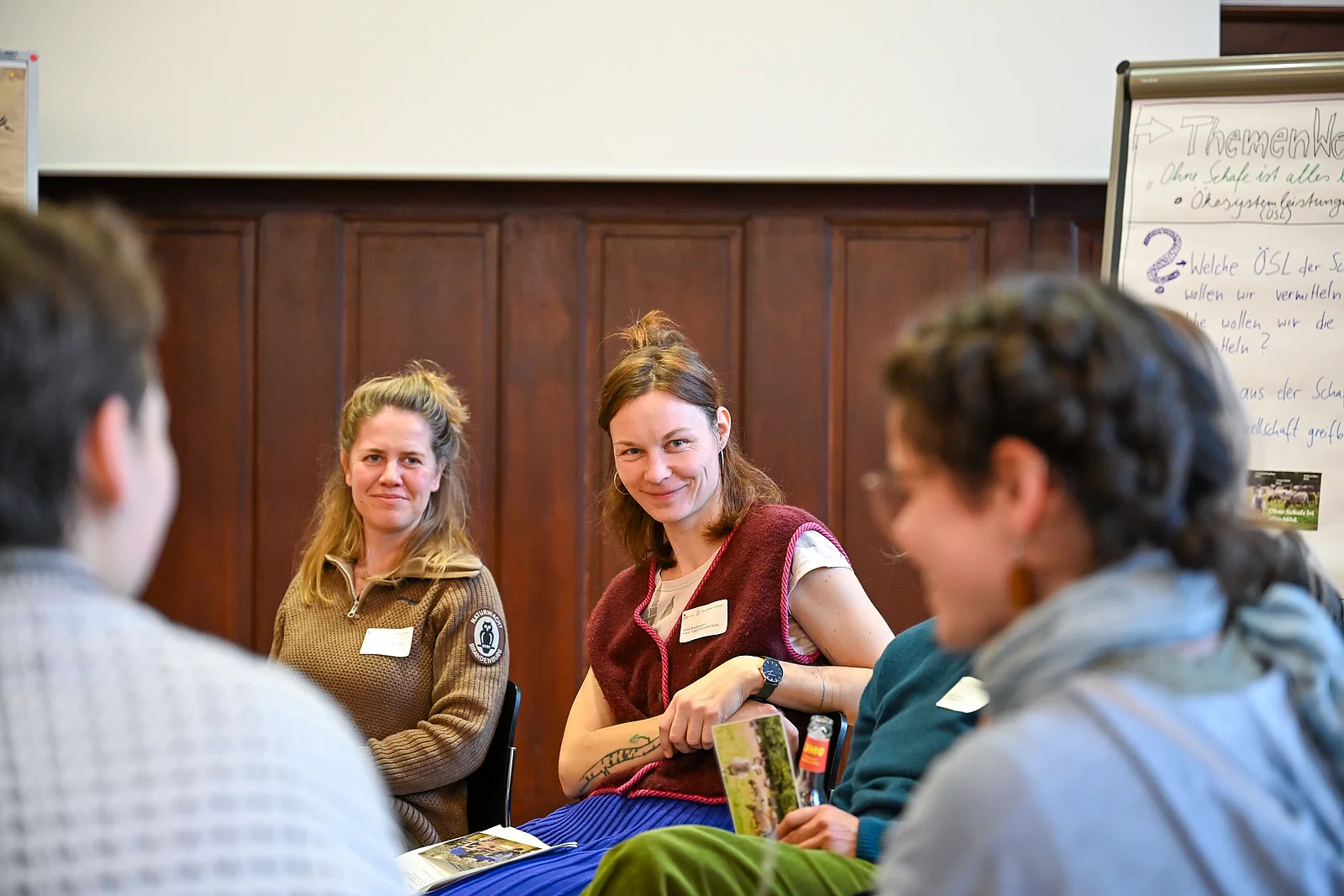
Sheep do far more than just produce wool, meat and milk. Through grazing, they help to preserve species-rich cultural landscapes, promote biodiversity and utilise plant material that is unsuitable for human consumption. In light of the negotiations on the future shape of the Common Agricultural Policy (CAP), public awareness of these benefits is becoming increasingly important.
“When we talk about the future of European agricultural policy, we must also discuss the value that sheep farming brings to our cultural landscapes and biodiversity. Society still pays far too little attention to these benefits. This makes it all the more important to raise the profile of sheep farming and its significance for the preservation of our landscapes,” emphasises Axel Vogel, former Minister for Agriculture, the Environment and Climate Protection of the State of Brandenburg.
The conference, organised jointly by the reffiSchaf project (Fördergemeinschaft Ökologischer Landbau Berlin-Brandenburg e. V.) and the ‘Inwert Ökosystem Schaf – Valorisation of the Ecosystem Services of Extensive Sheep Farming’ (HNEE), brought together stakeholders from various sectors. Short presentations highlighted the societal benefits of sheep farming, successful communication campaigns and opportunities for sustainable marketing of sheep products.
Dr Corinna Hölzer, head of the ‘Deutschland summt!’ campaign, used the example of public relations work for bee conservation to demonstrate how attention and social engagement can be mobilised. Her conclusion: “You can set up a campaign – for sheep too!” Kerrin Löhe, founder of BAM!, highlighted the diversity of products and services associated with sheep farming.
A virtual 360-degree tour of a pasture, available at www.mehrwert-schaf.info, demonstrated how sheep farming can be experienced first-hand. In the afternoon, the participants worked together to develop concrete approaches to improve communication around sheep farming and reach new target groups.
The findings will now be incorporated into the project work. A continuation of the conference series is planned for next year. The aim remains to raise public awareness of the link between regional sheep farming, the preservation of cultural landscapes, biodiversity and high-quality regional products.