














Personalised course content
Over the course of six semesters, we combine current scientific theories and concepts with hands-on experience of a wide variety of forests. The programme focuses on engaging with people for whom the forest is important, and on a joint search for practical solutions to forest management that do not aim solely at timber production, nor should they be dependent on it. The programme leads to 180 ECTS credits and qualifies graduates for professional practice.
Modules per term
First semester – Analysis
You are familiar with the concept of social ecology and socio-ecological systems, as well as their application to forests. The theoretical approaches have been examined within the framework of a holistic assessment of selected forest ecosystems. The ecosystem-related, socio-economic and socio-political characteristics, potential and challenges of selected forests have been explored through field trips and the study of relevant literature.
They are able to apply the methods and techniques of soil science and site analysis in a practical context. Knowledge of the site is understood as the foundation for forest management in the context of sustainable management.
They are able to contextualise the relevance of climatic and ecohydrological conditions—with particular regard to climate change—for forest management.
You will be able to engage in an interdisciplinary theoretical examination of the concept of sustainable development and apply this knowledge in a practical manner to solve specific sustainability issues.
You are familiar with the diversity and key characteristics of forest-related social systems and stakeholders. You understand the current challenges facing forest policy within the context of a socio-ecological understanding of forest management, ownership and power relations, and environmental and forest justice. You are able to critically reflect on existing approaches and instruments in policy, administration and public participation relating to forest management.
Second semester – Synthesis
You will learn to apply the ideas and approaches of ecological economics to forest ecosystems. You will practise applying a critical, economic-theoretical analysis to conventional and innovative forest management models.
You will gain an understanding of forest ecosystems in low mountain ranges and refine your diagnostic skills for assessing the socio-ecological situation and developing plausible scenarios, particularly for forest areas affected by natural disasters. You will understand the concepts of vulnerability and resilience using the example of various forestry operations and forest ecosystems managed in different ways. You will reflect on the strategies employed and assess the risks that threaten them or arise from them.
Using the example of forest ecosystems and wilderness areas at different stages of maturity in Eastern Europe, you will gain an understanding of their characteristics and develop an assessment framework for measuring how close or far they are from a natural state. You will identify what can be learnt from the structure and functionality of old-growth forests for forest management.
You can derive guidelines for harvesting management and forest regeneration from operational objectives. You recognise the interrelationships between different forest structures and the resilience of ecosystems.
They are able to understand and critically reflect on the current academic discourse on socio-ecological forest management. Through the use of selected literature, students are enabled to present structured summaries of the content and to assess the resulting implications for practice.
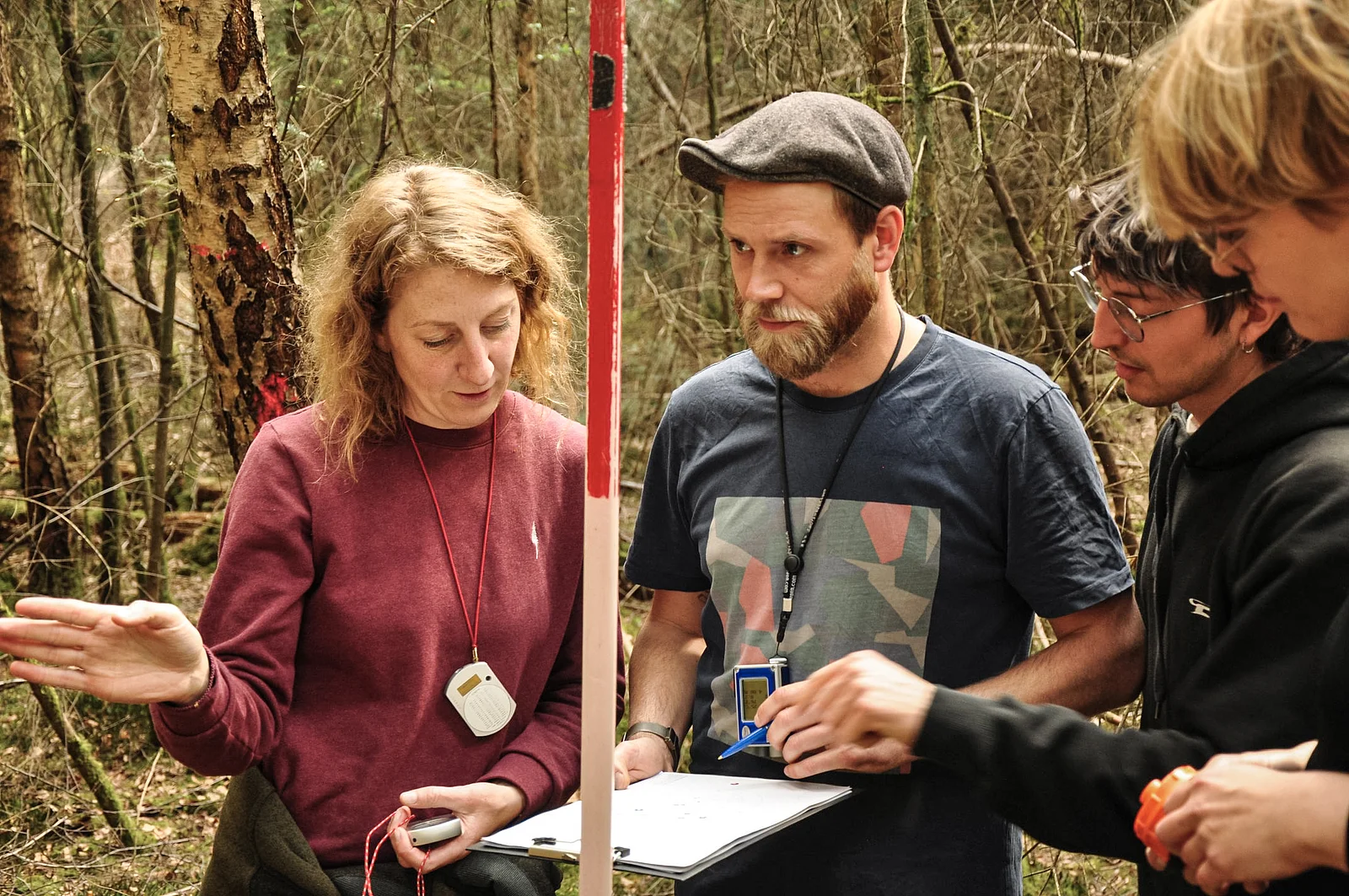
You will be able to understand forest-related data in a spatial and temporal context, apply digital processing and analysis methods, and carry out field mapping. In doing so, you will be equipped to handle data from various sources (remote sensing, forest inventory, databases, etc.) effectively. These skills are not merely theoretical in nature, but are reinforced through practical exercises to ensure their practical application.
Third semester – Practical application
You will be able to understand forest-related data in a spatial and temporal context, apply digital processing and analysis methods, and carry out field mapping. In doing so, you will be equipped to handle data from various sources (remote sensing, forest inventory, databases, etc.) effectively. These skills are not merely theoretical in nature, but are reinforced through practical exercises to ensure their practical application.
You will be able to understand and critically reflect on the current academic discourse on socio-ecological forest management. Through the use of selected literature, you will be able to present structured summaries of the content and assess the resulting implications for action.
They are able to safely apply practical methods of timber harvesting and assess their areas of application. Furthermore, they are familiar with the advantages and disadvantages of forestry inventory methods and can interpret the results appropriately. They are able to weigh up socio-political debates on forest management strategies and engage in informed discussions.
Building on identified challenges and current trends, you will explore new models of institutional organisation and participation and develop strategies for socio-ecological innovation in forest governance.
They recognise the importance of taking a macroeconomic view of forest management and understand the interplay between the operational and macroeconomic levels against the backdrop of national and global market developments. They examine new business models and develop proposals for economic innovation to finance forest management. This also involves an in-depth examination of models for public remuneration and private-sector financing of ecosystem services.
You will learn the basics of project management and apply them to socio-ecological projects.
Fourth semester – Specialisation
Five of the compulsory-election modules on offer must be taken this semester.
Optional in the 4th or 6th semester
You will develop practical participatory concepts for selected situations within socio-ecological forest systems. You will be familiar with the conceptual and methodological foundations of mediation and conflict management and will apply these to current conflicts in forestry practice and policy.
Optional in the 4th or 6th semester
You will be able to situate the concept of forest justice within its historical context and, drawing on existing discourses on environmental and climate justice, use it as a basis for argument in debates on forest policy.
in either the 4th or 6th semester
You will be able to develop innovative business ideas for forestry enterprises operating in a socio-ecological manner.
Optional in the 4th or 6th semester
You will examine the underlying values, assumptions and objectives, as well as the methods of various economic and econometric approaches, and draw conclusions from these for socio-ecological forest management.
Optional in the 4th or 6th semester
You will explore the theory and practice of revitalisation and critically examine the extent to which restoration or renaturation appears feasible in the context of ongoing environmental change. The concept of pronaturation will be further developed using examples, taking into account ecosystem functionality and the promotion of ecosystem services.
Optional in the 4th or 6th semester
You will be able to analyse the condition of the forest using a wide range of methods (forest inventories, remote sensing data). In terms of content and methodology, this builds on the module ‘Information Technology in the Forest’. You will be able to independently describe and assess a wide variety of forests using examples of your own choosing.
in either the 4th or 6th semester
You will be able to understand the complex interactions between climate change, its main drivers and impacts, and the political and societal responses at various levels.
Optional in the 4th or 6th semester
You will be able to understand the recreational function of forests and its growing importance in forest management for the benefit of the public good. You will learn about the possibilities and models of recreation-based forest management and practise planning relevant projects by developing a master plan for a specific project region.
in either the 4th or 6th semester
You will be able to analyse and design sustainable forest management concepts, develop future-proof business models, and understand and apply innovative communication strategies. These skills are developed through practice-oriented, critically reflective working processes in small groups, using best practice examples, and the results of this work are presented.
Optional in the 4th or 6th semester
You will be able to formulate a strategic campaign objective on a topic relevant to forestry policy. You will be able to draw up a campaign plan to achieve the strategic campaign objective. You will also acquire the ability to think and plan strategically across disciplines, as well as skills in teamwork, work organisation, presentation and discussion
in either the 4th or 6th semester
By reflecting on the experiences gained through sustained engagement, combined with an in-depth examination of subject-specific content, you will develop subject-specific and cross-disciplinary skills that contribute to personal development, such as communication skills, self-efficacy, teamwork and more. You will learn about the significance of civic engagement and will be able to assess and reflect on the opportunities and limitations in relation to your respective field of study.
Optionally in the 4th or 6th semester
You will be able to expand, deepen and apply your specialist and methodological knowledge, as well as your skills, in a specialist area outside the existing curriculum. The individual choice allows you to develop your own personal profile within the context of the programme’s learning objectives and professional qualifications.
Fifth semester – Practical training
The practical project lasts for at least 20 weeks.
The practical project serves to put the skills acquired in the first four semesters to the test and to deepen students’ understanding of social-ecological forest management. It can be carried out in forestry-related businesses, research institutions, non-governmental organisations, public authorities, start-ups or other organisations, primarily in Germany and, where appropriate, abroad. The results of the practical project are presented in a scientifically written project report.
Sixth semester – Documentation
You are able to produce an academic paper on a subject-specific topic of your own choosing. Within the context of your work, you can formulate subject-specific research questions and working hypotheses, and develop and apply established methodological approaches or new methods. You are able to analyse data scientifically and present it appropriately. The conclusions can be evaluated and critically discussed in the context of the results of comparable studies. You are able to write academically and are familiar with the principles of good academic practice.
The Bachelor’s thesis consists of a written component and a presentation.
They are able to present and critically discuss current projects in socio-ecological forest management. They deepen their knowledge of the political, socio-economic and ecological issues relating to forest management and develop a comprehensive understanding of the existing challenges and possible solutions.
See the course offerings for the 4th semester
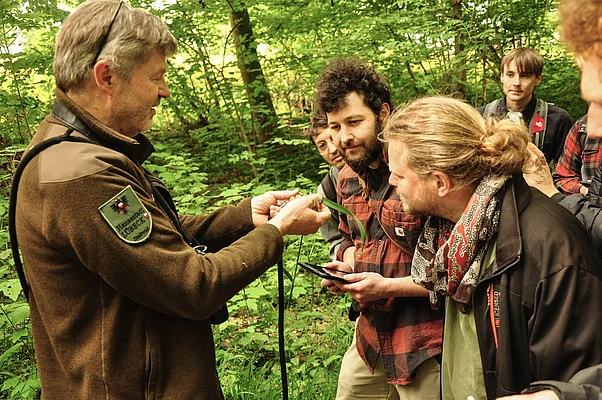
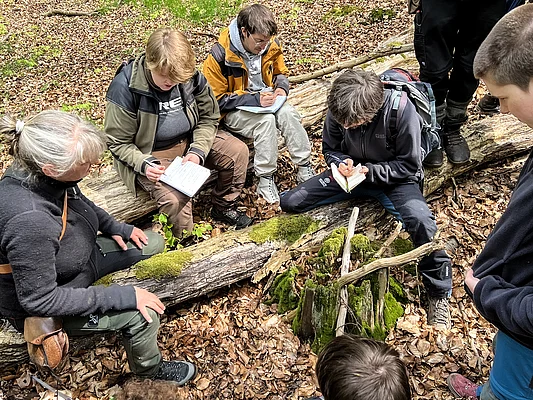
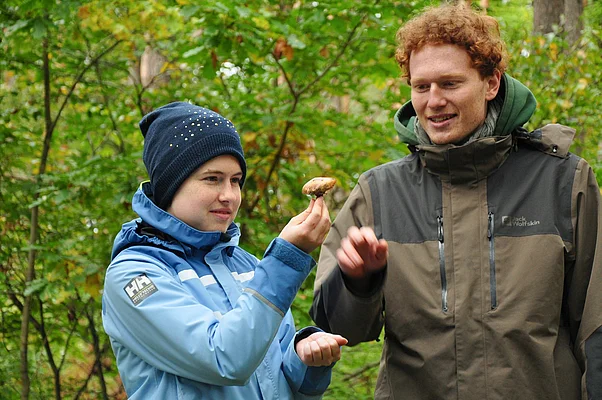
I never thought we’d actually spend so much time in the forest! Experiencing the different aspects of the forest for ourselves and the insights we gain from the many local partners are incredibly valuable for understanding forest ecosystems and their importance to us humans.
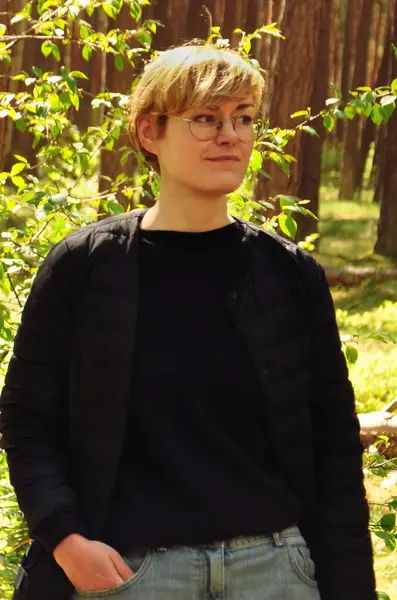
Anna Warnow
Student of Social and Ecological Forest Management
FAQ: Course Content
What makes the structure of the course so special?
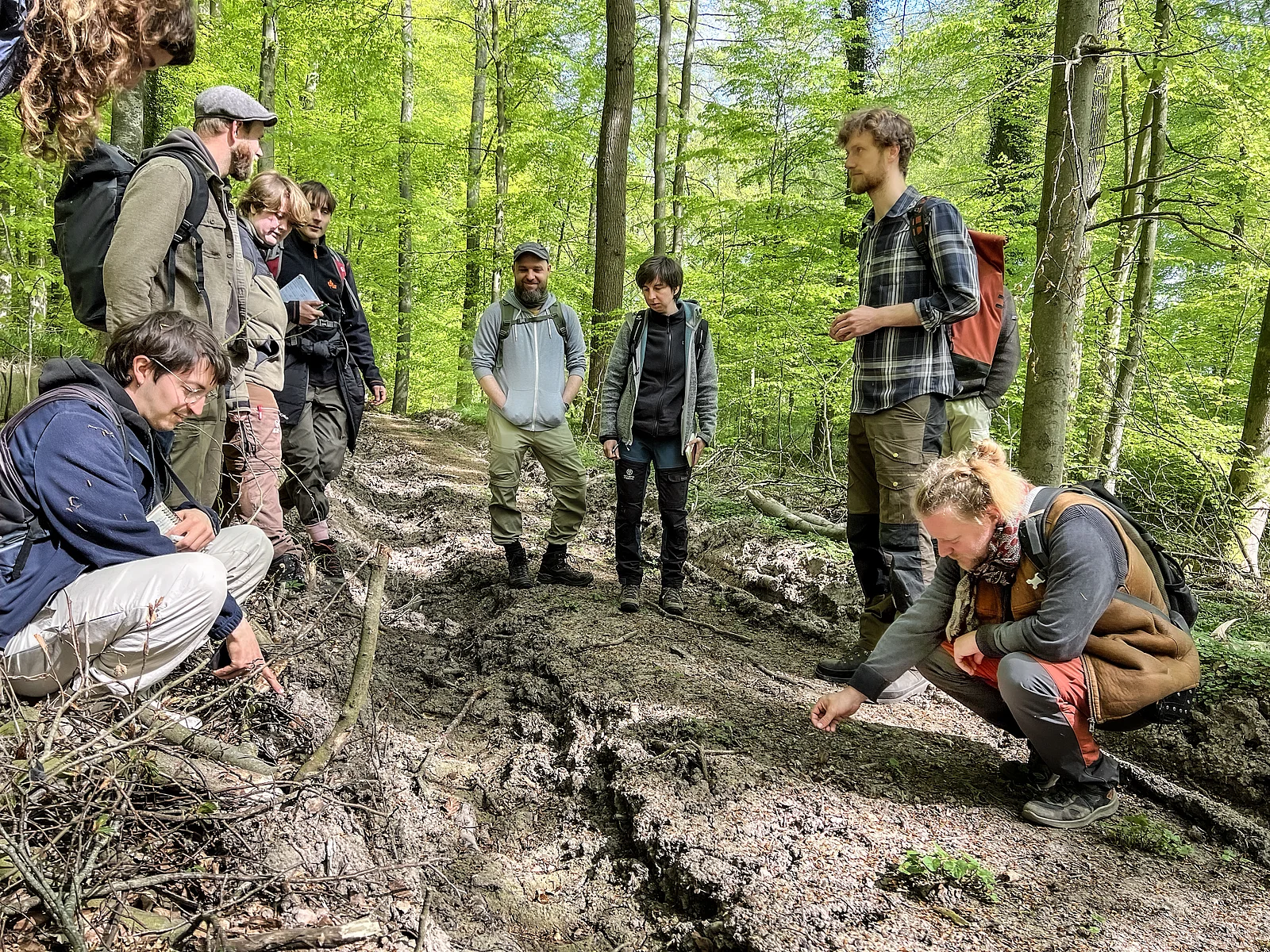
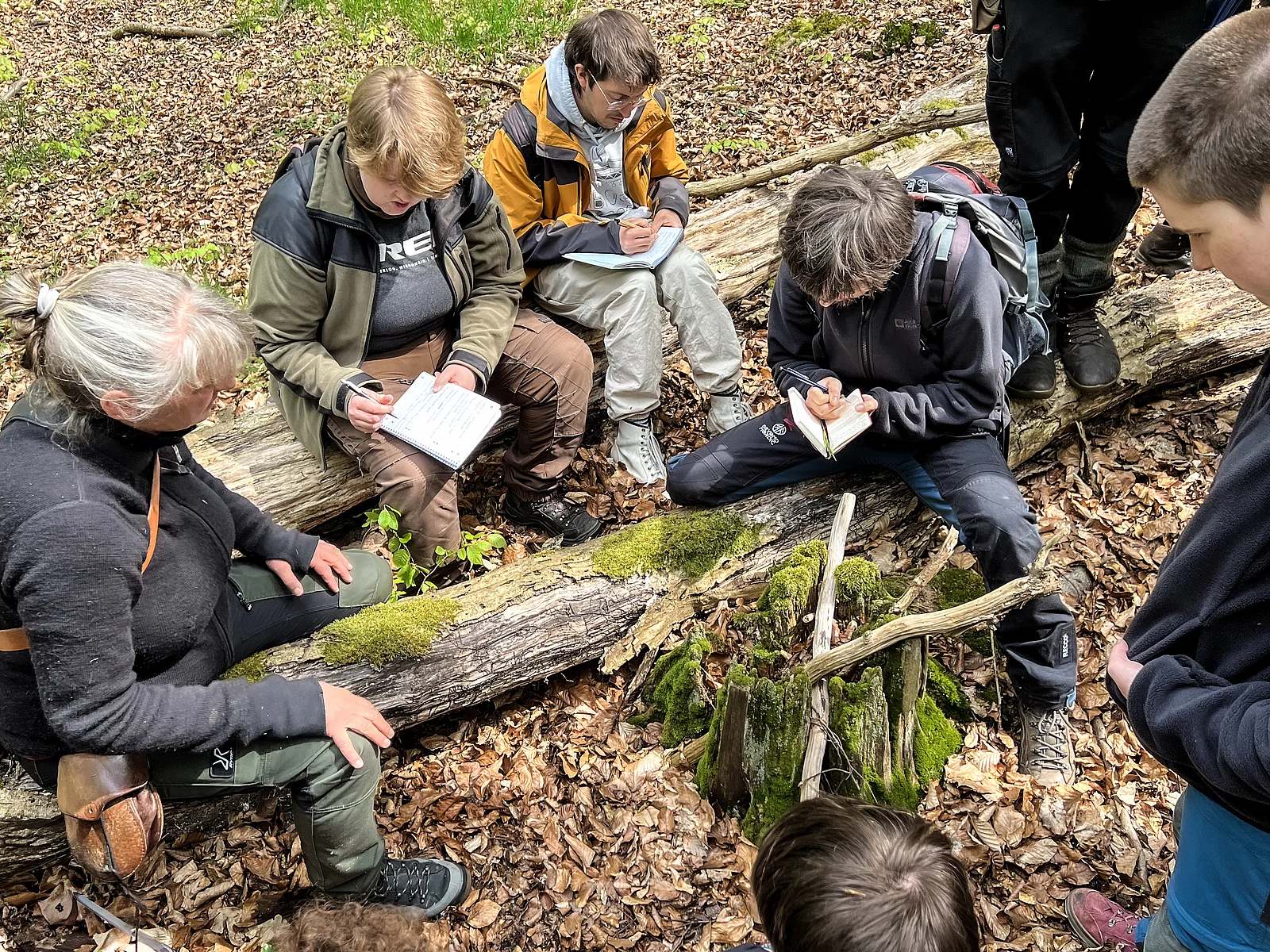
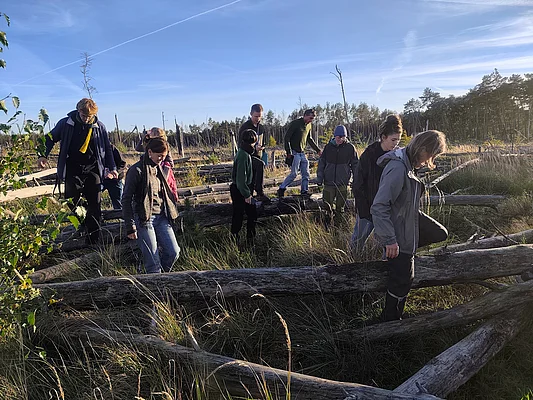
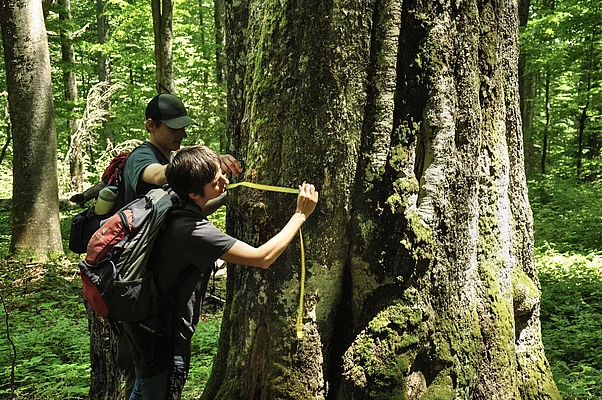
Many of the modules take the form of intensive courses, including one- to two-week field trips. The field trips in the first three semesters form part of the compulsory modules that all students must attend.
Some of the compulsory elective modules in the fourth and sixth semesters also take place outside Eberswalde, such as ‘Sustainable Forest Management, Communication and Future-Proof Business Models’ at Wohlleben’s Forest Academy in Wershofen in the Eifel.
What should I bear in mind regarding the excursions?
We organise both day trips and longer excursions involving overnight stays. For multi-day excursions, despite funding from the degree programme, students are required to contribute approximately 600–800 euros towards the cost of compulsory excursions during the first three semesters
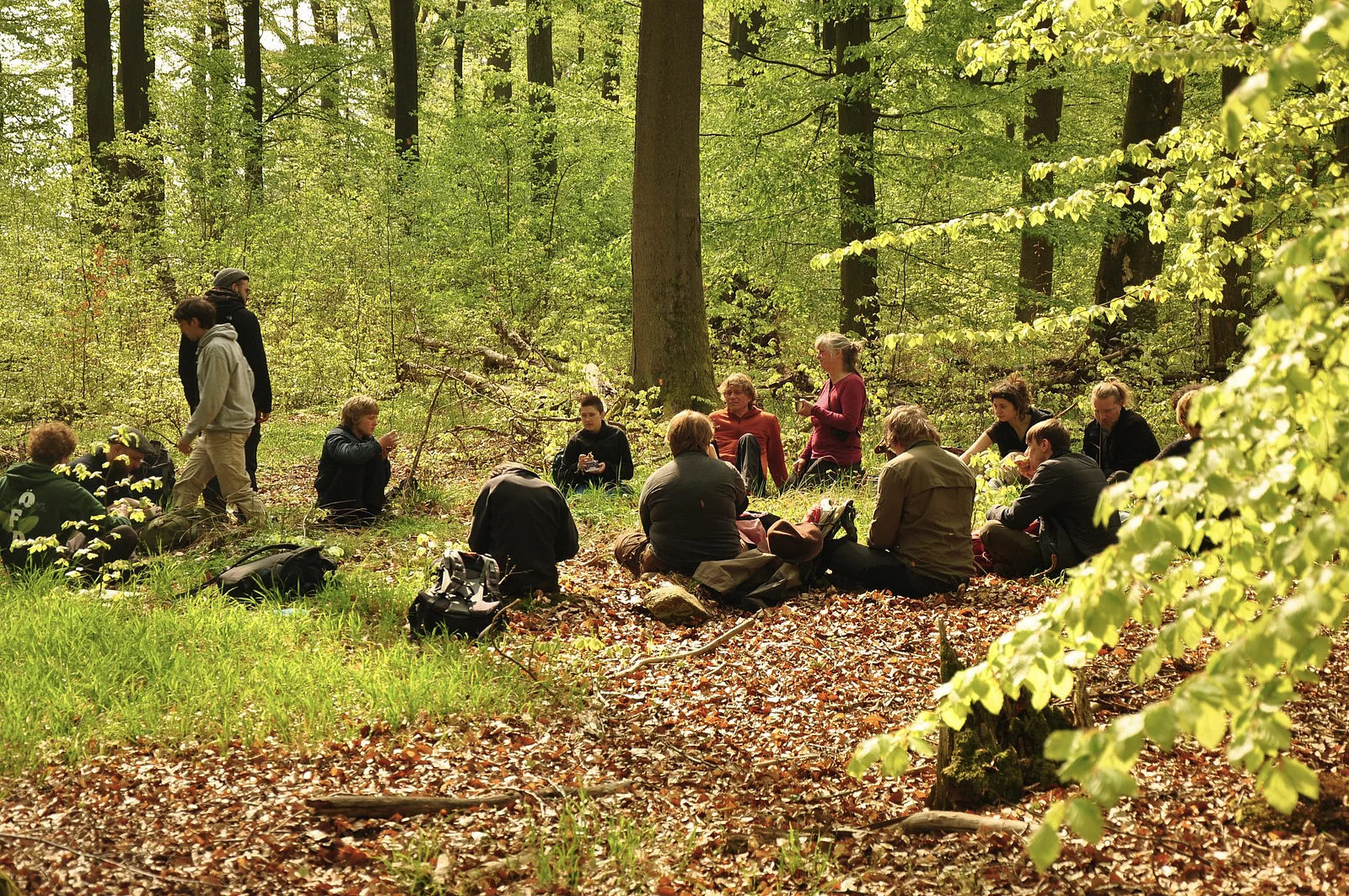
Furthermore, the most important thing is that you enjoy being outdoors and are willing to undertake longer bike rides and hikes, even with luggage. Our aim is to explore as many different types of woodland as possible and make the most of the field trip days. We will be travelling on foot, by bike, train and bus. We will also be spending some nights in tents (see the section on equipment) – comfort is therefore limited. However, you will often be rewarded with a beautiful view of the woodland first thing in the morning.
Do I need any special equipment for the excursions?
The great thing about this course is that we spend a lot of time outdoors in the woods! However, this also means that conditions can get quite wet and the terrain can be rough. Special equipment isn’t required, but hiking boots and a waterproof rain jacket make a real difference to how comfortable you feel out and about. A daypack and rain trousers are also recommended.
As well as day trips, we’ll also be camping on the longer excursions. A few tents are available for hire, and if necessary, there’s the option of sharing a tent, but ideally you should bring your own tent, a sleeping mat and a sleeping bag that will keep you warm in spring, autumn and in the mountains. For the two-week excursions, you should bring a trekking rucksack with sufficient storage space. We
do not always stay at fully equipped campsites. A camping stove is an advantage. Experience has shown that it is also easy to cook together, so having your own stove is not a must.
Last but not least: some of the excursions are done by bike. You should not only be able to ride a bike, but also bring your own bike in good working order. Ideally with standard to wider tyres, suitable for riding on sandy forest paths – welcome to Brandenburg!
Is knowledge of English required?
Almost all courses are taught in German. However, the vast majority of the academic literature we study is in English. For this reason, an English language certificate at B2 level or above is a prerequisite for admission to the programme.
Are there opportunities to gain practical experience and make contacts with the professional world and potential employers whilst you are still studying?
A great many! We are fortunate to work closely with a wide range of partners in the field, whom we get to know and visit as part of our studies. These include forestry organisations such as the Brandenburg State Forestry Authority, Lübeck City Forest and the Hatzfeld-Wildenburg Forestry Authority; foundations such as the Dieter Mennekes Environmental Foundation (DIMUS); organisations such as the Wohlleben Forest Academy, Greenpeace, or the Naturwald Academy in Lübeck; and companies that focus on various ecosystem services, ranging from forest recreation and leisure (such as Bikeplan) to Woodify, which concentrates on regulatory ecosystem services.
What opportunities are there to gain practical experience whilst still studying?
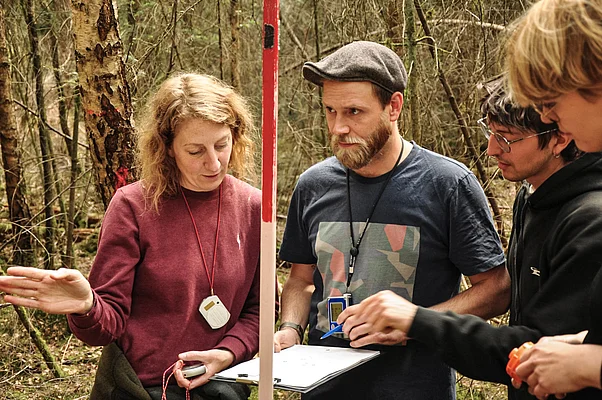
In addition to numerous opportunities to meet forestry practitioners and people who are involved in our forest ecosystems in a variety of ways – including exercises in site surveys, forest inventories and habitat mapping, as well as the planning of harvesting and afforestation measures – the fifth semester offers the chance to gain practical experience through a compulsory placement of at least 20 weeks, focusing on a small research project of your own.
I have a few more questions. Who can I contact?
If you have any questions about the application process, you can find detailed information on the procedure, requirements and deadlines on the website under “Application and Admission” and at the Student Advisory Service.
In addition, HNEE provides information about its degree programmes at its university information days, both in person and, in some cases, online.
If you have any special health or physical needs, we’re happy to support you – please get in touch with programme coordinator Christoph Nowicki so we can work together to find individual solutions. He’s also happy to answer any further questions about the structure and content of the programme: Christoph.Nowicki(at)hnee.de