

Doctoral Studies at HNEE
The topic of doctoral education at Universities of Applied Sciences is gaining increasing importance.
For many years, doctoral projects have been carried out at HNEE and implemented in cooperation with universities through collaborative doctoral procedures.
Since April 2024, the Brandenburg Higher Education Act (BbgHG) has also stipulated that a graduate school in the state of Brandenburg may be granted the right to award doctorates. The detailed implementation of this provision is currently still under development. The aim is to establish a distinctive profile of HNEE in the promotion of early-stage researchers and to further strengthen its role as a research institution within the academic landscape.
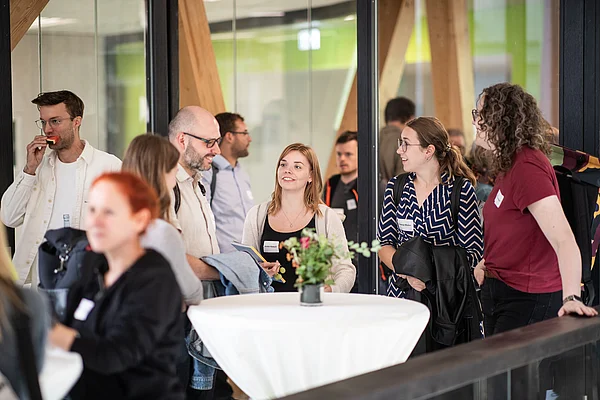
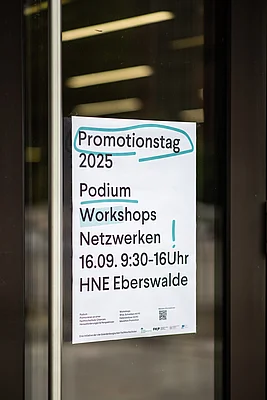
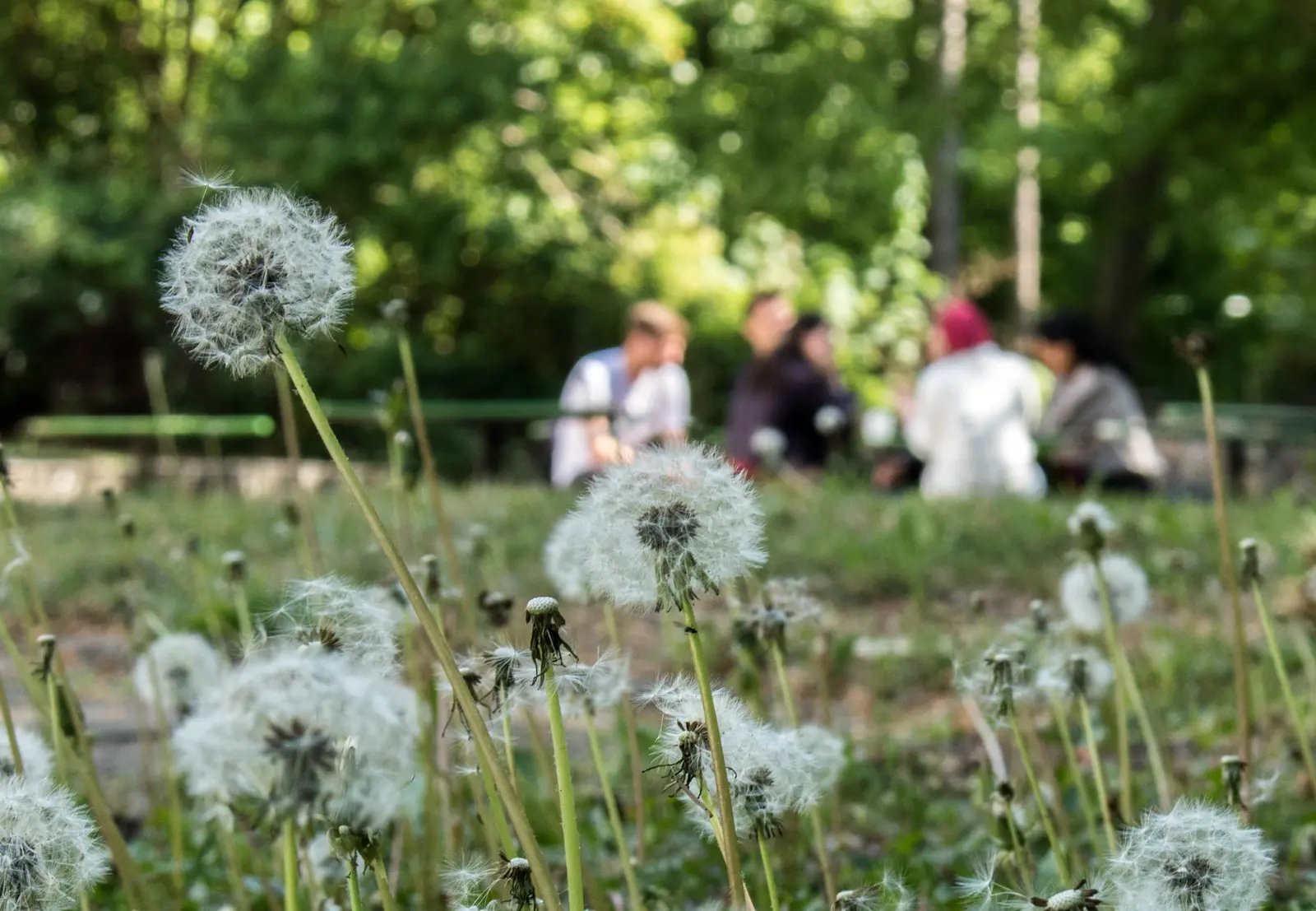
Promotionsinteressierte, Promovierende und Promovierte kommen zusammen.
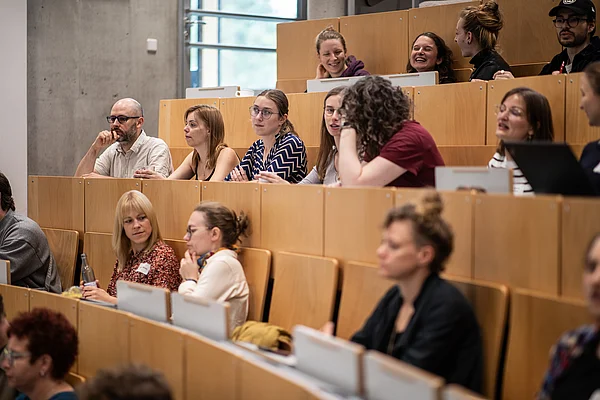
Promotionsinteressierte, Promovierende und Promovierte kommen zusammen.
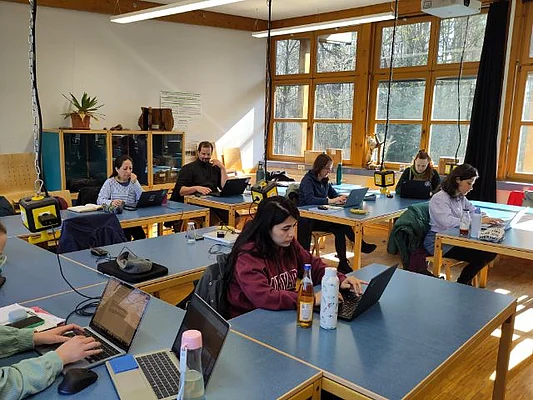
In der Schreibwerkstatt schreiben Promovierende und Studierende gleichzeitig unter Anleitung an ihren Arbeiten.
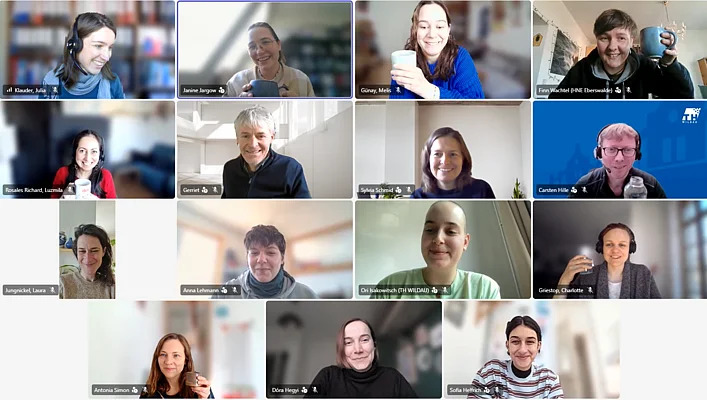
Teilnehmende einer Onlineveranstaltung tauschen sich aus.
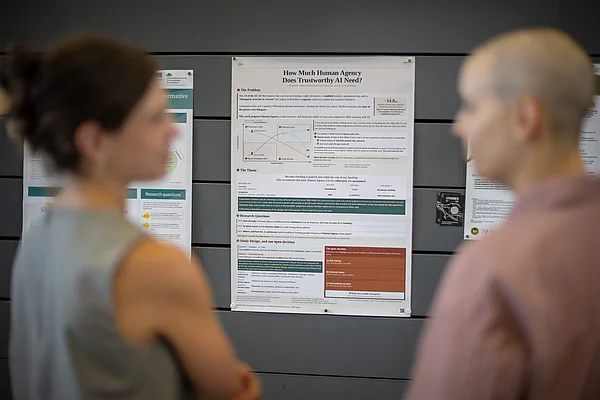
Die Postersession lud zum fachlichen Austausch und zur Vernetzung ein
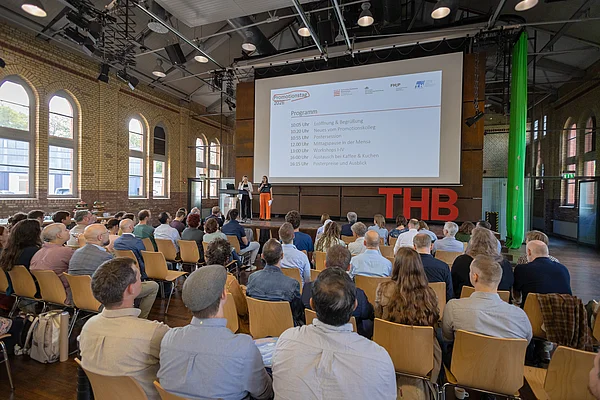
Ein abwechslungsreiches Programm erwartete die Teilnehmenden des Promotionstags
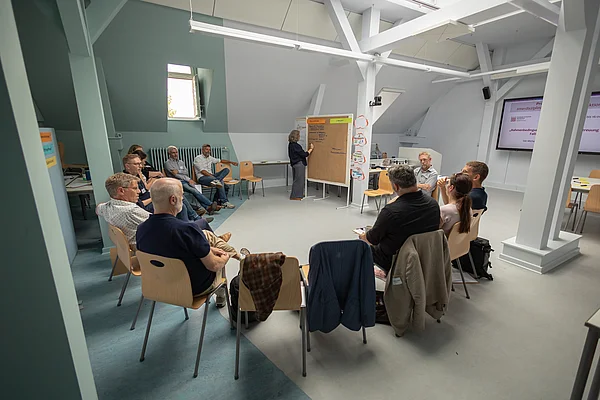
Promotionsbetreuende tauschen sich im Rahmen eines Workshops zum Thema Gute Betreuung aus
Offers and possibilities
Cooperative doctorates at the HNEE
HNEE has established an agreement with LEUPHANA University of Lüneburg to offer cooperative doctoral programmes. Together, the two universities run a co-operative research training group on biodiversity-focused land use in biosphere reserves. Cooperative doctorates are also possible in partnership with other universities.
To date, six doctorates have been successfully completed through the cooperative programme with Leuphana. Within the framework of this agreement, five doctoral projects of the BRI Graduate Program were successfully completed in 2024 alone, receiving the distinctions summa cum laude and magna cum laude.
Doctoral candidates at HNEE may also pursue cooperative doctoral projects with other universities, whether regional, national, or international. Such collaborations are a well-established and integral part of doctoral research at HNEE.
Brandenburg Graduate School for Applied Sciences
In 2025, the four Brandenburg universities of applied sciences (HAWs) – the Potsdam University of Applied Sciences, the Brandenburg University of Applied Sciences, the Wildau University of Applied Sciences and the Eberswalde University for Sustainable Development – signed a joint cooperation agreement. This collaboration was preceded by amendments to the Brandenburg Higher Education Act and the regulations on granting the Brandenburg Graduate School the right to confer doctoral degrees, which together established the legal framework for cooperation. With the granting of the right to confer doctoral degrees on 14 August 2026, the Brandenburg Graduate School for Applied Sciences is now able to conduct doctoral procedures independently. We are currently establishing the necessary structures and committees to ensure high-quality doctoral procedures based on clearly defined frameworks and standards.
The Graduate School is structured into three academic sections: Engineering Sciences, Natural and Environmental Sciences, and Business, Social and Media Sciences. Within these sections, professors and doctoral candidates will be organised and connected through academic networks.
Those interested in pursuing a doctorate can already approach professors with strong research profiles to initiate a doctoral project at the Brandenburg Graduate School for Applied Sciences. The doctoral procedure can then be formally registered through the Graduate School’s administrative office once the doctoral degree regulations come into force. If you have any questions about pursuing a doctorate at HNEE, please feel free to contact HNEE’s Advisor for Academic Career Development.
Various training opportunities, networking meetings and information events are already being offered. You can find the latest information on these opportunities here.
Professors with Strong Research Profiles at the Brandenburg Graduate School:
Section of Engineering Sciences
The following professors are currently members of the Graduate School and are eligible to supervise doctoral projects and dissertation topics within the framework of the program:
HNE Eberswalde
- Prof. Ulrich Schwarz, Professur für Gestaltung, Konstruktion und Herstellung von Produkten aus Holz
TH Brandenburg
- Prof. Robert Flassig, Professur für Technische Energieeffizienz
- Prof. Sven-Frithjof Goecke, Professur für Allgemeinen Maschinenbau
- Prof. Sören Hirsch, Professur für Elektrotechnik
- Prof. Emanuel Kitzelmann, Professur für Angewandte Künstliche Intelligenz
- Prof. Claus Vielhauer, Professur für Angewandte Informatik / Medieninformatik, insb. Datensicherheit
FH Potsdam
- Prof. Frank Heidmann, Forschungsprofessor für Design of Software Interfaces
- Prof. Michael Prytula, Forschungsprofessor für ressourcen-optimiertes und klimaangepasstes Bauen
TH Wildau
- Prof. Christian Dreyer, Professur für Faserverbund-Materialtechnologien
- Prof. Michael Herzog, Professur für Polymere Hochleistungsmaterialien
- Prof. René Krenz-Baath, Professur für cyberphysikalische Systeme
- Prof. Andreas Mai, Professur für Mikro- und Nanoelektronik
- Prof. Jörg Reiff-Stephan, Professur für Angewandte Informatik im Maschinenbau
- Prof. Christian Rudolph, BMDV-Stiftungsprofessur Radverkehr
Section of Natural and Environmental Sciences
The following professors are currently members of the Graduate School and are eligible to supervise doctoral projects and dissertation topics within the framework of the program:
HNE Eberswalde
- Prof. Ralf Bloch, Professur für Agrarökologie und nachhaltige Anbausysteme
- Prof. Tobias Cremer, Professur für Forstnutzung und Holzmarkt
- Prof. Katharina Helming, Professur für Nachhaltigkeitsbewertung
- Prof. Pierre Ibisch, Professur für Sozialökologie der Waldökosysteme
- Prof. Stefan Julich, Professur für Landschaftskunde
- Prof. Eckart Kramer, Professur für Prozessmanagement und Technologien im Ökolandbau
- Prof. Katharina Löhr, Professur für Sozialökologische Waldgovernance
- Prof. Carsten Mann, Professur für Nachhaltige Waldressourcenökonomie
- Prof. Denise Matias, Professur für Ecosystem-based transformation management in UNESCO Biosphere Reserves
- Prof. Jan-Peter Mund, Professur für GIS und Fernerkundung
- Prof. Eva Saliu, Professur für Tierhaltung im ökologischen Landbau
- Prof. Inga Schleip, Professur für Nachhaltige Grünlandnutzungssysteme und Grünlandökologie
- Prof. Marcus Schmidt, Professur für Technologien zur nachhaltigen Erzeugung und Qualitätssicherung pflanzlicher Lebensmittel
- Prof. Peter Spathelf, Professur für Angewandten Waldbau
- Prof. Uta Steinhardt, Professur für Landschaftsökologie und Landnutzungsplanung
TH Brandenburg
- Prof. Daniel Guterding, Professur für Wirtschaftsmathematik
- Prof. Kirsten Harth, Professur für Angewandte Mathematik
- Prof. Andreas Jechow, Professur für Grundlagen der Augenoptik und der optischen Gerätetechnik
TH Wildau
- Prof. Marcus Frohme, Professur für Molekulare Biotechnologie und Funktionelle Genomik
- Prof. Maria Krikunova, Professur für Laser- und Plasmatechnik
- Prof. Fred Lisdat, Professur für Biosystemtechnik
- Prof. Carolin Schmitz-Antoniak, Professur für instrumentelle Analytik / angewandte Oberflächenphysik
Section of Economic, Social and Media Sciences
The following professors are currently members of the Graduate School and are eligible to supervise doctoral projects and dissertation topics within the framework of the program:
HNE Eberswalde
- Prof. Erik Aschenbrand, Professur für internationalen Naturschutz und sozial ökologische Nachhaltigkeitsprozesse in Biosphärenreservaten
- Prof. Martin Balas, Professur für Nachhaltiges Destinationsmanagement
- Prof. Sonja Geiger, Professur für Psychologie und Marketing in der nachhaltigen Land- und Lebensmittelwirtschaft
- Prof. Britta Gossel, Professur für Social Business Management
- Prof. Anna Häring, Professur für Politik und Märkte in der Agrar- und Ernährungswirtschaft
- Prof. Daniel Johnson, Professur für wertebasierte Waldökonomie
- Prof. Heike Molitor, Professur für Umweltbildung und Bildung für eine nachhaltige Entwicklung
- Prof. Benjamin Nölting, Professur für Governance in regionaler Nachhaltigkeitstransformation
- Prof. Jens Pape, Professur für Nachhaltige Unternehmensführung in der Agrar- und Ernährungswirtschaft
- Prof. Heike Walk, Professur für Transformation Governance
- Prof. Martin Welp, Professur für Sozioökonomie und Kommunikation
TH Brandenburg
- Prof. Andreas Johannsen, , Professur für Systementwicklung und -integration
FH Potsdam
- Prof. Judith Ackermann, Forschungsprofessorin für Digitale Medien und Performance in der Sozialen Arbeit
- Prof. Jan Distelmeyer, Professor für Geschichte und Theorie der technischen Medien
- Prof. Ellen Euler, Forschungsprofessorin für Bibliothekswissenschaft - Open Access/Open Data
- Prof. Winfried Gerling, Professor für Konzeption und Ästhetik der Neuen Medien
- Prof. Gerlind Große, Forschungsprofessorin für Frühkindliche Bildungsforschung
- Prof. Peter Heisig, Professor für Informations- und Wissensmanagement
- Prof. Frauke Hildebrandt, Professorin für Pädagogik der Kindheit
- Prof. Antje Michel, Professorin für Informationsdidaktik und Wissenstransfer
- Prof. Heike Neuroth, Professorin für Bibliothekswissenschaft
- Prof. Ulrich Richtmeyer, Professor im Lehrgebiet Medienkulturarbeit
- Prof. Tobias Schröder, Forschungsprofessor für nachhaltige urbane Entwicklungsstrategien
- Prof. Stefan Thomas, Professor für Empirische Sozialforschung und Soziale Arbeit
TH Wildau
- Prof. Dietmar Baetge, , Professur für Wirtschaftsprivatrecht und Internationales Handelsrecht
- Prof. Ronny Freier, TH Wildau, Professur für öffentliche Finanzwirtschaft und Haushaltsrecht
- Prof. Stephan Meyer, TH Wildau, Professur für öffentliches Recht insbesondere Kommunalrecht und Umweltrecht
- Prof. Dana Mietzner, TH Wildau, Professur für Betriebswirtschaftslehre mit den Schwerpunkten Innovations- und Regionalmanagement
- Prof. Christian Schultz, TH Wildau, Professur für Allgemeine Betriebswirtschaftslehre mit dem Schwerpunkt Entrepreneurship
Financial support
There are various options for financing a doctorate, including employment as a research assistant in the relevant working group, a scholarship from a foundation, or a doctoral position in a graduate programme.
In principle, there are positions specifically for doctoral candidates, project positions and scholarships. It is less advisable to have an external job or a domestic position alongside your doctoral studies (if these are not related to your doctoral studies).
HNEE publishes current job advertisements for research staff in the area of working at HNEE.
There are a number of different scholarships and scholarship providers. Here is a small selection of scholarship providers that may be relevant to you:
- 13 scholarship organisations, funded by the BMFTR
- German Federal Environmental Foundation
- DAAD – German Academic Exchange Service
- FAZIT Foundation
Please also bear in mind from the outset that experiments, travel to conferences and practice partners may involve costs.
In addition to basic funding, HNEE offers its doctoral students additional support options.
These can be found in the guidelines for the promotion of scientists in the early stages of their careers (WiKa).
Please submit applications via the following link: Application form for funding for early-career researchers.
Events and Workshops
To support our doctoral candidates, we offer events related to doctoral studies as well as workshops on selected topics that accompany the doctoral process. Participation in all of these activities is free of charge.
The Brandenburg Graduate School of Applied Sciences offers an annual orientation week for new doctoral candidates, the Brandenburg Doctoral Day, and a research and doctoral colloquium held four times per semester. In addition, HNEE provides further opportunities, including a weekly writing day in the library and regular PhD lunches in the cafeteria. Alongside the development of key academic skills, these formats foster scholarly exchange and networking among doctoral candidates.
Furthermore, our doctoral candidates also have access to the services offered by the → Career Service and the → Start-up Center at HNEE.
Doctoral candidates may also participate in the programs and services offered by our cooperation partners, including the statistical consulting unit at Freie Universität Berlin and the continuing education center at Freie Universität Berlin. If you are interested, please contact the advisor for academic career development.
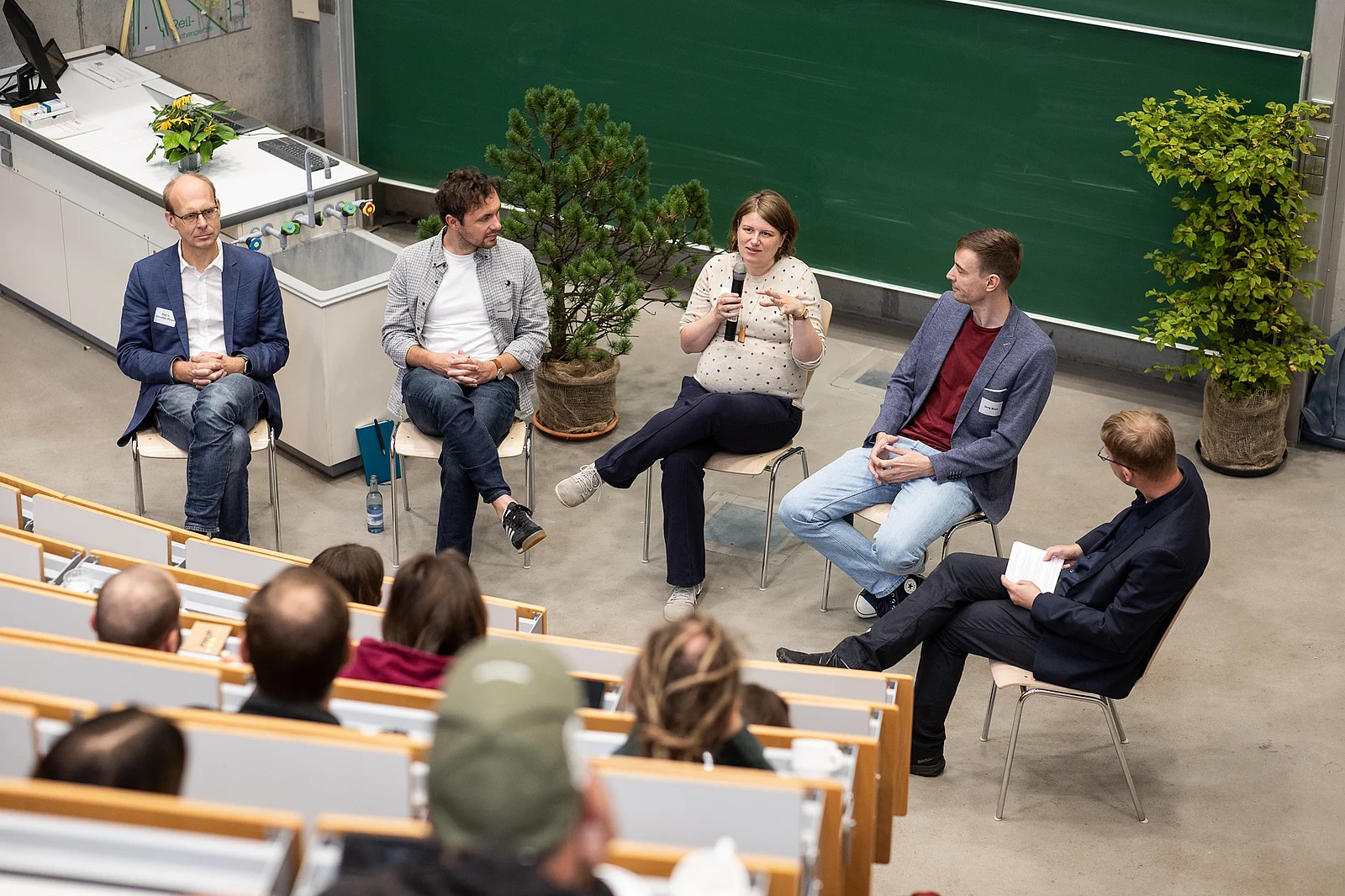
Workshop "When Science Meets Parenthood – Mental Load and Equality“
Using AI in Your Doctoral Research - Context Engineering / Context Management
PhD-Lunch at HNEE
Using AI in Your Doctoral Research - Building Your Own AI Assistants/Tutors
FAQ on doctoral studies at the HNEE
- Check the doctoral regulations: Confirm whether you meet the requirements for a doctorate. HNEE does not yet have its own doctoral regulations, so the regulations of the cooperating university apply
- Prepare to get started:
- Identify a potential topic, research question, or area of focus. Important questions to consider: Is the topic specific enough for a dissertation? If not, refine it. Are you enthusiastic about the topic? Is it meaningful? Are there research gaps? Does the topic suit your professional profile?
- Find supervision at HNEE and at the cooperating university. Ideally, this should be a person with a strong research background in your subject or topic, preferably holding a professorship.
- Secure funding for at least three years.
- Develop a research plan: Discuss your topic and the identified research gap with both supervisors. Then prepare an initial synopsis for your dissertation. This should outline the current state of research, your planned approach, and a timetable. Tips and guidance can be found, for example, → here.
Your topic should be a good fit for you, but you should also be a good fit for the topic. Ideally, you already have some expertise in the area (for example from your thesis or Master’s dissertation) and are highly motivated to explore a question that has interested you for some time. For project-based positions, it is advisable to choose a topic that is related to the project so that synergy effects can arise. Occasionally, supervisors may propose topics that align with your interests. In such cases, you should consider whether the topic excites and motivates you enough to sustain your research over several years.
You may already know potential supervisors from your Bachelor’s or Master’s studies who are a good fit for your topic and subject area. If you hold a project position, colleagues from the project may also be suitable supervisors. Alternatively, you can explore all → research projects at HNEE independently of any position to identify a potential supervisor.
Start by finding out which universities your university already cooperates with, as formal arrangements are usually already in place. HNEE, for example, has a cooperation agreement with the → Leuphana University in Lüneburg, Faculty of Sustainability.
If you have a “new” university in mind, seek support from both supervisors (HNEE and the partner university) and from central administrative units to help establish the cooperation. Stay friendly and patient — you’ll be paving the way for future doctoral candidates. This is pioneering work.
For a cooperative doctorate, you must refer to the doctoral regulations of the partner university to check the admission requirements.
Consider the added value that both your university supervisor and HNEE can offer you: e.g. infrastructure, access to literature and databases, research groups and networks, as well as financial or other support for doctoral candidates. Make full use of these opportunities.
Plan regular visits to your university supervisor realistically — in terms of both time and funding (for example, twice a year) and record these meetings in your supervision agreement.
Act as a link between your supervisors and, by extension, between the two institutions. Communicate transparently and proactively. After each meeting, summarise the current status and agreements in an email. A regular meeting with both supervisors (also online, for example once a year) helps to ensure that everyone remains up to date and aligned.
Enjoy the chance to benefit from the best of both worlds. And if things don’t go quite as planned, reach out to fellow doctoral candidates at other universities of applied sciences. You’re not on your own. Doing a doctorate at a university of applied sciences is a team effort and a relatively new way of working together.
Are you interested in pursuing a doctorate?
If you are interested in pursuing a doctorate at HNEE, feel free to contact us by email and ask to be added to the mailing list for prospective doctoral candidates. In addition, HNEE offers a Moodle course for doctoral candidates and postdocs. There you will also find further helpful tips and information on pursuing a doctorate.
Office of the Brandenburg Graduate School for Applied Sciences
Coordinator of the administrative office of the Brandenburg Graduate School for Applied Sciences
Staff member at the administrative office of the Brandenburg Graduate School for Applied Sciences
Networking with the Brandenburg Graduate School
The Brandenburg Graduate School for Applied Sciences is currently being established. The administrative office has been in place since February 2026 and is coordinating the new tasks and processes. Please feel free to contact us regarding any organisational or networking enquiries relating to the Brandenburg Doctoral College.