Model Project: Intercultural Communication in Higher Education for Sustainable Development
Research project
10/2024 - 09/2026
Project volume:48.664 EURO
Competence field:Sustainability in decision-making processes and accountability structures, Education for sustainable development
Cooperation:Composite partnership
Funding partner:State funding
Intercultural communication skills in the context of higher education for sustainable development are essential for enabling inclusive and equitable teaching that reaches everyone, as envisaged under SDG 4.7. Raising awareness of and recognising cultural differences enables students to improve mutual understanding and communicate more effectively about sustainability.
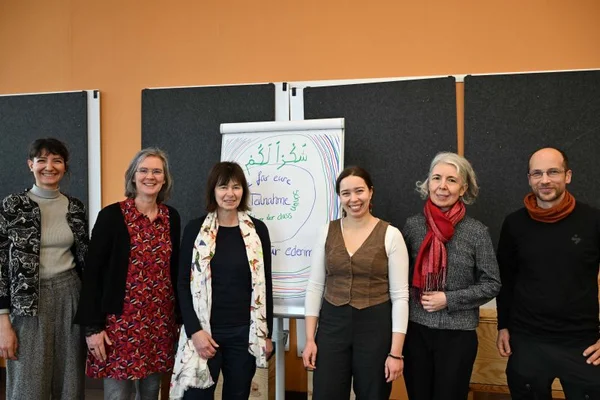
The project was launched at the end of January 2025. Yeşil Çember and HNEE brought together their expertise in intercultural communication and higher education for sustainable development.
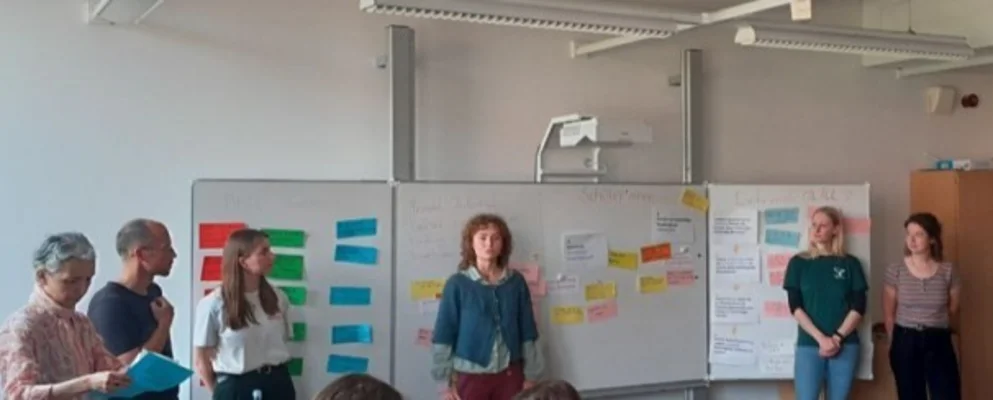
Workshop at a school in Neukölln: “How can we achieve greater diversity in green degree programmes?” Teachers, pupils from the advanced mathematics and Turkish courses, and HNEE students discussed motivation, barriers and prospects relating to access to sustainable degree programmes. The exchange with the HNEE students helped to open up the discussion.
Project Launch with Workshop:
The “InterKom” project was launched at the end of January 2025. Yeşil Çember and the Eberswalde University for Sustainable Development (HNEE) brought together their respective expertise in intercultural communication and higher education for sustainable development. Master’s student Jasmin Snoussi led a group discussion with students.
Workshop with university students and school pupils at a school in Neukölln:
“How can we achieve greater diversity in green degree programmes?”
Teachers, secondary school pupils from the advanced mathematics and Turkish courses, and HNEE students discussed motivation, barriers and prospects relating to access to sustainable degree programmes. The exchange with the HNEE students helped to open up the discussion. Their educational backgrounds made different pathways into higher education more tangible, although the group’s intercultural diversity could still be strengthened.
Our conclusion: To make it easier for young people from migrant backgrounds to access sustainable education, there needs to be a connection to their everyday lives, early access to information, personal encounters and forms of communication that relate to their everyday experiences. Formats such as school visits, peer counselling or tandem partnerships could provide new impetus in the long term.
Contact
Project manager
Prof. Dr. Heike MolitorProfessur für Umweltbildung und Bildung für eine nachhaltige Entwicklung
Funding partner
Federal funding
Partnerships
Partnership network