DAAD East-West-Dialogue Programme 2025
Research project
01/2025 - 12/2025
Competence field:Ecology, Sustainable forest management, Sustainable ecosystem management
Cooperation:Strategic cooperation
Funding partner:State funding
Nature for Resilience: A biosphere network for veteran recovery
This project represents the 10th consecutive initiative within the funding programme, continuing a successful track record of collaboration with both longstanding and new partners. Building on our partnerships, we are excited to explore the development of a comprehensive veteran rehabilitation and training programme. The central theme of this project is the enhancement of mental health and vocational training for veterans, focussing on nature-based rehabilitation and training in and with UNESCO Biosphere Reserves as model regions for sustainable development. Please also watch the video below, in which one of our project partners outlines the idea.
Contact
Project manager
Prof. Dr. Pierre L. IbischProfessor of Socio-Ecology of Forest Ecosystems
General contact
Angela DichteProject Focus
Mental health and nature-based recovery in times of war
Since the start of Russia’s full-scale invasion of Ukraine in February 2022, the question arose as to whether and how the expertise within the project team could also be used to support the mental health of the Ukrainian population, soldiers and veterans. It was clear that there would be a great need not only to address the destructive effects of the war on the country’s natural environment and infrastructure, but also that the constant stress, fear, despair and, in the worst cases, direct experience of war can and will have a profound and long-term impact on people’s physical and mental health.
International research (mainly from the US, UK, Canada, Israel and Australia) has shown that exposure to nature-based activities offers several benefits for the process of healing and reintegration of war veterans into society, family life and even professional life (e.g. Detweiler et al. 2010, Poulsen et al. 2016, Laverdure 2022, Shorer et al. 2023). The idea of combining this with vocational training related to conservation, sustainability and natural resource management – so-called ‘green jobs’ – appears to have been less explored, but some research (e.g. Bellotti et al. 2011, Kreski 2016) has also suggested positive outcomes in this area. Many of the authors mentioned, and others, highlight the potential of engagement in and with nature as being less stigmatised in society and by the participants themselves, as it is not primarily about them needing help. If the activity is framed instead as a challenge or adventure in the outdoors, or if they can contribute to the well-being of nature or the community, veterans tend to feel empowered and regain a sense of purpose. An example from practice could be the Green Veterans organisation (www.greenvets.org) in the US.
The Ukrainian situation is currently documented only in terms of the impact of war on the mental health of military personnel, their families and society (Semigina et al. 2021, Hrynzovskyi et al. 2022, Krasnodemska et al. 2023). Several initiatives are already focusing on support for veterans and their reintegration, as well as training and job-seeking (e.g. Ukrainian Veterans Foundation https://veteranfund.com.ua/en/, IREX Ukraine Veteran Reintegration Programme www.irex.org/project/ukraine-veteran-reintegration). Looking at international and Ukrainian experience (e.g. FBA and UNDP project EU4Recovery https://www.undp.org/ukraine/projects/eu4recovery-empowering-communities-ukraine-eu4recovery), it becomes clear that a community-based approach is essential to enhance societal reintegration.
Therefore, once again we see the role that UNESCO Biosphere Reserves can play as a platform and facilitator for this immense societal task of supporting veterans in their reintegration process (but also disabled people and other marginalised groups, as well as families who lost family members during the war), alongside the restoration of natural ecosystems and human infrastructure. The Carpathian Biosphere Reserve (CBR) appears to be an ideal location for these efforts, as it can be regarded as a safe haven, being situated in the only part of Ukraine that has not come under attack.
This gave rise to the idea of developing a training programme for veterans as a collaboration between Ukrainian universities and biosphere reserves or/and protected areas, which can provide safe spaces, access to nature and meaningful nature-based activities for veterans. The aim of this training programme would be to develop professional skills based on the needs of the participants and the biosphere reserves (e.g. monitoring, construction, IT, web design, etc.), as well as providing individual counselling by professionals. In this project, we would like to support this endeavour primarily through an on-site workshop, but also contribute with scientific insights generated through the research grants funded by the project.
Project Activities
Key components of the project include:
Study trip to Romania: We will organise a study trip involving German, Ukrainian and Moldovan students, offering an immersive educational experience.
Workshop in Ukraine: The workshop is planned for Western Ukraine. This workshop will serve as a crucial platform for further developing and discussing the veteran rehabilitation and training programme with potential future partners and the target group (veterans). It is designed to catalyse deeper engagement and collaboration, setting the stage for a more extensive, future endeavour.
Research Scholarships: We will offer three research scholarships focused on nature-based rehabilitation and training for veterans (and potentially other societal groups). These scholarships aim to advance research and practical applications in this field, contributing to the development of innovative approaches and solutions.
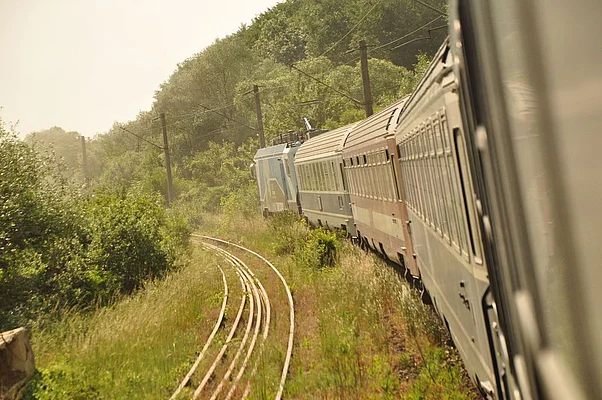
Train Travells are the best
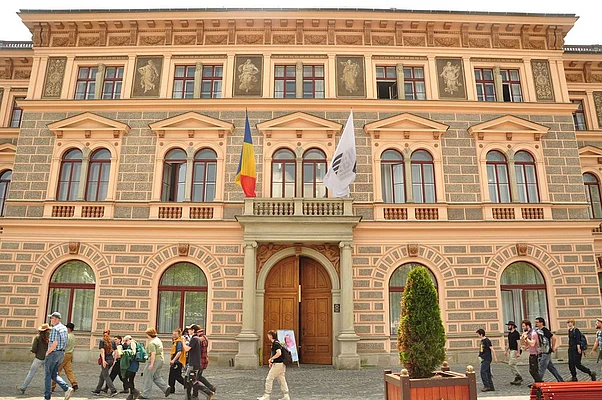
Brasov
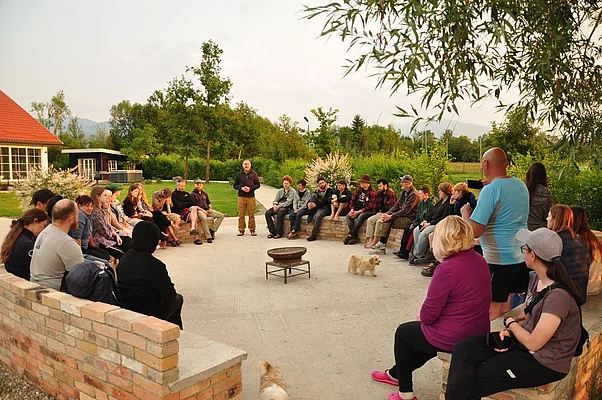
Introduction round in Bucium
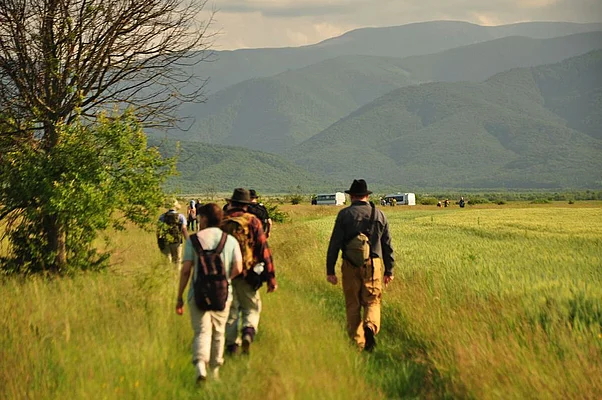
Towards the Făgăraș mountains
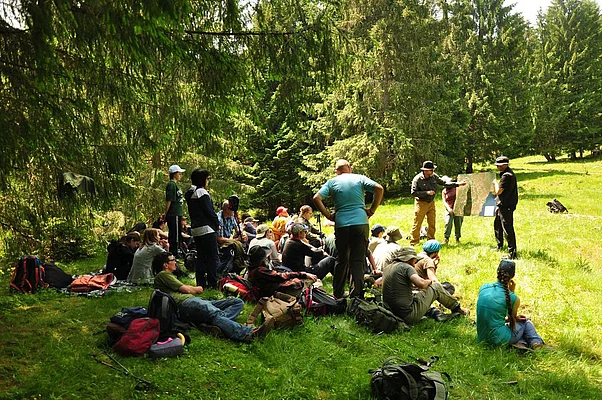
Outdoor classroom session
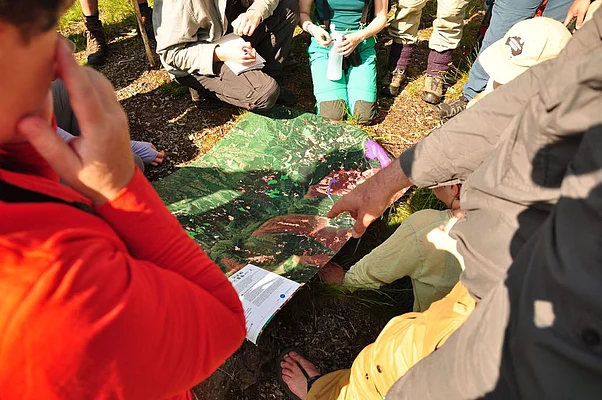
Excursion maps
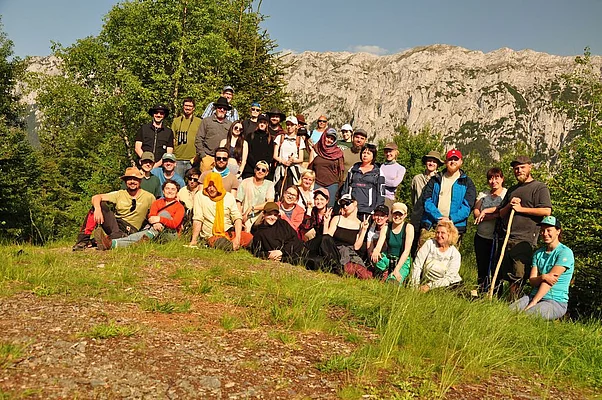
Infront of the Piatra Craiului wall
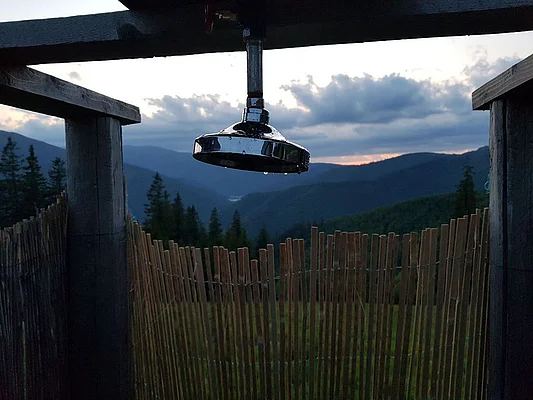
The shower view
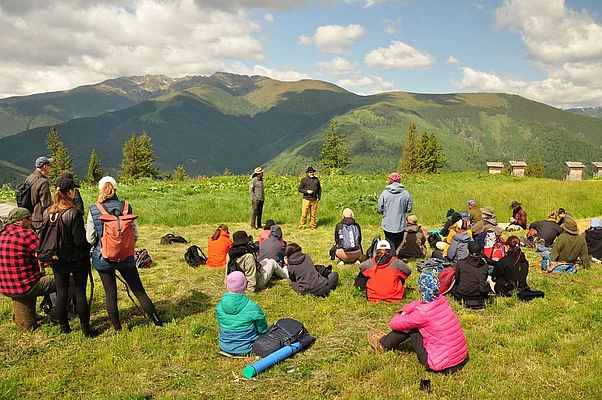
Morning outdoor classroom session
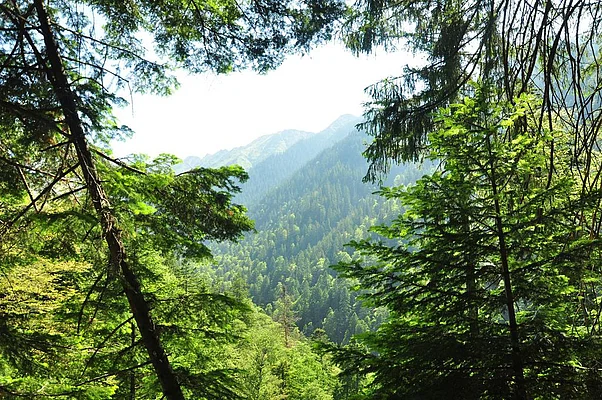
In the Arpasu Mare valley
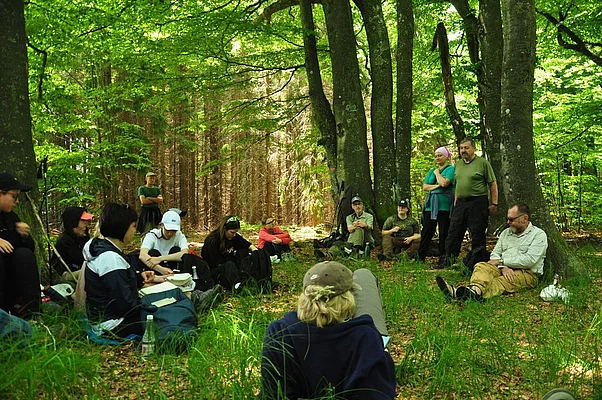
CBR team talk in the “Izvoarele Nerei” beech forest / Semenic NP
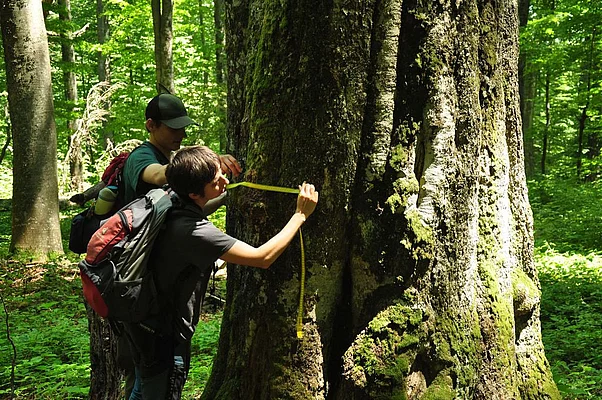
Measuring a giant
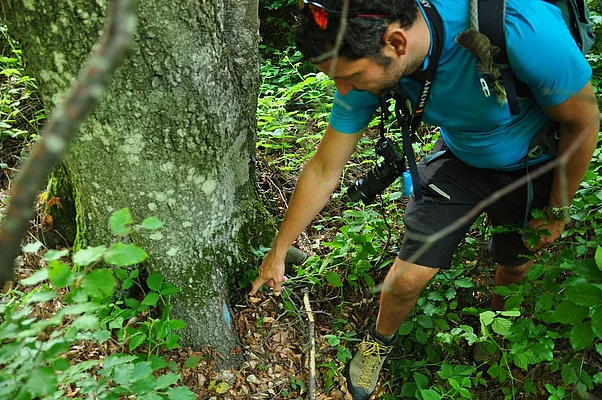
Market for cutting
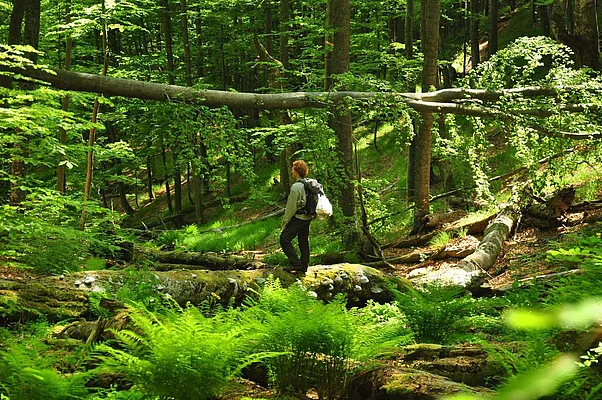
In the valley
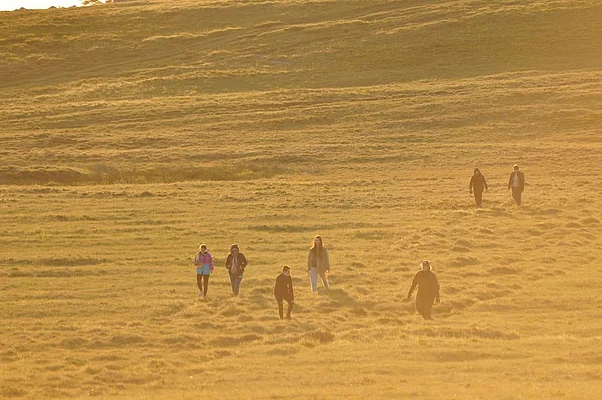
On the mountain top
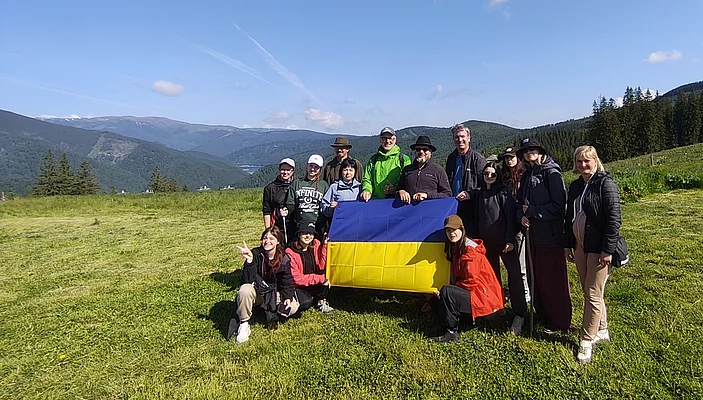
The Ukrainian group
Study Trip June 2025
From 11–21 June 2025, around 40 participants – including 20 funded international students and the first cohort of the new Bachelor’s programme in Socio-ecological Forest Management at HNEE – set off on a joint study trip to the Romanian Carpathians. The group explored some of Europe’s most valuable primeval and old-growth forests, including UNESCO World Heritage beech forest sites such as Codrul Secular Șinca and Izvoarele Nerei.
Over ten intensive days, participants undertook challenging hikes, field observations and discussions on pressing forest issues: from the impacts of climate change and bark beetle outbreaks to salvage logging, clear-cutting practices and the socio-political dimensions of forest governance. Meetings with local experts and NGOs, such as Christoph and Barbara Promberger from the Foundation Conservation Carpathia (FCC), enriched the scientific exchange with practical conservation perspectives.
The excursion was not only an academic learning journey but also an intercultural experience, fostering collaboration and dialogue between students from Ukraine, Germany, and Moldova. A special highlight was the participation of renowned forester and author Peter Wohlleben.
The Ukrainian students from UNFU documented the trip through reports and a drone video (produced using equipment funded by another DAAD project), which are published on their dedicated student webpage: UNFU Student Reports 2025.
Funding partner

Partner institutions
Links to partner organisations
- Ukrainian National Forestry University (Ukraine)
- National Transport University (Ukraine)
- Zhytomyr Polytechnic State University (Ukraine)
- Moldova State University (Moldova)
- Carpathian Biosphere Reserve (Ukraine)
- Chornobyl Radiation and Ecological Biosphere Reserve (Ukraine)
- NEW: National Psychological Association of Ukraine