

Prof. Dr. Ralf Bloch
Professorship in Agroecology and Sustainable Cropping Systems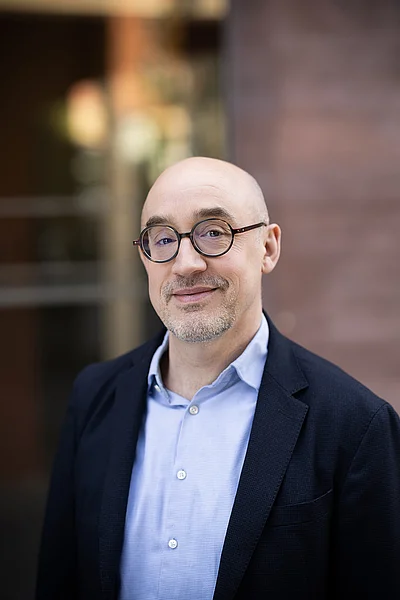
| Ralf.Bloch(at)hnee.de | |
| Phone | +49 3334 657-362 |
| Location | City Campus | Schicklerstrasse 5 | 16225 Eberswalde |
| Room | 01.212 |
| Office Hours | During the winter term: Mondays 15:00–16:00 |
| Website | Degree programme Ecological Agriculture & Food Systems |
| Course Website | Research Group Agri-ecology and Sustainable Farming Systems |
Duties
- Head of the MSc programme in Ecological Agriculture and Food Systems
- Scientific Director of the Wilmersdorf Teaching and Research Station
Teaching
- Plant cultivation systems
- Plant nutrition
- Introduction to organic farming / Introduction to sustainable agricultural and food systems
- Biological diversity and nature conservation
- Biodiversity consulting
- Land use and nature conservation (agriculture course)
- Organic vegetable cultivation
- Study partner organic farm, project module Regional value creation in agriculture and nutrition (supervision of individual working groups)
- Agroforestry systems
- Summer School Regenerative Agriculture and Agroforestry Systems (in collaboration with ZHAW)
- Organic farming / adaptation to climate change
- Agroecology (focus on agroforestry systems)
- Specialised crop production (development of cultivation methods)
- Practical trials, action research and knowledge transfer
- Digitalisation in agriculture and provision of ecosystem services (agricultural systems of the future)
Sustainable ecological vegetable cultivation systems in Brandenburg – ökoZuG-BB
The overarching goal of ökoZuG-BB is to develop and implement an innovative, sustainable and resilient vegetable cultivation system in Brandenburg that meets the specific climatic challenges of this region and the expected effects of climate change. A holistic approach will be used to create efficient and resilient cultivation methods that not only strengthen and expand organic vegetable cultivation in Brandenburg, but can also serve as a pioneering model for other German regions.
DBU project Climate-Agricultural Shrubs – Climate-resilient agricultural shrubs for agroforestry systems in drought-prone regions
The three-year research project will investigate how trees and shrubs can be successfully established in agroforestry systems under increasingly extreme climatic conditions. The aim of the project is to close existing gaps in knowledge about climate-resilient tree species/varieties and practical planting qualities through field experiments. The investigations will contribute to gaining insights into the successful establishment of woody plants with long-term plant health and regular growth, thereby minimising replanting in agroforestry systems. The results will be made available to experts and practitioners in land management, thus enabling the ‘risk-minimised’ and successful establishment of agroforestry systems in the future.
Agricultural systems of the future: DAKIS2 – Digital knowledge and information processing in agriculture
The aim of DAKIS2 is to develop an automated decision support system (EUS) that integrates ecosystem services (ÖSL) and biodiversity (BioDiv) as objectives in agricultural land use. ÖSL and BioDiv are highly location-dependent and must be considered on a larger scale than a single field or plot in the landscape context. Monitoring activities, modelling and data collection are taking place in selected landscape windows as a basis for setting up the DSS. The HNEE is working on selected case studies of spatially differentiated cropping systems in temporary grassland on arable land and/or beetle banks. These measures are being tested in field trials and on commercial farms. Ultimately, the results from the field trials will be used to create the automated DSS.
Roots & Robots – Evaluation of innovative methods for establishing young trees in agroforestry systems
Agroforestry systems have great potential, especially in times of climate change, to increase structural diversity in agricultural regions and have a positive effect on soil stabilisation and water retention.
Our project investigates which methods are particularly successful in establishing young trees in agroforestry systems and how the success rate of growth can be increased. To this end, field trials are being conducted in collaboration with two Brandenburg-based companies, and the various establishment methods are being tested and analysed.
At the same time, the project aims to further develop an autonomous weeding robot so that it can be used in agroforestry systems for the most efficient weed management possible in the future.
The results of the project are intended to help agricultural businesses make decisions and show how agroforestry systems can be established and managed effectively and in a resource-efficient manner.
Development of an action plan for the future viability of agricultural and horticultural field trials in the state of Brandenburg
The project aims to develop an action plan for agricultural and horticultural field trials (LGFV) in Brandenburg. The goal is to make agriculture sustainable in the face of climatic and economic challenges. Through the participatory involvement of research institutions, farmers, consultants and educational establishments, concrete fields of action and measures are to be developed that implement the visions of the future already developed in the predecessor project ‘AnpaG’. The action plan aims to strengthen cooperation and networking among stakeholders, promote the innovative strength of the LGFV and contribute to the achievement of overarching state goals, such as climate protection and biodiversity.
Climate-resilient cultivation methods for risk optimisation
The aim of the project Climate-Resilient Cultivation Methods for Risk Optimisation – With Special Consideration of Arable Farming Strategy and its Regional Requirements (KARO) is the region-specific further development of existing production systems in crop production in order to make them more resilient to climate change phenomena.
CiceRegio – Locally produced chickpeas in food value chains – the example of the Berlin/Brandenburg model region
The aim of the CiceRegio project is to use new value chains in the Berlin/Brandenburg metropolitan region as examples to show how regionally produced chickpeas (Cicer arietinum) can contribute to human nutrition in the future. Stakeholders from production, processing, consulting, research, education and other multipliers are working together in a continuous, co-creative exchange to develop viable solutions for establishing chickpeas in the region. The interdisciplinary and transdisciplinary research approach generates systemic and application-oriented knowledge about the cultivation, processing, quality requirements and market potential of regional chickpeas.
Uckerbots – swarm robotics for organic sugar beet in the Uckermark region
In the current project, the prototype of the Uckerbot is being further developed into a swarm of up to five robots in order to increase the working speed and impact of the technological innovation. At the same time, a business model is being developed to organise the distribution and maintenance of the robots on farms in the region and to ensure low-threshold access to the technology for farmers even after the end of the project.
Pilot project for a multimedia "Potato Practice Diary" and concept development - ÖkoBlog Kartoffel
The “Öko-Blog Kartoffel” pilot project aims to expand the oekolandbau.de website with a multimedia “field diary” on organic potato cultivation and to present in-depth crop production knowledge in a practical way. Through a combination of podcasts, video clips, interviews and other media formats, the entire value chain of the organic potato is illustrated and made accessible to an agricultural audience.
Agroforestry for sustainable multifunctional agriculture
FORMULA investigates agroforestry systems and their contributions to nature for people (Nature's Contributions to People - NCP). The aim is to identify management options that optimise synergies and mitigate potential trade-offs resulting from the integration of forestry elements into arable land.
Testing and adapting knowledge transfer and group-based advisory concepts for sustainable agriculture in Brandenburg – AnpaG
AnpaG – stands for tackling the issue; advancing the transformation of agriculture towards sustainability.
At AnpaG, we contribute to this by testing collegial group counselling as a methodological format for agricultural counselling. Through events such as field days and counsellor days, we help Brandenburg farmers, counsellors and researchers to network with each other. We are also developing an information website about agricultural advisory services in Brandenburg, which will help to raise the profile of advisors and their expertise.
WIR! Region 4.0 – Joint project zUCKERrübe: Development of cultivation methods using innovative field robotics, UAS & practical research for organic sugar beet cultivation in the Uckermark region
The “zUCKERrübe” project developed an innovative cultivation method for organic sugar beet farming in the Uckermark region. The starting point was the high level of manual labour required for weed control within the rows, which severely limits the economic viability of organic farming.
Analysis of the actual costs involved in establishing agroforestry systems and development of suitable entry-level concepts and business models for farmers
The aim of the project is to develop implementation and maintenance strategies for agroforestry systems (AFS) to make it easier for farmers to get started. To this end, the benefits, as well as the actual costs, effort and risks, are being systematically identified.
Protecting avenues with flower strips
The ‘Protecting Tree-Lined Avenues with Flower Strips’ project is developing practical strategies to protect tree-lined avenues running alongside farmland. The aim is to establish flower strips on the farmland side as buffer zones up to six metres wide to prevent damage caused by agricultural machinery, for example during ploughing. To this end, site-specific implementation solutions and suitable funding models for compensating agricultural businesses are being developed.
Development of a digital learning platform (beneficial organism finder) on plant protection in organic farming for the internet portal https://pflanzenschutz.oekolandbau.de
As part of the project, the plant protection section of the website www.oekolandbau.de was updated and developed into a digital learning platform.
The aim was to create an interactive learning space that enables users to explore plant protection in organic farming independently and in a practical way.
Regional agricultural practice network "Biodiversity in agriculture" in Brandenburg
In order to strengthen organic farming in Brandenburg in the face of climatic and economic changes and to optimise competitiveness, approaches tailored to individual farms and locations are necessary. Regional practical networks between land users and stakeholders from research and advisory services can help to develop solution strategies and drive their implementation.
Competence and practical research network for the further development of nutrient management in organic farming
Everyone is pulling together here: in the nationwide project Competence and Practical Research Network for the Further Development of Nutrient Management in Organic Farming (NutriNet), practitioners, consultants and scientists are working together to address the question of how nutrient management in organic farming can be improved.
Competence Network for Ecological Arable Farming and Plant Production in North-East Brandenburg (Cropping School)
The project “Competence Network for Organic Arable and Crop Farming in North-East Brandenburg – Cropping School” established a regional advisory and exchange platform for organic farms.
The aim was to establish a self-sustaining network that would strengthen professional and social exchange between practitioners and researchers, and jointly develop solutions to current challenges in organic arable farming.
Agriculture – real-world laboratory and teaching module
Agroforestry systems are a form of land use that combines agricultural production with the cultivation of trees or shrubs on the same area of land.
In 2017, HNEE set up a real-world laboratory for this purpose in cooperation with an agricultural business in the Löwenberger Land region. Designed as a long-term study, adaptation to climate change and increasing biodiversity on agricultural land play just as important a role here as the practicability and economic viability of this new form of land use.
Research professorship at HNE Eberswalde (approved)
Professorship in Agroecology and Sustainable Cropping Systems at HNE Eberswalde
Visiting Professor of Agricultural Ecology and Sustainable Farming Systems at HNE Eberswalde
Academic staff member at HNE Eberswalde
Coordination of the BMBF project Agricultural Systems of the Future: DAKIS – Digital Knowledge and Information System for Agriculture at the Leibniz Centre for Agricultural Landscape Research (ZALF) e.V.
Deputy Head of the Working Group on the Provision of Ecosystem Services in Agricultural Systems at the Leibniz Centre for Agricultural Landscape Research (ZALF) e.V.
Call for applications for the W2 professorship in "Ecological Plant Production" (University of Applied Sciences Erfurt) – rejected
Visiting professor at HNE Eberswalde (specialising in the subject/research area of agricultural use / teaching crop production systems and agroecology)
Doctorate in Ecological Agricultural Sciences, subject/research area of Organic Farming and Crop Production (University of Kassel)
Topic: "The Vulnerability of Organic Farming to Climate Change Effects in the Federal State of Brandenburg, Germany"
Dissertation awarded the 2016 Research City of Müncheberg Sponsorship Prize
Research assistant at HNE Eberswalde (in the subject/research area of agricultural use) and research associate at the Leibniz Centre for Agricultural Landscape Research (ZALF) e.V.
Research assistant at the Leibniz Centre for Agricultural Landscape Research (ZALF) e.V.
Research assistant at HNE Eberswalde and the Leibniz Centre for Agricultural Landscape Research (ZALF) e.V. in the BMBF project Innovation Network Climate Adaptation Brandenburg Berlin (INKA BB)
Lecturer for special tasks at HNE Eberswalde and coordinator of the organic farming and marketing degree programme
Project internship at GIZ
Sector project "Implementation of the Convention on Biological Diversity"; country of operation: People's Republic of China: Development of adapted land use systems in Nujiang Prefecture. Rehabilitation and protection of the rainforest in Hainan and Yunnan provinces.
Studied the degree programme in landscape use and nature conservation at HNE Eberswalde University of Applied Sciences
Thesis on "Arthropod diversity in comparison with nature indicators for agricultural practice"; thesis awarded the Johannes Schubert Prize 2003
Vocational training as a farmer
Member of the DAFA Steering Group on Agriculture in Climate Change. Collaboration on the webinar series ‘Agricultural Research on Climate Change’
Member of the Society for Plant Production Sciences
Member of the Eberswalde University Society
Member of the Central Brandenburg Landscape Conservation Association
Link to external publications page: Research Group Agri-ecology and Sustainable Farming Systems
Keim, L.; Laber, H.; Bloch, R. (2026): Effekte von Roggenmulch und dessen Zerkleinerungsgrad auf Ertrag, Beikraut und Mikroklima in einer Zwiebelpflanzkultur. In: Kemper, R.; Athmann, M.; Häring A.; Neuhoff, D.; Müller-Lindenlauf, M.; Schmitz, L.; Stumm, C.; Tiemann, I.; Döring, T. F. (Hrsg.): Beiträge zur 18. Wissenschaftstagung Ökologischer Landbau. Widerspruch begegnen – viele Antworten, ein Ökolandbau. S. 81-84.
Steinherr, L.; Bloch, R.; Cremer, T. (2026): Praxiserfahrungen in der Etablierung von Walnuss, Maulbeere und Esskastanie in Agroforstsystemen in dürregefährdeten Regionen Ostdeutschlands. In: Kemper, R.; Athmann, M.; Häring A.; Neuhoff, D.; Müller-Lindenlauf, M.; Schmitz, L.; Stumm, C.; Tiemann, I.; Döring, T. F. (Hrsg.): Beiträge zur 18. Wissenschaftstagung Ökologischer Landbau. Widerspruch begegnen – viele Antworten, ein Ökolandbau. S. 342-345.
Cremer, T.; Martetschläger, L.; Bartsch, M.; Jacobi, L.; Bloch R. (2025): The Living Lab "Ackerbau(m)" - Findings and experience from 8 years of alley cropping in North-East Germany under real conditions. 6th World Congress of Agroforestry, 21.10.2025, Kigali, Rwanda. Book of Abstracts. S. 116
Krengel-Horney, S.; Bethwell, C.; Conradt, T.; Naser, A. Q.; Aurbacher, J.; Bellingrath-Kimura, S.; Bloch, R.; Busch, F.; Glemnitz, M.; Helbig, J.; Löllmann, L.; Moroder, A.-M.; Scholz,S.; Strassemeyer, J.; Stroedter, L.; von Buttlar, C.; von Steimker, T.; Waldau, T. (2025): Integrierter Ansatz zur Risikominimierung: Regional passfähige Anpassung an den Klimawandel. In: Isselstein J. & Kotttmann L. (Hg.): "Planetary Boundaries Rising to the Challenges ahead". 65. Jahrestagung der Gesellschaft für Pflanzenbauwissenschaften e.V., Halle, 23.-25.09.2025; Göttingen: Liddy Halm (Mitteilungen der Gesellschaft für Pflanzenbauwissenschaften, 34), S. 199-200.
Donat, M.; Trappe R.; Keuschnig, J.; Schade P., Schmerling L., Cremer T., Bloch, R. (2025): Management von Baumstreifen in Agroforstsystemen: Ein Anwendungsfall für autonome Feldrobotik. In: Isselstein J. & Kotttmann L. (Hg.): "Planetary Boundaries Rising to the Challenges ahead". 65. Jahrestagung der Gesellschaft für Pflanzenbauwissenschaften e.V., Halle, 23.-25.09.2025; Göttingen: Liddy Halm (Mitteilungen der Gesellschaft für Pflanzenbauwissenschaften, 34), S. 257-258.
Rißmann, C.; Bloch R.; Donat M.; Franke S.; Lorenz T.; Cremer, T. (2025): Bewertung innovativer Methoden zur Etablierung von Jungbäumen in Agroforstsystemen (Projekt „Roots & Robots“) In: Isselstein J. & Kotttmann L. (Hg.): "Planetary Boundaries Rising to the Challenges ahead". 65. Jahrestagung der Gesellschaft für Pflanzenbauwissenschaften e.V., Halle, 23.-25.09.2025; Göttingen: Liddy Halm (Mitteilungen der Gesellschaft für Pflanzenbauwissenschaften, 34), S. 303-304
Scholz, S.; Bloch, R. (2025): Bedeutung des landwirtschaftlichen und gartenbaulichen Feldversuchswesens für die Transformation in der Landwirtschaft – Ergebnisse aus dem Land Brandenburg. In: Isselstein J. & Kotttmann L. (Hg.): "Planetary Boundaries Rising to the Challenges ahead". 65. Jahrestagung der Gesellschaft für Pflanzenbauwissenschaften e.V., Halle, 23.-25.09.2025; Göttingen: Liddy Halm (Mitteilungen der Gesellschaft für Pflanzenbauwissenschaften, 34), S. 401-402.
Rißmann, C.; Bloch, R.; Donat, M.; Franke, S.; Lorenz, T.; Cremer, T. (2025): Roots & Robots – Bewertung innovativer Methoden zur Etablierung von Jungbäumen in Agroforstsystemen: Versuchsplanung und. Datenerfassung. In: Westerwalbesloh, P.; Minarsch, EML.; Schillem, S.; Gernhardt, A.; Weckenbrock P. (Hg.): Tagungsband: 10. Forum Agroforstsysteme - Vielfalt pflanzen, Agroforst skalieren. Gießen 17.-18.09.2025. Deutscher Fachverband für Agroforstwirtschaft (DeFAF) e.V. Cottbus, Germany; S. 81-82
Donat, M.; Geistert, J.; Cremer, T.; Bloch, R. (2025): Digitale Planung von Agroforstsystemen in Brandenburg: Ein Open-Source-Tool zur räumlichen Gestaltung, Vergleich und Analyse. In: Westerwalbesloh, P.; Minarsch, EML.; Schillem, S.; Gernhardt, A.; Weckenbrock P. (Hg.): Tagungsband: 10. Forum Agroforstsysteme - Vielfalt pflanzen, Agroforst skalieren. Gießen 17.-18.09.2025. Deutscher Fachverband für Agroforstwirtschaft (DeFAF) e.V. Cottbus, Germany; S. 79-80
Steinherr, L.; Cremer, T.; Bartsch, M.; Bloch, R. (2025): Klimarobuste Gehölze für Agroforstsysteme in dürregefährdeten Regionen. In: Westerwalbesloh, P.; Minarsch, EML.; Schillem, S.; Gernhardt, A.; Weckenbrock P. (Hg.): Tagungsband: 10. Forum Agroforstsysteme - Vielfalt pflanzen, Agroforst skalieren. Gießen 17.-18.09.2025. Deutscher Fachverband für Agroforstwirtschaft (DeFAF) e.V. Cottbus, Germany; S. 147-148
Schwarze, J.; Baumann, M.; Häring, A; Bloch, R.; Reckling, M.; Rohn, S. (2025): Charakterisierung von Kichererbsen und deren wertgebenden Inhaltsstoffen aus regionaler Erzeugung – Berlin/Brandenburg als Modell. 62. Wissenschaftlicher Kongress der Deutschen Gesellschaft für Ernährung e.V. – Was bestimmt unsere Lebensmittelauswahl? Einfluss von Kultur und Biologie, Kassel, 12.-14. März 2025; Abstractband, Vol. 31; S. 74
Reckling, M., Winterling, A.; Zikeli, S.; Weiler, C.; Lehner, D.; Hiltbrunner, J.; Preußner, V.; Holstein, S.; Bloch, R.; Rusch, C.; Radtke, O.; Schwabe, I.; Karalus, Hüppe, C.; Keijzer, P.; Scholten, O.; Schäfer, T.; Neugschwandtner, R.; Petersen, J.; Schwarz, J.; W.; Rosner, G.; Salama, K.; Halwani, M. (2024): Das Anbaupotential von Kichererbsen. 2. Nationaler Leguminosen-Kongress - Perspektiven für Landwirtschaft und Ernährung der Deutschen Agrarforschungsallianz. Leipzig, 7.–10. Oktober (Tagungsband), S. 22.
Steinherr, L.; Belo, M.; Trappe, R.; Acosta Ortiz, D. I.; Birkmann, A.; Krachunova, T.; Bloch, R. (2024): Organic sugar beet (Beta vulgaris L.) cultivation using the field robot Uckerbot as a system for sustainable farming. In: Hoffmann, C.; Stein, A.; Gallmann, E.; Dörr, J.; Krupitzer, C.; Flotor, H. (Hg.): Biodiversität fördern durch digitale Landwirtschaft: Welchen Beitrag leisten KI und Co? 44. Jahrestagung der Gesellschaft für Informatik in der Land-, Forst- und Ernährungswirtschaft e.V. (GIL), Stuttgart 27.-28. Februar. Bonn: Gesellschaft für Informatik (Proceedings 334), S. 419
Reckling, M.; Halwani, M.; Winterling, A.; Pflugfelder, A.; Zikeli, S.; Lehner, D.; Hiltbrunner, J.; Preußner, V.; Lutzer, H.-H.; Bloch, R.; Rusch, C.; Radke, O.; Schwabe, I.; Karalus, W.; Hüppe, C.; Rosner, G.; Salama, K.; Blessing, C. (2024). Das Potenzial von Kichererbsen für den ökologischen Landbau. In: Bruder, V.; Röder-Dreher, U.; Breuer, L.; Herzig, C. und Gattinger, A. (Hrsg.): Beiträge zur 17. Wissenschaftstagung Ökologischer Landbau. Landwirtschaft und Ernährung - Transformation macht nur gemeinsam Sinn. S. 131-132.
Steinherr, L.; Krachunova, T.; Birkmann, A.; Belo, M.; Trappe, R.; Bellingrath-Kimura, S.; Bloch, R. (2024) KI-basierte Unkrautregulierung mit dem Uckerbot im ökologischen Zuckerrübenanbau – vom Prototyp zur Praxisreife. In: Bruder, V.; Röder-Dreher, U.; Breuer, L.; Herzig, C. und Gattinger, A. (Hrsg.): Beiträge zur 17. Wissenschaftstagung Ökologischer Landbau. Landwirtschaft und Ernährung - Transformation macht nur gemeinsam Sinn. S. 492-493.
Bruckner, A.; Schulz, H.; Athmann, M.; Bloch, R. (2024): Validierung der Clusterung von Versuchsbetrieben im Netzwerkversuch: Mineralisierungspotential und tatsächliche Stickstoffmineralisierung als Kriterien. In: Bruder, V.; Röder-Dreher, U.; Breuer, L.; Herzig, C. und Gattinger, A. (Hrsg.): Beiträge zur 17. Wissenschaftstagung Ökologischer Landbau. Landwirtschaft und Ernährung - Transformation macht nur gemeinsam Sinn. S.112-114.
Birkmann, A.; Casper, S.; Karpinski, I.; Püschel, U.; Burghardt, L.; Kühne, S.; Bloch, R. (2024): Pilotprojekt zur Erstellung eines multimedialen „Praxistagebuch Kartoffel“ für das Internetportal Oekolandbau.de. In: Bruder, V.; Röder-Dreher, U.; Breuer, L.; Herzig, C. und Gattinger, A. (Hrsg.). Beiträge zur 17. Wissenschaftstagung Ökologischer Landbau. Landwirtschaft und Ernährung - Transformation macht nur gemeinsam Sinn. S. 528-529.
Bruckner, A.; Schulz, H.; Athmann, M.; Bloch, R. (2023): Der Netzwerkversuch: Ein Ansatz für die Praxisforschung. In: V. Bibic; K. Schmidtke (Hg.): Beiträge zur 16. Wissenschaftstagung Ökologischer Landbau. One Step Ahead - einen Schritt voraus. 1. Auflage, S. 790-791.
Birkmann, A.; Steinherr, L.; Lutzer, H.-H.; Bloch, R. (2023): Erprobung autonomer Feldrobotik zur Beikrautregulierung für den Bio-Zuckerrübenanbau in der Uckermark – Ergebnisse aus dem Projekt zUCKERrübe. In: V. Bibic; K. Schmidtke (Hrsg.): Beiträge zur 16. Wissenschaftstagung Ökologischer Landbau. One Step Ahead - einen Schritt voraus. 1. Auflage, S. 411-412.
Arrekhi, A.; Niknahad-Gharmakher, H.; Bellingrath Kimura, S. D.; Bloch, R.; Bachinger, J.; Hufnagel, J. (2022): Relationship Among Plant Measurements of Salsola turcomanica (Litv) and Soil Properties in Semi-arid Region of Golestan Province, Iran. In: Journal of Rangeland Science.12(2), S.168-178.
Arrekhi, A.; Niknahad-Gharmakher, H.; Bachinger, J.; Bloch, R.; Hufnagel, J. (2021): Forage Quality of Salsola turcomanica (Litv) in Semi-arid Region of Gomishan, Golestan Province, Iran. In: Journal of Rangeland Science. 11(1), S. 74-86.
Arrekhi, A.; Niknahad-Gharmakher, H.; Bachinger, J.; Bloch, R. (2020): Treatments for the Optimization of Salsola turcomanica (Litv) Seed Germination and the Effects of Different Drought and Salinity Levels. In: Journal of Rangeland Science. 10(3), S. 302-315.
Scholz, S.; Bloch, R.; Häring, A. M. (2019): Cropping School: Wir lernen gemeinsam mit und voneinander - eine kooperative Zusammenarbeit zwischen Landwirten, Wissenschaftlern und Beratern. In: D. Mühlrath, J. Albrecht, M. R. Finckh, U. Hamm, J. Heß, U. Knierim und D. Möller (Hg.): Beiträge zur 15. Wissenschaftstagung Ökologischer Landbau. Innovatives Denken für eine nachhaltige Land- und Ernährungswirtschaft. 1. Auflage, S. 558-559.
Scholz, S.; Bloch, R.; von Münchhausen, S.; Häring, A. M. (2018): "Cropping School" - An alternative to advisory services in Brandenburg, Germany? In: Farming systems: Facing uncertainties and enhancing opportunities. Proceedings of the 13th European IFSA Symposium. Chania, Crete, Greece 1.-5. Juli. Mediterranean Agronomic Institute of Chania. Session 1.9 Education and training of farmers and advisors. Skills and competences: Innovative approaches to education and training, S. 1-8.
Hübner-Rosenau, D.; Koch, O.; Hofmann P.; Große, F.; Bloch, R.; Cremer, T. (2018): Education on Agroforestry in the context of sustainable Development. In: N. Ferreiro-Domínguez, M. R. Mosquera-Losada (Hg.): Proceedings of the 4th European Agroforestry Conference. Agroforestry as Sustainable Land Use. Nijmegen, 28-30 May 2018. European Agroforestry Federation, S. 537-541.
Vieweger, A.; Döring, T.; Bloch, R.; Bachinger, J.; Klimek, M.; Paxton, R.; Woodward, L. (2017): The IFOAM principle of health – how do organic farmers apply it in practice? In: G. Rahmann, C. Andres, A.K. Yadav, R. Ardakani, H.B. Babalad, N. Devakumar et al. (Hg.): Innovative research for organic 3.0, Volume 1. Proceedings of the scientific track at the Organic World Congress 2017, November 9-11 in Delhi, India. Braunschweig: Johann Heinrich von Thünen-Institut (Thünen Report, 54, volume 1), S. 86–89.
Paxton, R.; Klimek, M.; Vieweger, A.; Döring, T.; Bloch, R.; Bachinger, J.; Woodward, L. (2017): The Role of Intuition in Managing Organic Farm System Health. In: G. Rahmann, C. Andres, A.K. Yadav, R. Ardakani, H.B. Babalad, N. Devakumar et al. (Hg.): Innovative research for organic 3.0, Volume 1. Proceedings of the scientific track at the Organic World Congress 2017, November 9-11 in Delhi, India. Braunschweig: Johann Heinrich von Thünen-Institut (Thünen Report, 54, volume 1), S. 82–85.
Scholz, S.; Bloch, R.; Knuth, U.; Häring, A. M. (2017): Strengthening On-Farm Research in Upper Secondary Agricultural Education in Germany. In: Smyrniotopoulou A. und A. Koutsouris (Hg.): Transformative learning: new directions in agricultural extension and education. Book of Abstracts. 23rd European Seminar on Extension (and) Education. Chania (Greece), 4th-7th July. ESEE, S. 54.
Reckling, M.; Jäckel, U.; Wolf, L.; Gefrom, A.; Bloch, R.; Bergkvist G.; Bachinger, J. (2017): Optimierung des Soja- und Lupinenanbaus in Ostdeutschland: Ergebnisse aus On-Farm Demonstrationen. In: S. Wolfrum, H. Heuwinkel, H. J. Reents, K. Wiesinger und K.-J Hülsbergen (Hg.): Beiträge zur 14. Wissenschaftstagung Ökologischer Landbau. Ökologischen Landbau weiterdenken - Verantwortung übernehmen - Vertrauen stärken. 1. Auflage, S. 76-79.
Knuth, U.; Bloch, R.; Häring, A. M.; Scholz, S. (2017): Praxisversuche in der landwirtschaftlichen Beratung: Erfahrungen und Wissensbedarfe in Deutschland. In: S. Wolfrum, H. Heuwinkel, H. J. Reents, K. Wiesinger und K.-J Hülsbergen (Hg.): Beiträge zur 14. Wissenschaftstagung Ökologischer Landbau. Ökologischen Landbau weiterdenken - Verantwortung übernehmen - Vertrauen stärken. 1. Auflage, S. 714-717.
Vieweger, A.; Döring, T. F.; Bloch, R.; Bachinger, J.; Klimek, M.; Paxton, R.; Woodward, L. (2017): Das Prinzip der Gesundheit als Leitmotiv des Handelns in der betrieblichen Praxis. In: S. Wolfrum, H. Heuwinkel, H. J. Reents, K. Wiesinger und K.-J Hülsbergen (Hg.): Beiträge zur 14. Wissenschaftstagung Ökologischer Landbau. Ökologischen Landbau weiterdenken - Verantwortung übernehmen - Vertrauen stärken. 1. Auflage, S. 696-699.
Bloch, R.; Bachinger, J.; Reckling, M.; Schuler, J.; Zander, P. (2016): Exploring Rye-Soybean Double Cropping Systems as a Climate Change Adaptation Strategy. In: European Society for Agronomy (Hg.): Congress proceedings. ESA 14 - Growing landscapes-Cultivating innovative agricultural systems. Edinburgh, 5-9 September, S. 33-34.
Reckling, M.; Bergkvist G.; Bloch, R.; Stoddard, F. L.; Watson, C. A.; Bachinger, J. (2016): Novel Approaches to Optimize Grain Legume Cropping Systems. In: European Society for Agronomy (Hg.): Congress proceedings. ESA 14 - Growing landscapes -Cultivating innovative agricultural systems. Edinburgh, 5-9 September, S. 5-6.
Schuler, J.; Bloch, R.; Reckling, M.; Uthes, S.; Schläfke, N.; Bachinger, J.; Zander P. (2016): Climate change adaptation - a qualitative survey among farmers in North-East Germany. In: Balázs Madarász und Adrienn Tóth (Hg.): International Conference on Conservation Agriculture and Sustainable Land Use. Book of Abstracts. Budapest, Hungary: Szarka, László; CSABA; Academy of Sciences; Research Centre for Astronomy and Earth Sciences, S. 79.
Bloch, R.; Bachinger, Johann (2015): Potential impacts of climate change on legume based cropping systems. In: Emmanuel S. Gritti und Jacques Wery (Hg.): Proceedings of the 5th International Symposium for Farming Systems Design. FSD5. Montpellier, September 7 - 10, S. 161-162.
Reckling, M.; Döring, T. F.; Stein-Bachinger, K.; Bloch, R.; Bachinger, J. (2015): Yield stability of grain legumes in an organically managed monitoring experiment. In: Simon Peacock, M. Barbara Smith, A. Elizabeth Stockdale und Christine Watson (Hg.): Valuing long-term sites and experiments for agriculture and ecology. University of Newcastle. Association of Applied Biologists (Aspects of Applied Biology 128, 2015, 128), S. 57-61.
Bloch, R.; Heß, J.; Bachinger, J. (2015): Auswirkungen des Klimawandels auf die Erträge von Leguminosengrasgemengen im Land Brandenburg. In: Anna Maria Häring, B. Hörning, R. Hoffmann-Bahnsen und H. Luley (Hg.): Beiträge zur 13. Wissenschaftstagung. Ökologischer Landbau. Am Mut hängt der Erfolg: Rückblicke und Ausblicke auf die ökologische Landbewirtschaftung. Berlin: Köster Berlin, S. 3-6.
Bachinger, J.; Bloch, R.; Reckling, M.; Stein-Bachinger, K. (2015): 20 Jahre Modellbetrieb für Ökolandbau in Müncheberg. Teil 1: Entwicklung von Humus- und Nährstoffgehalten. In: Anna Maria Häring, B. Hörning, R. Hoffmann-Bahnsen und H. Luley (Hg.): Beiträge zur 13. Wissenschaftstagung Ökologischer Landbau. Am Mut hängt der Erfolg: Rückblicke und Ausblicke auf die ökologische Landbewirtschaftung. Berlin: Köster Berlin, S. 260-261.
Reckling, M.; Döring; T. F.; Bloch, R.; Stein-Bachinger, K.; Bachinger, J. (2015): 20 Jahre Modellbetrieb für Ökolandbau in Müncheberg. Teil 2: Wie ertragstabil sind Körnerleguminosen? In: Anna Maria Häring, B. Hörning, R. Hoffmann-Bahnsen und H. Luley (Hg.): Beiträge zur 13. Wissenschaftstagung Ökologischer Landbau. Am Mut hängt der Erfolg: Rückblicke und Ausblicke auf die ökologische Landbewirtschaftung. Berlin: Köster Berlin, S. 301-302.
Hofbauer, M.; Gerke, H. H.; Bachinger, J.; Bloch, R. (2015): Effects of Ring Cutter Application on Physical Properties of a Sandy Top Soil. In: Geoecology and Rational Use of Subsoil: from Science to Practice. Materials of III. International Scientific Conference of Young Scientists. Belgorod, 6.-10.04.: Politerra, S. 133-137.
Hofbauer, M.; Schmidt, J.; Gerke, H. H.; Bachinger, J.; Bloch, R. (2014): Effects of Ring Cutter Application on Physical Properties of a Sandy Top Soil. In: Topical Issues of Subsoil Usage: Proceedings of Scientific Papers. Part II / National Mineral Resources University (University of Mines). Topical Issues of Rational Use of Natural Resources. Saint Petersburg, 23.-25.04., S. 87.
Hofbauer, M.; Bloch, R.; Gerke, H. H.; Bachinger, J. (2013): Effekte des Ringschneidereinsatzes zur pfluglosen Bodenbearbeitung auf physikalische Eigenschaften sandiger Böden. In: Daniel Neuhoff, C. Stumm, S. Ziegler, G. Rahmann, U. Hamm und Ulrich Köpke (Hg.): Beiträge zur 12. Wissenschaftstagung Ökologischer Landbau. Ideal und Wirklichkeit: Perspektiven ökologischer Landbewirtschaftung. 1. Aufl. Berlin: Köster Berlin, S. 34-37.
Bloch, R.; Bachinger, J. (2013): Entwicklung klimaangepasster Anbauverfahren im Ökolandbau mittels Methoden der Aktionsforschung. In: Daniel Neuhoff, C. Stumm, S. Ziegler, G. Rahmann, U. Hamm und Ulrich Köpke (Hg.): Beiträge zur 12. Wissenschaftstagung Ökologischer Landbau. Ideal und Wirklichkeit: Perspektiven ökologischer Landbewirtschaftung. 1. Aufl. Berlin: Köster Berlin, S. 640-643.
Bloch, R; Bachinger, J. (2012): Vulnerabilitätsanalyse — Grundlage zur Entwicklung von Anpassungsstrategien für den Ökolandbau in Brandenburg. In: Klimawandel: Was tun ! Tagungsband IALE-D Jahrestagung 2012, 24.-26. Oktober, Eberswalde, S. 144-145
Siart, S.; Knierim, A.; Bloch, R.; Bachinger, J. (2012): Development of Agricultural Innovations in Organic Agriculture to adapt to Climate Change - Results from a Transdisciplinary R&D Project in North-Eastern Germany. In: Producing and Reproducing Farmings Systems: New modes of organisation for sustainable food systems of tomorrow. Book of Abstracts. 10th European IFSA Symposium. Aarhus, Denmark, 1.-4. Juli. IFSA Europe; Aarhus University; Swedish University of Agricultural Sciences, S. 55
Bloch, R.; Bachinger, J. (2012): Assessing the Vulnerability of Organic Farming Systems - A Case Study from the Federal State of Brandenburg, Germany. In: Producing and Reproducing Farmings Systems: New modes of organisation for sustainable food systems of tomorrow. Book of Abstracts. 10th European IFSA Symposium. Aarhus, Denmark, 1.-4. Juli. IFSA Europe; Aarhus University; Swedish University of Agricultural Sciences, S. 53-54.
Konrad, J.; Bloch, R.; Glemnitz, M.; Platen, R.; Gernot, V. (2010): Einfluss der Vegetationsstruktur von agrarischen Anbaukulturen auf die Zusammensetzung der Zönosen von Laufkäfern (Col.: Carabidae) und Spinnentieren (Arach.: Araneae, Opiliones). – Archiv f. Forstwirtschaft u. Landsch.ökol. 44 (2010) 4; S.169- 181; DLV Verlag Berlin.
Mayer, E.; Häring, A.; Bloch, R. (2009): Lehr- und Lernformen in der Hochschulbildung, In: Mayer, J. et. al. (Hrsg.). Werte - Wege - Wirkungen: Biolandbau im Spannungsfeld zwischen Ernährungssicherung, Markt und Klimawandel. Beiträge zur 10. Wissenschaftstagung Ökologischer Landbau, Zürich, 11.-13. Februar 2009. ETH Zürich, 11.-13. Februar 2009. Verlag Dr. Köster, Berlin. S. 502- 505.
Arndt, T.; Steinhardt, U.; Bloch, R.; (2008): Wasserzentrierte Strukturanalyse der Planungsregion Uckermark-Barnim vor dem Hintergrund des Klimawandels. – Archiv f. Forstwirtschaft u. Landsch.ökol. 42 (2008) 2; S.49- 61; DLV Verlag Berlin.
Bloch, R., A. Häring, A.-E. Krieger, T. Schatz, R. Schmidt, H.-P. Piorr (2005): Entwicklung eines regionalen Ausbildungsmodells „Ökolandbau und Vermarktung“ an der Hochschule für nachhaltige Entwicklung Eberswalde im Rahmen des Bundesförderprogramms Regionen Aktiv.In: J. Heß und G. Rahmann (Hrsg.): Ende der Nische. Beiträge zur 8. Wissenschaftstagung Ökologischer Landbau Kassel, S. 661-662
Bloch, R.; Krieger, A.-E.; Palme S.; Schlepphorst, R.; Schmidt, R. (2005): Ökologischer Landbau als Beitrag zu einer nachhaltigen Landschaftsentwicklung am Beispiel des Biosphärenreservates Schorfheide-Chorin (Brandenburg). - Beitr. Forstwirtschaft u. Landsch.ökol. 39 (2005) 4; S.157- 164; DLV Verlag Berlin.
Anpassung der Bodenbearbeitung zum Wassersparen. Wasser in der Landwirtschaft – Welche Rolle spielt der Ökolandbau? Bioland-Wintertagung Ost 2025. Seddiner See, 29.01.2025
Bloch, R.: Gemeinsam anpacken - Pflanzenbausysteme resilient gestalten. DAFA-Tagung Agrarforschung zum Klimawandel. Potsdam-Griebnitzsee, 14.01.2024
Bloch, R.: Arbeitsweise und Projekte im Rahmen des Innovationszentrums für nachhaltige Ernährungssysteme (INES) an der HNE Eberswalde. BUSplus-Seminar der LWK Niedersachsen. Eberswalde, 17.01.2024
Martetschläger, L.; Schnautz, C.; Bloch, R.; Cremer, T.: Baum der Erkenntnis. Agroforstsysteme als Thema in Studium und Ausbildung. Agroforst - Wozu und wie Acker und Bäume kombinieren? Evangelische Akademie Loccum, 09.11.2023
Bloch, R.: Organic agriculture in Northeast Brandenburg - a success story? Development between land use demands of conventional agriculture, nature conservation and energy production. International Summer School on Transdiscipinary Methods and Tools on Sustainability and Land use Conflicts. Eberswalde, 19.09.2023
Bloch, R.: zUCKERrübe - Anbau von Bio-Zuckerrüben in der Uckermark mittels Agrarrobotik. Forum Agrar- und Ernährungswirtschaft auf der Brandenburgischen Landwirtschaftsausstellung. Paaren, 11.05.2023
Bloch, R.; Salecker C.: Schutz der Alleen durch blühende Extensivstreifen - Konzepte und Lösungsansätze. Forum Agrar- und Ernährungswirtschaft auf der Brandenburgischen Landwirtschaftsausstellung. Paaren, 11.05.2023
Bloch, R.: Die Transformation der Agrar- und Ernährungssysteme gemeinsam gestalten – Anforderungen an Praxis und Forschung. Arbeitsgruppe Klima und Landwirtschaft der DLG e.V. Göttingen, 11.10.2022
Bloch, R.: Zusammenwirken von Pflanzenbau und Pflanzenschutz. Workshop-Serie Agrarforschung zum Klimawandel. Auswirkungen des Klimawandels auf den Pflanzenschutz. DAFA-Plattform Landwirtschaft und Klimawandel. 01.06.2022
Bloch, R.: Landwirtschaft und Ernährung und seine Relevanz für die Zertifizierung "Fairer Kirchenkreis". Frühjahrestagung der Kreissynode des Evangelischen Kirchenkreises Tempelhof-Schöneberg, 19.03.2022
Bloch, R.; Lorenz, T.; Cremer, T.: Dreijährige Erfahrungen aus dem Reallabor Ackerbau(m)". Notwendige Anpassungen der Land- und Forstwirtschaft an den Klimawandel - Agroforstmaßnahmen und Streuobstwiesen. Tagung der Brandenburgischen Akademie Schloss Criewen. Criewen, 04.10.2021
Vieweger, A.; Döring, T. F.; Bloch, R.; Bachinger, J.: Inspiring Farmers for Healthy Farming. Organic World Congress 2021. Rennes, 08.09.2021
Bloch, R.: Digitaler Denkanstoß Hülsenfrüchte: Regionale Erzeugung von Körnerleguminosen - Herausforderungen und Potentiale. Die Gemeinschaft. Das Symposium 2021.12.08.2021
Cremer, T.; Bloch, R.; Kamphoff, T.; Wodzinowski E.: 3 years of agroforestry implementation in Brandenburg – main findings, lessons learnt, outlook. 5th European Agroforestry Conference. 17.05.2021.
Bloch, R.: Klimaneutrale Landwirtschaft gestalten. biosphere.training. Online-Fortbildungsveranstaltung des biosphere center. 04.05.2021.
Bloch, R.: Optimale Bereitstellung und Honorierung von Ökosystemleistungen durch Digitalisierung. DBU-digital Online-Forum Biodiversität und Digitalisierung 16.03.2021.
Bloch, R.: Naturschutz als Betriebszweig. Impulsvortrag zur Auftaktveranstaltung für das Praxisnetzwerk "Biodiversität im Ackerbau". Eberswalde, 22.02.2021.
Bloch, R.: Zwischenfrüchte und ihr Potenzial zur Ertragsstabilisierung im Klimawandel. OptAKlim Dialoggruppentreffen. 10.02.2021.
Cremer, T.; Bloch R.: Projekt Ackerbau(m) / Agroforst. Vortrag beim Rotary E-Club Münster-International. 18.01.2021.
Bloch, R.: Klimawandel - sind klassische Öko-Anbaustrategien noch zeitgemäß? Gäa Wintertagung. 28.01.2021.
Bloch, R.: Klimawandel - sind klassische Öko-Anbaustrategien noch zeitgemäß? Online FiBL-Fachberatertagung ökologischer Pflanzenbau. 25.11.2020.
Bloch, R.: Schluss mit "Vom Winde verweht" - Agroforst statt Streusandbüche. Themenabend der Fördergemeinschaft Ökologischer Landbau Berlin Brandenburg e.V. Berlin, 25.02.2020
Bellingrath-Kimura, S.; Bloch, R.: Digitalisierung in der Landwirtschaft - Chancen für Artenvielfalt. 40. Jahrestagung der Gesellschaft für Informatik in der Land-, Forst- und Ernährungswirtschaft e.V. Weihenstephan, 17.02.2020
Bloch, R. (2025): Transformationsprozesse und Herausforderungen in der Land- und Lebensmittelwirtschaft. Jahrestreffen AK Landwirtschaft der Arbeitsgemeinschaft deutscher Biosphärenreservate (AGBR). Hilders 29.09.2025.
Scholz, S; Bloch, R. (2025): Role of agricultural experiment stations in AKIS: How could the Brandenburg’s (Germany) agricultural experiment stations be well set up for the undergoing agriculture transformations? 27th European Seminar on Extension & Education – Vila Real (Portugal), 30.06-04.07.2025.
Bloch, R. (2025): Maßnahmen für Biodiversität, Klimaschutz und -anpassung in der Agrarlandschaft Brandenburg – Standortfaktoren, Ausgangssituation und Bedarfe. Auftaktveranstaltung der Vernetzungsstelle Biodiversitäts- und Klimaberatung in der Agrarlandschaft Brandenburg. Haus der Natur. Potsdam, 22.07.2025
Bloch, R. (2025): Organic agriculture in Northeast Brandenburg - a success story? Development between land use demands of conventional agriculture, nature conservation and energy production. International Summer School on Transdisciplinary Methods and Tools on Sustainability and Land use Conflicts. Eberswalde, 24.06.2025
Bloch, R. (2025): "Wenn Landwirt*innen tüfteln: Mit Praxisforschung die Innovationskraft auf dem Acker sprießen lassen". Online-Seminarreihe zu den Handlungsfeldern der Ackerbaustrategie 2035. Praxis-Talk #01/2025. 26.02.2025
Bloch, R.; Kling Charlotte (2025): Regenerative Landwirtschaft – Was steckt dahinter? Online-Seminar für die NutriNet-Regiobetriebe. 25.02.2025
Martetschläger, L.; Bloch, R.; Cremer, T. (2024): Ergebnisse aus dem Reallabor Ackerbaum. NABU Dialogforum Agroforst - Landwirtschaft der Zukunft? Rühstädt, 18.10.2024
Bloch, R. (2024): Regenerative Landwirtschaft - Was kann man darunter verstehen? 3. Brandenburger Beratertag. Seddiner See, 01.10.2024
Die Freunde der Felder. In: Handwerker Magazin. 07/2024. S.30-33
Klee könnte Brandenburg Glück bringen. Märkische Oderzeitung. 21.06.2024
Rübe oder Unkraut? Wie KI den Bauern helfen kann. Märkische Oderzeitung (MOZ online). 02.05.2024
„Uckerbot“ aus Eberswalde ‒ so beseitigt ein KI-Roboter Unkraut. Märkische Oderzeitung (MOZ online). 09.05.2024
Feldrobotor als Alternative. In: neue energie. 03/2024. S. 36
Robotor für den Zuckerrüben-Anbau - so ist der Stand. Märkische Oderzeitung (MOZ online). 27.11.2023.
Nachhaltige Ernährungswirtschaft - Studium mit Zukunft. In: Slow Food. 06/2023. S. 76-79.
Klimaschutz: Warum Bäume und Sträuche mitten auf dem Acker eine gute Idee sein könnten. Märkische Allgemeine (MAZ online). 31.10.2023
Steinherr, L.; Birkmann, A.; Bloch, R.: Roboterschwärme auf dem Feld. In: Lumbrico (15), S.14-18
Roboter zum Anbau der Zuckerrübe macht Fortschritte. In: Märkische Oderzeitung (Uckermark Anzeiger). 18.11.2022, S.17
Mission "Uckerbot" - Wie Robotik die Zuckerrübe in die Uckermark zurückbringen soll. In: Märkische Allgemeine Zeitung. Sonderausgabe: Gemeinsam - Wir in Brandenburg und in Europa. 15./16.10.2022, S.10
Intelligenter Robotor jätet Unkraut. zdf. heute-in Deutschland. 07.06.2022
Testlauf auf Zuckerrübenfeld - Intelligenter Roboter jätet Unkraut in Brandenburg. 02.05.2022. rbb24.
Cremer, T.; Bloch, R.: Gemeinsam forschen und Lernen. In: Ökologie & Landbau (03), S. 32-33
Metzger, L.; Lorenz, T.; Cremer, T.; Bloch, R.: Innovative Lehre zur Agroforstwirtschaft. In: B&B Agrar (2), S.18-19
Grimpe, J.; Lucke, S.; Lorenz, T.; Bloch, R.; Cremer, T.: Agroforst auf trockenen Böden. In: Lumbrico (11), S.41-45
Der Dünger wird knapp. Zeit-online. 22.03.2022
Scholz, S.; Bloch, R.; Häring, A. M.: Ackerbauer lernen mit - und voneinander. In: LandInForm (3), S. 46-47
Der April - macht er, was er will? - Videoreportage von Thies Schnack. 01.04.2021. 3sat nano.
Jäten statt spritzen: Roboter sollen dem Unkraut zu Leibe rücken (12.07.2021). Deutschlandfunk Forschung aktuell berichtet über das Projekt zUCKERrübe
Wir! - Region 4.0 - Podcast (Video): Podcast-Video für das Projekt „WIR! region 4.0“ über den Anbau von Zuckerrüben durch Roboter in der Uckermark.
Schüler*innen aus der Region und André F. Nebe stellen Fragen an die Experten unseres Zuckerrübenprojekts Rodja Trappe (Gründer und Geschäftsführer der Zauberberg GmbH) und Marcin Brzozowski (IPH GmbH – Innovations for High Performance Microelectronics/ Leibniz-Institut für innovative Mikroelektronik
Kühne, S.; Bloch, R.: Viel mehr als ein Mitteleinsatz - Die Kunst, Pflanzen gesund zu halten. Interview. In: Bioland, H. 3, S. 18-20
Bloch, R; Rieken, H.: Praxisforschung muss man leben.Interview. In: Naturland-Nachrichten, H. 1, S. 19-21
Bloch, R.; Bruckner, A; Hansen, H.: NutriNet: Nährstoffwissen aus der Praxis.In: BioTOPP. H. 4, S.15-16
Feldversuche in Zeiten der Dürre - Der Acker der Zukunft. Videoreportage von Thies Schnack. 03.06.2020. Spiegel-Online
Bloch, R.: Wir brauchen dringend Niederschläge im Mai. Interview. 22.04.2020. rbb Inforadio
Bruckner, A.; Bloch, R.; Hansen, H.: Nährstoffwissen vom Betrieb - Das Praxisforschungs-Netzwerk NutriNet. In: Bioland, H. 3, S. 20-21
Der SPIEGEL (2020): Unsere schlaue Farm. Beitrag zum Forschungsprojekt DAKIS. H7, S.96-98
Trockene Böden – starke Bäume: Walnuss & Co. im Praxistest. In: Die neue Hochschule. 5/2025. S. 4-5
Bischoff, M.; Heller, J.; Zimmermann, S.; Bloch, R. (2024): Winterfeuchte besser nutzen. In: Lumbrico (19), S.36-41
Birkmann, A.; Lutzer, H.-H.; Schleip, I.; Bloch, R. (2024): Trockentoleranz von Futterleguminosen-Gras-Gemengen durch Komplementarität der Arten. 2. Nationaler Leguminosen-Kongress - Perspektiven für Landwirtschaft und Ernährung der Deutschen Agrarforschungsallianz. Leipzig, 7.–10. Oktober (Tagungsband), S. 48.
Essen der Zukunft – welche Rolle Linsen und Lupinen spielen. Märkische Oderzeitung. 24. Juni 2025