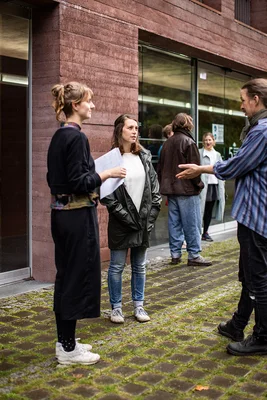
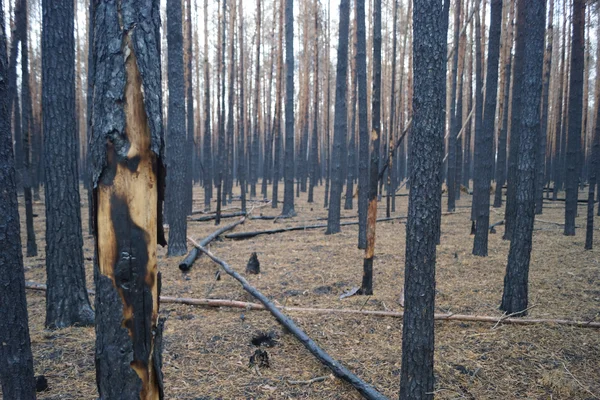
Convivial Futures – Exploring convivial conservation amid war, climate and societal crises / Konvivialer Naturschutz in Zeiten von Krieg, Klima- und Gesellschaftskrisen
Research project
01/2026 - 12/2026
Project volume:71.525 EURO
Competence field:Ecology, Biosphere reserves & protected areas, Sustainable ecosystem management
Cooperation:Strategic cooperation
Funding partner:State funding
This project is the eleventh consecutive initiative under the funding programme and continues our collaboration with our long-standing partners in Ukraine and the Republic of Moldova. It focuses on how war, climate change and societal crises intersect, and on what the concept of ‘Convivial Conservation’ can contribute to addressing these challenges. Together with universities, biosphere reserves and civil society organisations, we are exploring whether and how approaches such as co-management, shared responsibility for natural areas and participatory governance can strengthen socio-ecological recovery. The project comprises a two-week study tour through the Carpathians and as far as Moldova’s eastern forest boundary, a ‘Conviviality Week’ in Germany, and three research fellowships.
Contact
Project manager
Prof. Dr. Pierre L. IbischProfessor of Socio-Ecology of Forest Ecosystems
General contact
Angela DichteProject Focus
Convivial Futures: Conservation in Times of Multiple Crises
Since 2016, the Centre for Econics and Ecosystem Management has been working with partners in Ukraine, the Republic of Moldova and Romania. What began in 2016 as a dialogue on civil society participation in sustainable forest management has evolved into a robust network of universities, biosphere reserves and non-governmental organisations.
The context in 2026 is characterised by multiple, interrelated crises: the immediate consequences of the war in Ukraine, increasing droughts, extreme weather and rising wildfire risk, accelerating land and ecosystem degradation, economic decline and destroyed infrastructure, displacement and demographic change, as well as growing physical and psychological strain. These crises do not occur in isolation; rather, they reinforce one another and collectively shape the degree to which societies and landscapes are under stress.
As a unifying conceptual framework, the project introduces the approach of Convivial Conservation (Büscher & Fletcher 2019, 2020). This approach links the protection of biological diversity with questions of environmental justice, collective responsibility and livelihood security, and seeks forms of coexistence between humans and nature beyond both isolation on the one hand and marketisation on the other. We are examining which elements of this approach can actually be applied under the crisis conditions prevailing in Eastern Europe, and where its limitations lie.
Project Activities
The key components of the project include:
- Study trip: A two-week field trip for students and teaching staff from Germany, Ukraine and the Republic of Moldova to primeval and old-growth forests in Slovakia, Romania, the Republic of Moldova and the Czech Republic.
- ‘Conviviality Days’ in Germany: A three-day event in Eberswalde in autumn 2026, bringing together around 15 participants from the partner institutions for a workshop and a public evening event featuring a guest from the international Convivial Conservation community.
- Three research fellowships: Research stays of up to three months at HNEE for researchers from the partner countries.
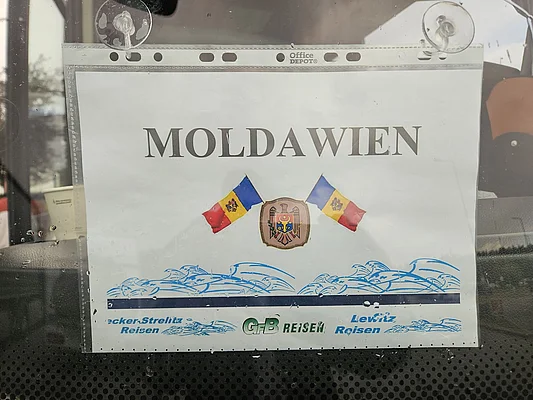
Field trip, June 2026 – Flora and fauna in the Vihorlat World Natural Heritage Site, the first stop on the study tour.
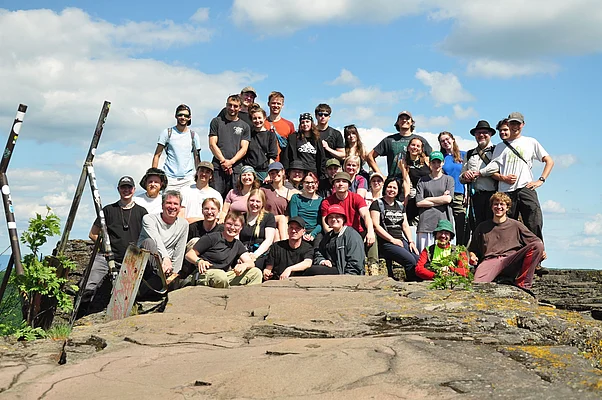
Field trip, June 2026 – Group photo at the Vihorlat World Natural Heritage Site, the first stop on the study trip.
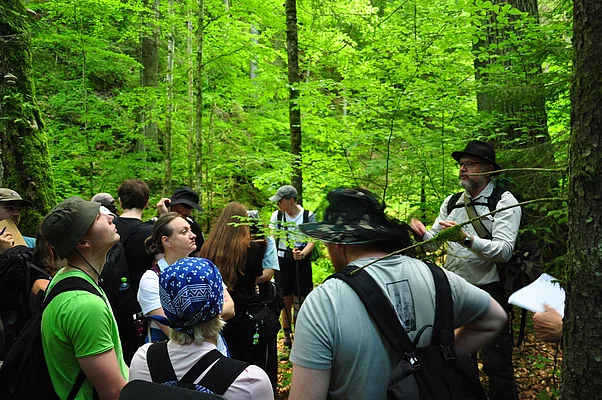
Field trip, June 2026 – Discussion at the Codrul Secular Slătioara World Natural Heritage Site, Romania
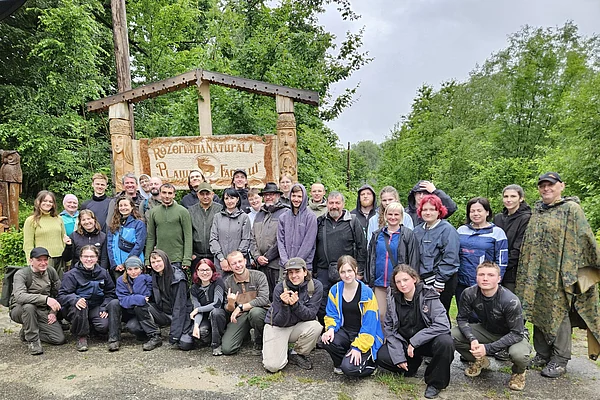
Field trip, June 2026 – Group photo at the eastern edge of the forest in the Plaiul Fagului Nature Reserve, Republic of Moldova
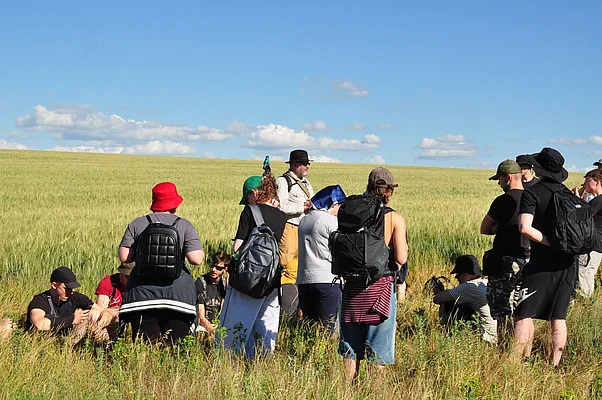
Field trip, June 2026 – At the edge of the steppe; the project’s first educational field trip to the Republic of Moldova.
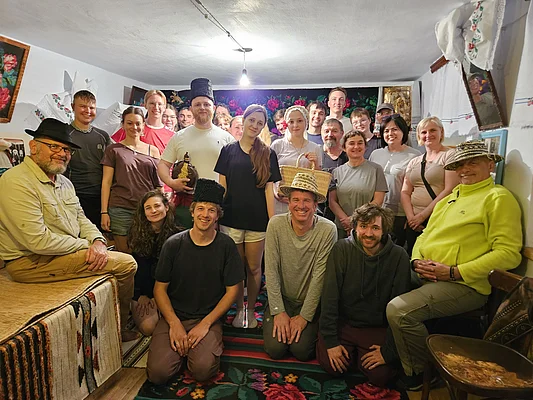
Field trip, June 2026 – Group photo at the Museum of Gagauz History and Tradition in Congaz, Gagauzia
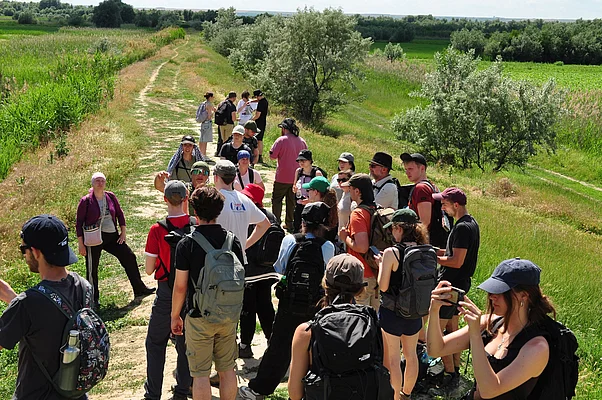
Field trip, June 2026 – In the floodplain landscape of the Prut River in the Lower Prut UNESCO Biosphere Reserve
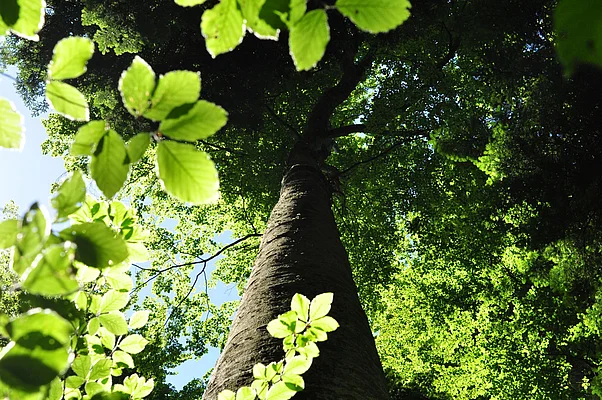
Field trip, June 2026 – Buchenwald in the Codrul Secular Șinca UNESCO World Natural Heritage Site in the Făgăraș Mountains, Romania
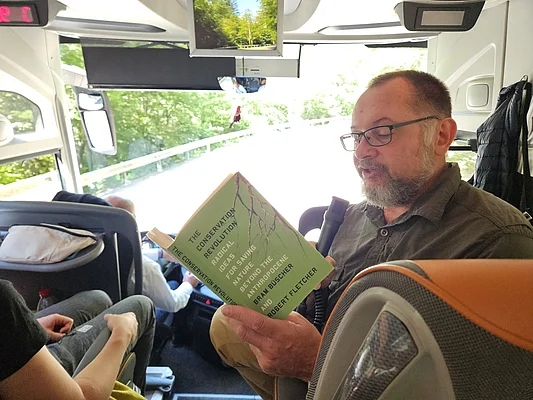
Excursion, June 2026 – A reading and discussion on the concept of the convivial approach to nature conservation during the bus journey
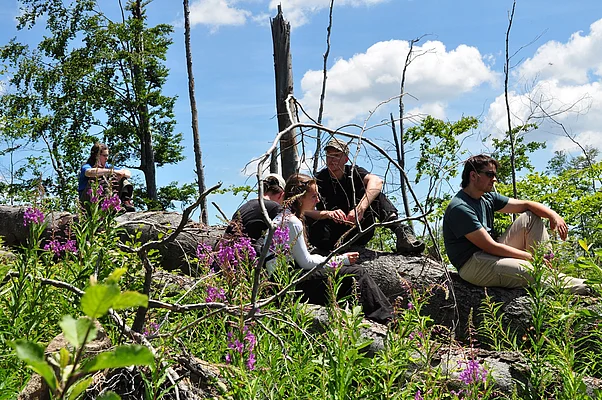
Field trip, June 2026 – Discussion on disturbance dynamics and process protection at the extensive windthrow site
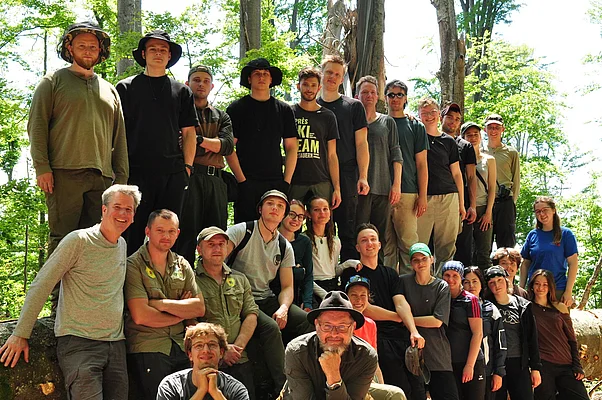
Field trip, June 2026 – Group photo at the windthrow site in the Izvoarele Nerei World Natural Heritage Site, Semenic National Park, Romania
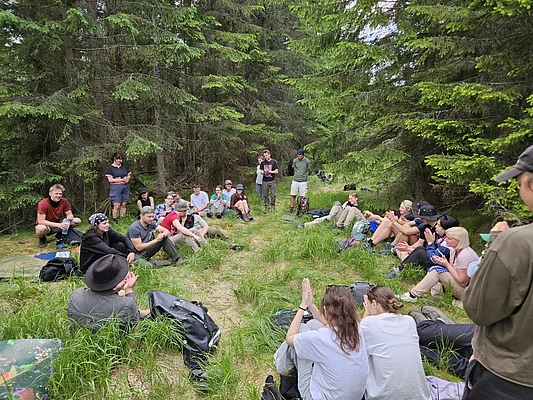
Field trip, June 2026 – Closing reflection session in the Šumava National Park, Czech Republic
Study Tour in June 2026
From 7 to 21 June 2026, the study tour brought together 41 participants – including 33 German and Ukrainian students supported by the project, as well as teaching staff and practitioners from Ukraine and the Republic of Moldova – and travelled across four countries, from Slovakia through Romania and the Republic of Moldova to the Czech Republic. The trip took place as part of the module ‘Conservation and Development of Old and Mature Forest Ecosystems’ and was undertaken entirely by chartered coach.
The focus was on four components of the UNESCO World Natural Heritage Site ‘Ancient and Primeval Beech Forests of the Carpathians and Other Regions of Europe’: Vihorlat in Slovakia, and Codrul Secular Slătioara, Codrul Secular Șinca and Izvoarele Nerei in Romania. The project team visited two of these sites for the first time.
For the first time, a study tour organised by the project also took participants to the Republic of Moldova. In the Plaiul Fagului Reserve, the group reached the eastern limit of the beech forest’s natural range at the transition to the steppe – a landscape gradient that cannot be observed in this form in Central Europe. Other stops included the Autonomous Territorial Unit of Gagauzia and the UNESCO Lower Prut Biosphere Reserve with its riparian forests.
Among the most striking impressions were two large-scale disturbance events: the extensive windthrow area in the Semenic Forest and the regeneration following the bark beetle outbreak in Šumava National Park. Both sites provided an opportunity to discuss restoration, process protection and how to deal with uncertainty – issues that are particularly relevant in the partner regions under conditions of war and crisis.
Funding partner

‘East-West Dialogue’ programme, funded by the Federal Foreign Office.